Examining Pakistan's Symbolic Role in Iran-US Ceasefire Efforts
Synopsis
A deep dive into Pakistan's involvement in the Iran-US ceasefire reveals a role that is largely symbolic, lacking substantive diplomatic influence. Discover the nuances of this geopolitical landscape and what it means for regional stability.
Key Takeaways
Pakistan's role in the ceasefire is largely symbolic.
Diplomatic assessments suggest a lack of substantial influence.
Recent media portrayals may exaggerate Pakistan's mediation claims.
Statements from Iran and the US clarify Pakistan's position as a facilitator.
The ceasefire is a temporary solution amid ongoing tensions.
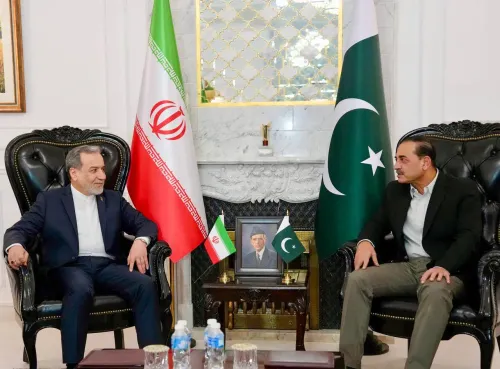
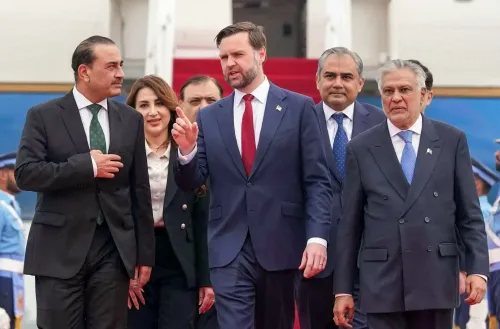
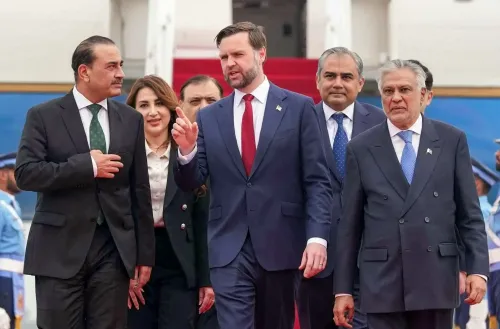
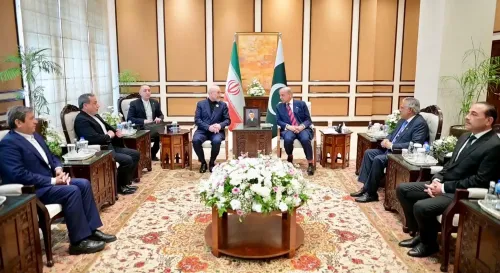
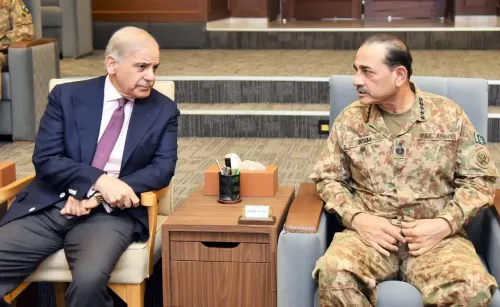
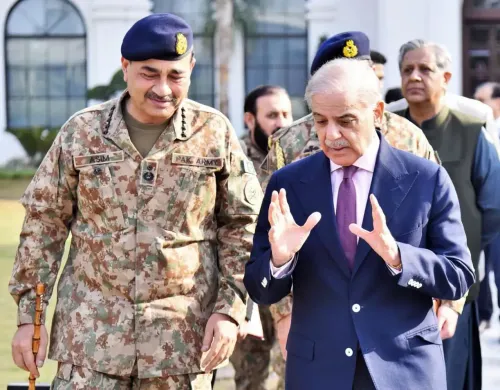
Islamabad/New Delhi, April 10 (NationPress) The focus on Pakistan's involvement in facilitating a ceasefire between Iran and the US is primarily symbolic rather than substantive.
Despite numerous social media posts from both Iranian and American sources being cited as valid evidence of Pakistan's role in negotiating a two-week ceasefire, a report released on Friday indicates that diplomatic evaluations and logical reasoning do not support these claims.
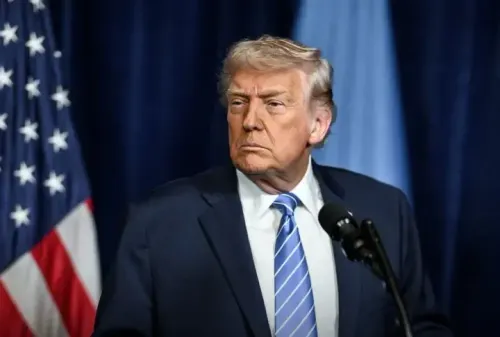
After enduring nearly 40 days of intense conflict in the Middle East, there has been a brief cessation of hostilities for two weeks, but this peace is precarious, hanging by a single thread that could unravel at any moment. According to the report from India Narrative, this ceasefire stems from desperation and a scarcity of options. The US's hastily devised exit strategy failed to instill confidence within the security community. The last military operation aimed at Kharg Island, intended to gather intelligence, only revealed an unstable and hazardous environment for ground forces. Faced with dwindling options just before Trump's ultimatum, the US was compelled to act quickly to ensure its survival, yielding to diplomatic pressures and resulting in a ceasefire spectacle.
The report suggests that several elements indicate that Pakistan's involvement in this ceasefire is largely a high-voltage symbolic act, aimed at portraying itself as an essential player in the situation.
It also emphasizes that the diplomatic significance is notably absent, with Pakistan merely serving as a facilitator while its media promotes it as a pivotal mediator. Recently, Iran's envoy to India dismissed assertions regarding Pakistan's mediating role in the conflict.
The report further elaborates that Pakistan's influence is predominantly rooted in its Islamic politics, which limits its capacity in the conflict to that of an intermediary with minimal diplomatic leverage or impact on mediation, contrary to claims made by its media. The critical question remains: What leverage does Pakistan possess to persuade either Iran or the US to agree to a ceasefire? The answer is almost none, raising doubts about Pakistan's status as a primary player in this scenario, which appears to be more about symbolism than substance.
Furthermore, statements from Iranian and US officials acknowledging Pakistan's role in the mediation process have been widely misinterpreted, framing Islamabad as a key contributor. The consensus from both nations suggests Pakistan should function as a facilitator rather than a mediator.
In an exclusive interview with IANS, Reuven Azar, Israel's Ambassador to India, noted that Pakistan has not played a significant role during the conflict, stating, "We have not seen Pakistan participating in the war, but they have not been playing a positive role. The United States has chosen to use them as a facilitator for their own reasons. We trust the United States to implement the 15-point plan."
Point of View
It's evident that while media narratives may amplify Pakistan's role in the ceasefire between Iran and the US, the reality points to a more limited influence. Diplomatically, Pakistan's capacity to mediate effectively remains questionable, emphasizing the importance of critical analysis in international relations.
NationPress
7 Oct 2026
Frequently Asked Questions
What is the significance of Pakistan's role in the Iran-US ceasefire?
Pakistan's role is primarily symbolic, lacking substantial diplomatic influence or leverage to mediate effectively between Iran and the US.
Why do media reports highlight Pakistan's involvement?
Media narratives often focus on Pakistan's involvement to project it as a key player in regional diplomacy, despite evidence suggesting a more limited role.
What are the implications of the ceasefire?
The ceasefire reflects a momentary halt in hostilities, underscoring the fragile nature of peace in the region, driven by desperation rather than a solid diplomatic resolution.
What did the Israeli Ambassador say about Pakistan's involvement?
The Israeli Ambassador noted that Pakistan has not played a major role in the conflict and is primarily being used as a facilitator by the US.
How do Iran and the US view Pakistan's role?
Both Iran and the US view Pakistan as a facilitator rather than a mediator, indicating the limited scope of its influence in the ceasefire negotiations.