Pakistan's Struggling Role in Mediating US-Iran Tensions
Synopsis
Explore how Pakistan's attempts at diplomatic mediation in the US-Iran conflict are faltering. Despite its efforts, Tehran's rejection reveals a shift in regional influence, challenging Pakistan's strategic significance in the Gulf.
Key Takeaways
Pakistan's attempts at mediation in the US-Iran conflict faced rejection.
Iran returned a Pakistani tanker, highlighting regional dynamics.
Pakistan's diplomatic approach is perceived as more propaganda than substance.
In contrast, Qatar's diplomacy is based on reliability and credibility.
The recent geopolitical shifts challenge Pakistan's strategic significance.
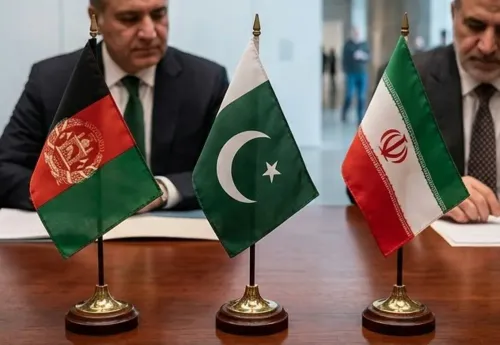
Islamabad, March 27 (NationPress) In spite of Islamabad's efforts to present itself as a mediator in the US-Iran conflict, Tehran has not only returned a Pakistani tanker but also hindered its transit through the Strait of Hormuz. Additionally, Iran has dismissed proposals for dialogue, including attempts for a ceasefire by the US, specifically overlooking Trump's 15-point peace initiative.
A report by India Narrative indicates that the rejection of a Pakistani vessel and the Iranian ambassador's candid dismissal of Pakistan's mediating role showcase shifting regional dynamics. This suggests that Pakistan's influence and significance in the Gulf are dwindling.
The analysis further reveals that this situation highlights Pakistan's propaganda-driven diplomacy, which Islamabad perceives as a show of diplomatic strength. However, in reality, it is only serving to diminish the nation's remaining sway in the Gulf, painting it as a propagandist entity.
The report elaborates, “Pakistan is once again caught in a futile display that prioritizes nuisance over substance. This propaganda-centric diplomacy, aimed at safeguarding its diminishing strategic relevance while navigating backlash, is nothing new. The latest engagement of Pakistan in the Gulf, attempting to secure a significant diplomatic event, lacks any substantial strategic importance. Its diplomatic maneuvers are devoid of the depth and value necessary to establish itself as a principal mediator in high-stakes conflicts.”
Pakistan's diplomatic efforts in the Gulf rely on two primary strategies: symbolic outreach and ideological appeal. Both of these traditional elements have been in decline for decades, primarily due to a lack of strategic reliability and relevance—qualities essential for effective diplomacy. In contrast, Qatar has emerged as a compelling diplomatic actor in the region by building its tactics and policies on reliability rather than merely ideological appeals.
The report mentions that Qatar's strategic reliability stems from its reputation as an “honest broker” that maintains open communication channels with various adversarial entities, including the United States, Iran, the Taliban, and Hamas.
Conversely, Pakistan's “propaganda diplomacy” heavily relies on ideology and media rather than on strategic, niche, and credible diplomatic efforts. This ultimately undermines its legitimacy as a mediator, unlike Qatar. In Pakistan's case, the absence of relevance, credibility, and particularly a strategic niche is striking. The only factor bolstering Pakistan's influence is ideology, which does not equip it to be an effective or persuasive diplomatic actor. The longstanding tensions between Saudi Arabia and Iran have been exacerbated by a new mediator: Pakistan,” the report highlights.
“Former Prime Minister Imran Khan frequently offered to mediate between the two regional adversaries, yet Saudi Arabia firmly refused. The real progress was made in 2023 when China facilitated an agreement, leaving Pakistan largely sidelined. Moreover, the well-known Afghan peace process, where Pakistan claimed to be the primary mediator between the US and the Taliban, ultimately failed as its relations with the TTP and the Afghan Taliban deteriorated,” it concluded.
Point of View
The current situation illustrates Pakistan's struggle to maintain relevance in Gulf diplomacy amidst changing geopolitical dynamics. While it aims for a mediating role, the response from Iran and the limited impact of its efforts suggest a need for reevaluation of its diplomatic strategies.
NationPress
2 Oct 2026
Frequently Asked Questions
What led to Iran's rejection of Pakistan's mediation?
Iran's rejection stems from Pakistan's perceived diminishing influence in the Gulf and a lack of strategic credibility.
How is Pakistan's diplomatic approach characterized?
Pakistan's diplomatic efforts are often described as 'propaganda-driven,' focusing more on ideological appeal than strategic substance.
What is the contrast between Pakistan and Qatar's diplomatic strategies?
Qatar's diplomacy is based on reliability and maintaining communication with adversaries, while Pakistan relies heavily on ideology.
What recent events sidelined Pakistan in mediation efforts?
China's facilitation of an agreement in 2023 significantly sidelined Pakistan from mediating between Saudi Arabia and Iran.
How has Pakistan's influence in the Gulf changed over time?
Pakistan's influence in the Gulf has been gradually declining due to a lack of strategic relevance and successful diplomatic engagements.