Iran offers to mediate Pakistan-Afghanistan border conflict
Synopsis
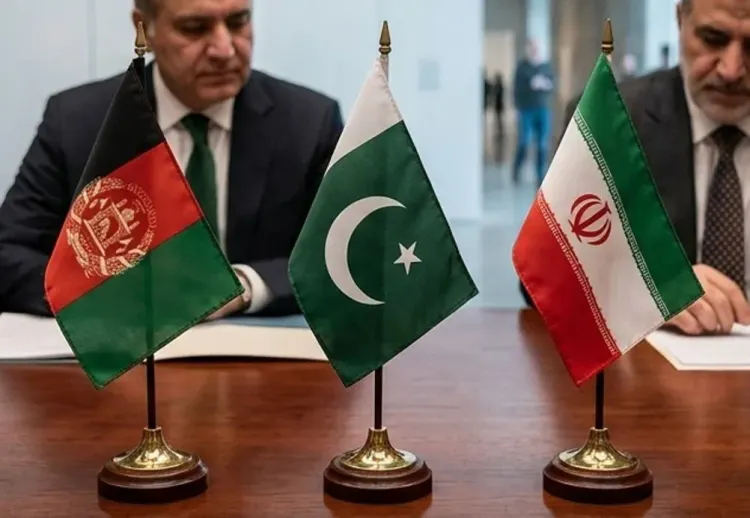
The country that tried — and failed — to broker peace between Iran and the US is now being offered mediation by Iran itself, in its own border war with Afghanistan. Tehran's offer is self-interested but credible: shared borders, refugee pressures, and ISKP fears give Iran real skin in the game. For Pakistan, it is a telling reversal.
Key Takeaways
Iran has reiterated an offer to mediate between Pakistan and Afghanistan over ongoing border clashes and cross-border raids.
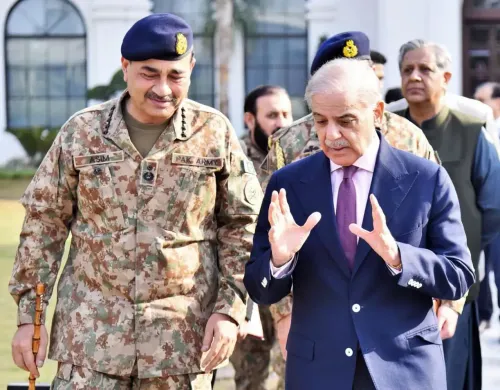
Pakistan's Army Chief General Asim Munir had previously attempted Iran-US mediation, visiting Tehran at least twice, but diplomatic leadership shifted to Qatar .
The Islamabad Memorandum of Understanding , a provisional peace framework, reportedly failed to hold.
Pakistan accuses the Afghan Taliban of sheltering the Tehreek-e-Taliban Pakistan (TTP) ; Kabul denies the charge and contests Pakistani cross-border military action.
The Durand Line border demarcation remains a foundational dispute — recognised by Pakistan but rejected by successive Afghan governments.
Iran shares borders with both countries and faces threats from Islamic State Khorasan Province (ISKP) , giving it strategic incentives to mediate.
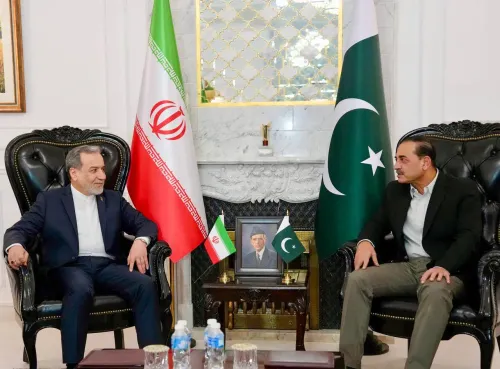
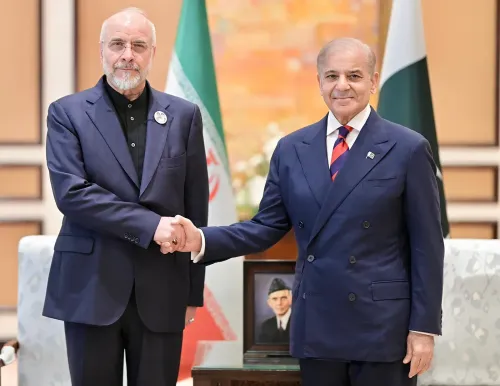
Iran has reiterated its offer to mediate between Pakistan and Afghanistan, proposing to bring the two neighbours to the negotiating table to resolve their escalating border clashes and cross-border raids. The offer, renewed from Tehran, carries a notable irony: Pakistan itself had recently attempted — and ultimately failed — to broker peace between Iran and the United States.
Pakistan's Mediation Record and Its Limits
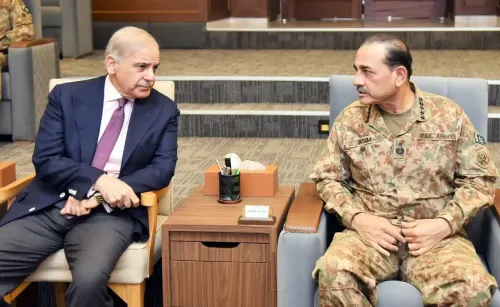
Pakistan's foray into Iran-US diplomacy began with considerable ambition. Army Chief General Asim Munir visited Tehran at least twice, drawing praise from US President Donald Trump. However, the centre of diplomatic gravity soon shifted to Qatar, whose negotiators dispatched to Tehran, hosted senior Iranian officials, and maintained sustained coordination with Washington.
Doha held structural advantages that Islamabad could not match — established back-channels with both capitals, deep experience mediating between adversaries, and the financial and political endurance to keep talks alive. Pakistan could carry messages; Qatar was better positioned to close deals.
Washington ultimately declared Tehran's conduct had made the arrangement unsustainable, while Iran maintained it had honoured its commitments. The Islamabad Memorandum of Understanding, a provisional framework intended to wind down hostilities, was described as an impressive diplomatic menu that failed to satisfy the diners. Pakistan stepped back without formal announcement, maintaining what officials termed diplomatic discretion.
A Pattern of Ambitious but Incomplete Diplomacy
This episode fits a longer pattern. Pakistan allied with Washington in the 1950s Baghdad Pact to contain Soviet expansion, then watched its influence erode after its Civil War and successive military defeats against India. In the 1980s, it partnered with the US in a covert campaign against Soviet forces in Afghanistan — an intervention Pakistan's own defence minister has since publicly criticised.
Islamabad also played a facilitating role in the landmark US-China diplomatic rapprochement, positioning itself as an indispensable back-channel. Throughout, it has maintained what it describes as an 'all-weather' relationship with Beijing while simultaneously cultivating ties across the Islamic world. Critics argue these parallel alignments have repeatedly stretched Islamabad's credibility without converting access into durable leverage.
The Pakistan-Afghanistan Dispute
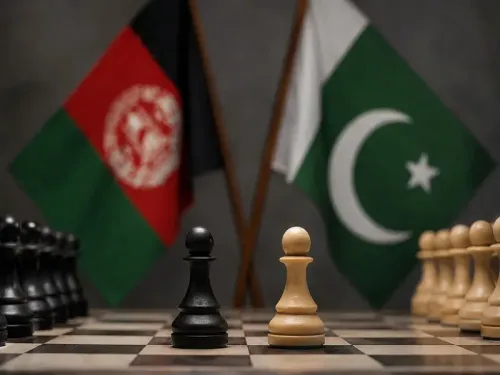
The conflict Iran now offers to mediate is serious enough to threaten broader regional stability. Islamabad accuses the Afghan Taliban of sheltering or actively supporting the Tehreek-e-Taliban Pakistan (TTP), which is allegedly responsible for deadly attacks inside Pakistani territory. Kabul denies hosting such elements, arguing that Pakistan must address its own internal security failures, and strongly contests Pakistani cross-border military operations.
Border closures and clashes at major crossings have disrupted bilateral trade and divided communities whose daily lives straddle the Durand Line. The frontier itself remains a source of deep contention: Pakistan treats the Durand Line — drawn by British colonial administrators — as the settled international boundary, while successive Afghan governments have refused to recognise it, asserting that large swathes of Pashtun-inhabited territory were arbitrarily placed on the Pakistani side.
Why Iran Is Volunteering
Tehran has concrete incentives to insert itself as mediator. Iran shares borders with both countries, hosts one of the world's largest Afghan refugee populations, and faces persistent security threats from extremist groups, including the Islamic State Khorasan Province (ISKP). Regional instability directly undermines Iranian trade routes and border security.
Tehran also has its own recurring disputes with both Islamabad and Kabul, making a mediator role a way to reframe those tensions. Successful mediation would allow Iran to project itself not merely as a neighbouring state, but as a credible regional power — a significant diplomatic dividend at a time when Tehran is navigating its own international isolation.
Whether Iran can succeed where Pakistan struggled remains to be seen. The country that once sought to reconcile two continents may now find itself on the receiving end of a peace offer from one of them.
Point of View
Only to be outmanoeuvred by Qatar's superior leverage. Now, one of the very parties Pakistan sought to reconcile is offering to do the same for Pakistan — in its own backyard. The deeper problem is structural: Pakistan has repeatedly traded on its geographic position as a diplomatic asset, but geography without durable relationships or economic weight produces access, not outcomes. Iran's offer may be sincere, but Tehran carries its own credibility deficits with Kabul, and the Durand Line dispute is a sovereignty question no mediator can paper over.
NationPress
16 Sept 2026
Frequently Asked Questions
Why is Iran offering to mediate between Pakistan and Afghanistan?
Iran shares borders with both Pakistan and Afghanistan, hosts a large Afghan refugee population, and faces security threats from groups like the Islamic State Khorasan Province (ISKP). Mediating the dispute would also allow Tehran to position itself as a credible regional power, a significant diplomatic gain given its current international isolation.
What is the Pakistan-Afghanistan border dispute about?
Pakistan accuses the Afghan Taliban of sheltering the Tehreek-e-Taliban Pakistan (TTP), which allegedly carries out deadly attacks inside Pakistan. Kabul denies this and strongly objects to Pakistani cross-border military operations. At the root is also the unresolved Durand Line boundary dispute, which Afghanistan has historically refused to recognise as a legitimate international frontier.
What happened to Pakistan's attempt to mediate between Iran and the United States?
Pakistan's Army Chief General Asim Munir led early efforts, visiting Tehran at least twice and receiving positive signals from Washington. However, Qatar ultimately assumed the central mediating role, leveraging its established channels with both capitals and greater financial and political stamina. Pakistan stepped back without a formal announcement, and the Islamabad Memorandum of Understanding — a provisional framework — did not hold.
What is the Durand Line and why does it matter?
The Durand Line is the border drawn by British colonial administrators between what is now Pakistan and Afghanistan. Pakistan treats it as the settled international boundary, but successive Afghan governments have refused to recognise it, claiming that large areas of Pashtun-inhabited territory were arbitrarily assigned to Pakistan. The dispute is a foundational source of tension in the bilateral relationship.
What is the Tehreek-e-Taliban Pakistan (TTP)?
The Tehreek-e-Taliban Pakistan (TTP) is a militant group that carries out armed attacks inside Pakistan. Islamabad accuses the Afghan Taliban government of providing the TTP shelter or support across the border — an allegation Kabul denies. TTP-linked violence has been a primary driver of the current Pakistan-Afghanistan tensions.