US Advocates for Stronger Ties with Pakistan Amidst Complex Relationship
Synopsis
In a pivotal symposium, US lawmakers emphasize the need for deeper ties with Pakistan, highlighting shared interests in security and economic growth amidst a complex relationship. Insights from diplomats and experts underscore the importance of collaboration for mutual benefits.
Key Takeaways
Strengthening partnerships: Emphasis on deeper US-Pakistan ties.
Shared interests: Focus on security, economic growth, and human dignity.
Dialogue is key: Importance of respectful communication across divides.
Global impact: The relationship benefits the entire world.
Concrete outcomes: Aiming for tangible results from diplomatic efforts.
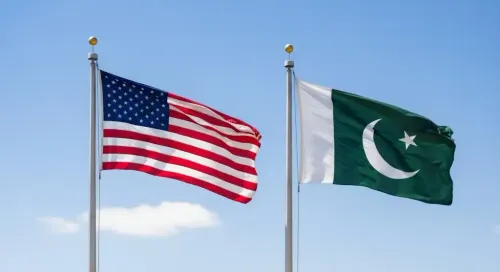
Washington, March 27 (NationPress) Senior officials and legislators from the United States are advocating for a more profound and results-oriented partnership with Pakistan, labeling the connection as “complex”.
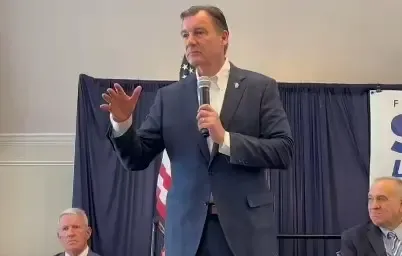
A bipartisan event on Capitol Hill, led by Tom Suozzi and Jack Bergman, convened over 200 policymakers, diplomats, and specialists on Wednesday to evaluate the future of US-Pakistan relations.
“In a time when our nation and the world appear increasingly fragmented, it’s crucial to fortify our connections with essential partners like Pakistan,” stated Suozzi.
“The bond between the United States and Pakistan may be intricate, but it is also brimming with potential, particularly when we prioritize shared goals such as security, economic advancement, and human dignity.”
Bergman emphasized the necessity of dialogue and collaboration across differences. “Unity like this doesn’t occur by accident. It begins with communication. It starts with a mutual conviction that progress is achievable when individuals unite, share ideas transparently, and engage respectfully,” he remarked. He further noted that disagreements need to be approached “with respect” to facilitate enduring progress.
Pakistan’s Ambassador to the United States, Rizwan Saeed Sheikh, characterized the relationship as both longstanding and significant.
“The partnership with Pakistan is undeniably among the most vital and impactful relationships, evidenced by numerous successful collaborations over nearly eight decades,” he commented. “Each time we have united, it has been significant beyond just the bilateral context and has genuinely benefited the entire globe.”
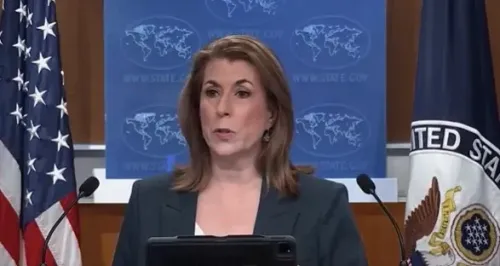
Assistant Secretary of State S. Paul Kapur indicated that Washington seeks tangible results. “We aspire to ensure that the goodwill and high-level focus on the US-Pakistan bilateral relationship convert into concrete advantages for both the American and Pakistani populations.”
The symposium included panel discussions regarding security and economic cooperation. Experts explored regional stability, particularly Pakistan’s interactions with India and China, along with opportunities for enhancing trade and investment.
Michael Kugelman from the Atlantic Council mentioned that the partnership is “in a favorable position” but must evolve to become more sustainable over time. Former ambassador Touqir Hussain cautioned that US policies must extend beyond mere appearances. “If America aims to have reliable partners, it should implement sound policies. The standard for a good policy should not merely be how it appears in Washington,” he asserted.
Security issues were a primary focus. Lisa Curtis warned that the Tehrik-i-Taliban Pakistan (TTP) continues to pose a “dangerous and lethal threat” and highlighted the US interest in ensuring stability in Pakistan. Hassan Abbas pointed out the necessity to enhance civilian law enforcement to counter terrorism, organized crime, and cross-border dangers.
On the economic side, Sofyan Yusufi mentioned Pakistan's efforts towards digitization and macroeconomic reforms but indicated that a clearer industrial strategy is essential for boosting exports and foreign reserves. Esperanza Jelalian from the US Chamber of Commerce noted that renewed engagement has opened doors for private sector investment and urged for resolution of bilateral trade challenges.
“This conference is all about learning from our history, comprehending our present situation, and creating a more intelligent, cooperative future for our two nations,” Suozzi concluded.
Point of View
It's essential to recognize the growing call for a deeper partnership between the US and Pakistan. This relationship, while complex, presents numerous opportunities that could benefit both nations significantly. Dialogue and collaboration appear to be the way forward.
NationPress
5 Oct 2026
Frequently Asked Questions
What is the current state of US-Pakistan relations?
US-Pakistan relations are described as complex but filled with opportunities for collaboration, particularly in areas like security and economic growth.
Why is dialogue important in US-Pakistan relations?
Dialogue is crucial as it fosters understanding and cooperation, enabling both nations to address differences respectfully and work towards shared goals.
What are the key areas of focus in the recent symposium?
The symposium focused on security cooperation, economic partnerships, and regional stability, particularly concerning relations with India and China.
What role does the US see Pakistan playing globally?
The US views Pakistan as a vital partner whose relationship has significant global implications, benefiting not just the two nations but the wider world.
What are the economic goals discussed in the symposium?
Goals include enhancing trade and investment, focusing on Pakistan's digitization efforts, and resolving bilateral trade issues to foster private sector growth.