US House panel urges tighter aerospace curbs over China military links
Synopsis
A US congressional panel has named Honeywell, GE Aerospace and Collins in a sweeping investigation, concluding that routine commercial deals gave China's military a technology edge. The committee is now pushing for FAA certification bans on Chinese aircraft, mandatory disclosure of military-company ties, and Treasury-level investment curbs — with an explicit warning that going it alone without allied coordination could simply hand the contracts to European rivals.
Key Takeaways
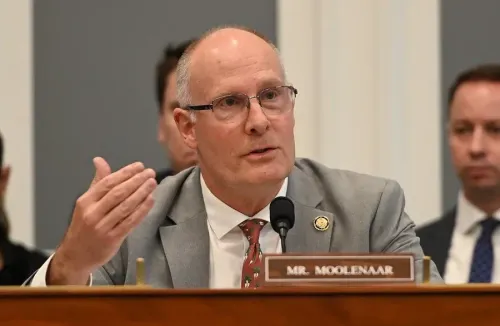
House Select Committee on China Chairman John Moolenaar released the aerospace technology investigation on 20 November 2026 .
Honeywell , GE Aerospace , and Collins were named for repeatedly obtaining licences for controlled technology transfers involving Chinese military end users .
The committee recommended the FAA not certify aircraft manufactured in China — a proposed policy change, not an existing ban.
It urged the Treasury Department to bring China's aerospace sector under the Outbound Investment Security Program .
The panel flagged Chinese joint ventures as a gap in CFIUS national-security scrutiny.
The report warned that unilateral US restrictions could cost American firms business without blocking China's access if allied suppliers fill the void.
A US House Select Committee on China has called for sweeping restrictions on aerospace technology transfers and investment involving China, concluding that lawful commercial arrangements with American and European companies helped advance capabilities available to the Chinese military. The investigation, released on Thursday, 20 November 2026, marks one of the most detailed congressional examinations of Western corporate exposure to China's military-civil fusion strategy.
Key Findings and Named Companies
Committee Chairman John Moolenaar released the investigation's findings, specifically naming Honeywell, GE Aerospace, and Collins in the report. According to the committee, these firms repeatedly sought and obtained licences for controlled technology transfers involving Chinese military end users and other military-linked entities as part of commercial aerospace programmes. The findings focus squarely on weaknesses in government policy and licensing arrangements, rather than on individual corporate misconduct alone.
'American and European companies transferred technology to China that could be used against our brave men and women in uniform,' Moolenaar said. He further argued that China's military-civil fusion strategy enables its armed forces to draw on civilian technological advances, blurring the line between commercial partnerships and defence capability-building.
What the Committee Is Recommending
The committee's proposed remedies span several branches of the US government. It has urged the Treasury Department to bring China's aerospace sector within the scope of restrictions under the Outbound Investment Security Program, and called on Congress to incorporate a corresponding prohibition into the Comprehensive Outbound Investment National Security Act of 2025.
Separately, the committee recommended that the Federal Aviation Administration (FAA) should not certify aircraft manufactured in China — a proposed policy shift, not an existing ban. It also urged passage of the Aerospace Transparency Act (H.R. 11047), which would require aerospace contractors working with the US defence establishment to disclose relationships with designated Chinese military companies.
A further recommendation involves the Geospatial Intelligence Transparency and Security Act (H.R. 11048), which would direct the National Geospatial-Intelligence Agency to assess commercial geospatial artificial intelligence capabilities and identify national-security concerns to inform export controls.
Joint Ventures and the CFIUS Gap
The committee identified Chinese joint ventures as a significant gap in national-security scrutiny. Such arrangements, it said, allowed sensitive capabilities to move offshore outside the principal framework of the Committee on Foreign Investment in the United States (CFIUS). The panel also called for broader overhauls of State Department and Commerce Department licensing processes, including fuller disclosure of beneficial ownership, restrictions on dual-use transfers accessible to Chinese military companies, and stronger penalties for violations.
Limits of Going It Alone
Notably, the report's own recommendations acknowledge the limits of unilateral American action. The committee warned that US companies could lose business without actually denying China access to Western technology — if allied suppliers step in to fill the gap. This comes amid broader Western debates about whether export controls without coordinated allied enforcement simply redirect, rather than restrict, technology flows to Beijing.
The committee also called for heightened scrutiny of French acquisitions of American aerospace companies, recommending a presumption against approval until acquiring firms unwind ties to China's civil-military system. It further argued that US taxpayer funding should not support companies that help build adversaries' military capabilities.
What Comes Next
The report's recommendations now require legislative and executive action to take effect. With the Aerospace Transparency Act and the outbound investment legislation both pending in Congress, the pace of follow-through will determine whether the committee's findings translate into enforceable policy — or remain a pointed but non-binding warning to the industry.
Point of View
These recommendations risk being economically punishing for American firms without being strategically effective. The push for a presumption against French acquisitions of US aerospace assets also signals that the committee views the problem as a Western-alignment issue, not just a bilateral US-China one. Whether Congress has the appetite to pass the Aerospace Transparency Act and the outbound investment legislation before the next election cycle will be the real measure of seriousness.
NationPress
20 Nov 2026
Frequently Asked Questions
What did the US House China committee find about aerospace technology transfers to China?
The committee concluded that lawful commercial arrangements between American and European aerospace firms and Chinese counterparts helped advance capabilities available to China's military. It named Honeywell, GE Aerospace, and Collins as companies that repeatedly obtained licences for controlled technology transfers involving Chinese military end users.
What restrictions is the US House committee recommending?
The committee has recommended stronger export controls, restrictions on outbound investment under the Outbound Investment Security Program, and a prohibition on FAA certification of aircraft manufactured in China. It also urged passage of the Aerospace Transparency Act (H.R. 11047), which would require defence contractors to disclose ties to designated Chinese military companies.
What is China's military-civil fusion strategy and why does it matter here?
China's military-civil fusion strategy is a national policy that enables the People's Liberation Army to draw on civilian technological advances, blurring the boundary between commercial partnerships and defence capability-building. The committee argues this makes ordinary commercial aerospace deals a potential conduit for sensitive technology reaching China's armed forces.
What is the gap the committee identified in CFIUS oversight?
The committee said Chinese joint ventures allowed sensitive aerospace capabilities to move offshore outside the principal scrutiny framework of the Committee on Foreign Investment in the United States (CFIUS). This structural gap means technology transfers through joint venture structures may avoid the national-security review that direct acquisitions would trigger.
Will these recommendations automatically become law?
No. The committee's report contains proposed policy changes that require legislative or executive action to take effect. Key bills — including the Aerospace Transparency Act and the Comprehensive Outbound Investment National Security Act of 2025 — remain pending in Congress, and the FAA certification recommendation is a proposed policy shift, not an existing ban.