AUDIT AI Act: US senators push SEC for AI investment disclosure rules
Synopsis
A rare bipartisan coalition of US senators has introduced the AUDIT AI Act, pushing the SEC to force public companies to disclose how they finance AI infrastructure — including circular investment arrangements that may obscure systemic risk. With AI capital flows deepening and corporate structures growing more opaque, the bill takes direct aim at a transparency gap that neither markets nor regulators have yet addressed.
Key Takeaways
The AUDIT AI Act was introduced in Washington on 20 November 2026 by a bipartisan group of four US senators.
The bill directs the SEC to develop disclosure rules covering AI investments, infrastructure financing, joint ventures, and contractual commitments.
Non-financial public companies would be required to report AI financing arrangements — including leases and guarantees — in annual, quarterly, and offering documents.
Covered firms must disclose whether they have an AI governance policy and a board-level AI oversight committee, or explain why they do not.
A separate provision mandates an SEC study on whether current financial reporting captures AI R&D, infrastructure costs, and revenue adequately.
Former SEC commissioner Robert Jackson and former chief accountant Paul Munter both publicly supported the proposal.
A bipartisan group of US senators on 20 November 2026 introduced the Advancing Uniform Disclosure of Investments and Transparency of Artificial Intelligence Act — known as the AUDIT AI Act — in Washington, directing the Securities and Exchange Commission (SEC) to develop rules requiring greater transparency around artificial intelligence investments, infrastructure financing, and related financial risks. The legislation marks one of the most detailed congressional efforts yet to bring AI-era financing arrangements under formal securities disclosure requirements.
Who Is Behind the Bill
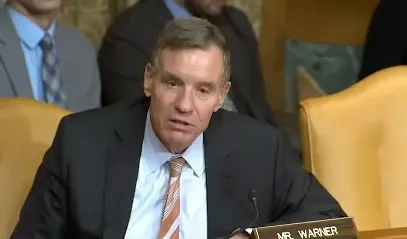
Democratic Senators Mark Warner and Angela Alsobrooks joined Republican Senators John Kennedy and Mike Rounds in sponsoring the proposal, underscoring rare bipartisan alignment on AI oversight. The bill remains proposed legislation and does not impose new requirements unless enacted and subsequently implemented by the SEC.
'Investors and policymakers deserve to know where that money is going, how these deals are being financed, and what risks are involved,' Senator Warner said in a statement accompanying the bill's introduction.
What the AUDIT AI Act Would Require
The proposal targets a specific structural problem: the difficulty of assessing financial exposure when AI infrastructure is financed through joint ventures, separate investment entities, and contractual commitments that fall outside a company's directly reported accounts. Under the bill, non-financial public companies would be required to identify relevant AI infrastructure entities and financing arrangements — including leases, guarantees, and servicing commitments — in annual and quarterly reports as well as offering statements.
The SEC would retain authority to determine additional disclosure details, potentially covering ownership stakes, debt levels, major counterparties, and broader contractual commitments. For companies with significant AI exposure, the legislation would create a standardised risk section within annual Form 10-K reports, with mandated categories covering dependence on outside AI models, concentration among computing providers, shifting training and operating costs, and liabilities tied to data rights.
Governance and Board Oversight Provisions
Beyond financial disclosures, the bill would require covered companies to declare whether they maintain an AI governance policy and a dedicated board committee overseeing the technology. Companies without such arrangements would need to explain their position publicly. Notably, the text allows firms to designate existing board committees with broader mandates as satisfying the AI oversight requirement, rather than compelling every company to establish a separate committee.
Circular Investments and Systemic Risk Concerns
According to reports, Senator Warner expressed concern about circular investment arrangements in which companies finance businesses that are simultaneously their customers — a pattern that critics argue obscures the true depth of financial interdependence within the AI sector. Warner reportedly cautioned that insufficient transparency makes it difficult to assess how broadly a setback in AI investment could ripple through the wider economy. He framed this as an assessment of potential systemic risk, not a prediction that a collapse is imminent.
Study on Financial Reporting and Market Automation
A separate provision would direct the SEC to study whether existing financial reporting standards adequately capture AI research and development expenditure, infrastructure costs, and revenue. The study would examine model-training costs, the treatment of obsolete models, assumptions about the useful life of AI infrastructure, and the case for separately reporting AI-related revenue and capital spending. The bill also includes an annual SEC reporting requirement on how automated investment strategies affect securities prices and market efficiency, including risks arising from multiple investors deploying similar algorithmic systems simultaneously.
Former SEC commissioner Robert Jackson and former SEC chief accountant Paul Munter both expressed support for the proposal in statements released by the bill's sponsors. With AI capital flows accelerating and corporate structures growing increasingly opaque, the AUDIT AI Act's passage — or failure — will likely set the tone for how Washington regulates the financial architecture underpinning the AI boom.
Point of View
A customer, and an infrastructure provider to the same AI startup — relationships that standard consolidated accounting can render nearly invisible. The circular-investment concern Warner flagged is not theoretical: several of the largest AI deals of the past two years have involved exactly this structure. The bill's real test will be in the SEC rulemaking phase, where industry lobbying historically dilutes specificity. If the final rules allow broad definitional latitude on what constitutes a 'material' AI financing arrangement, disclosure could become a checkbox exercise rather than genuine transparency. Bipartisan sponsorship improves the bill's legislative odds, but the gap between a mandated study and enforceable standards is where accountability typically goes to die.
NationPress
20 Nov 2026
Frequently Asked Questions
What is the AUDIT AI Act introduced by US senators?
The AUDIT AI Act is a bipartisan bill introduced on 20 November 2026 that directs the Securities and Exchange Commission to develop disclosure rules covering AI investments, infrastructure financing arrangements, and governance policies for public companies. It aims to give investors a clearer picture of the financial risks embedded in the AI industry's rapid expansion.
Which senators introduced the AUDIT AI Act?
Democratic Senators Mark Warner and Angela Alsobrooks joined Republican Senators John Kennedy and Mike Rounds in sponsoring the legislation, making it one of the more notable bipartisan technology-regulation efforts in the current congressional session.
What disclosures would the AUDIT AI Act require from companies?
Non-financial public companies would need to identify AI infrastructure entities and financing arrangements — including leases, guarantees, and servicing commitments — in annual and quarterly filings. Companies would also need to disclose whether they have an AI governance policy and a board committee overseeing AI, or explain the absence of such arrangements.
Why is Senator Warner concerned about circular AI investments?
Warner has reportedly flagged arrangements in which companies finance businesses that are simultaneously their own customers, arguing this obscures true financial interdependence. He cautioned that without greater transparency, it is difficult to gauge how far a setback in AI investment could spread through the broader economy.
Does the AUDIT AI Act become law automatically?
No. The bill is proposed legislation and does not impose any new requirements unless it is passed by Congress and enacted into law, after which the SEC would undertake a separate rulemaking process to implement the specific disclosure rules.