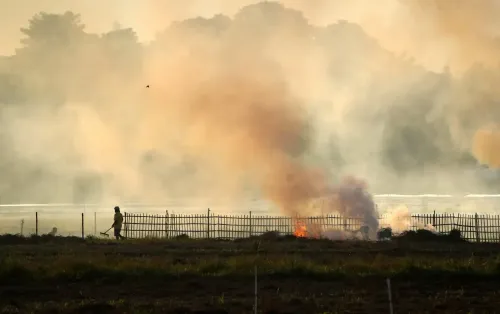
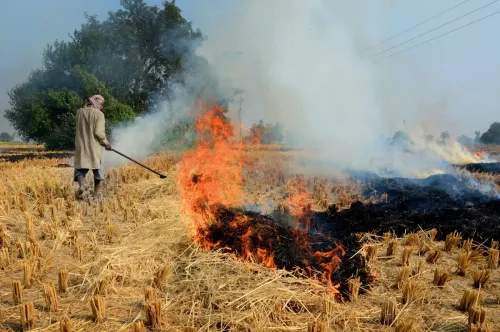
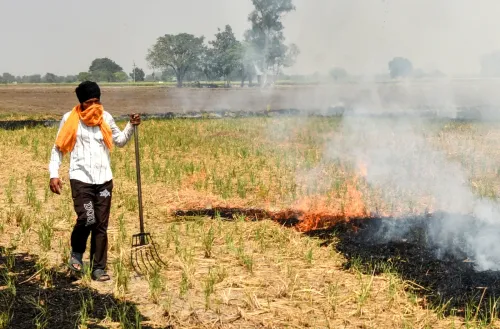
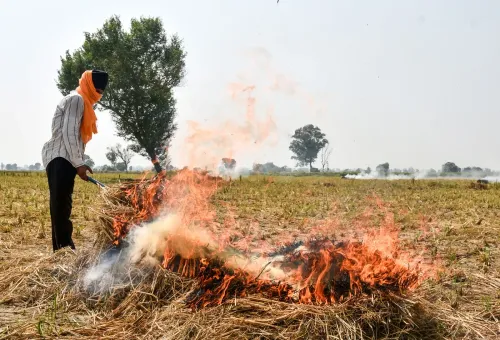
Punjab stubble burning: 6,874 cases logged, ₹11.94 crore penalty imposed by Nov 19
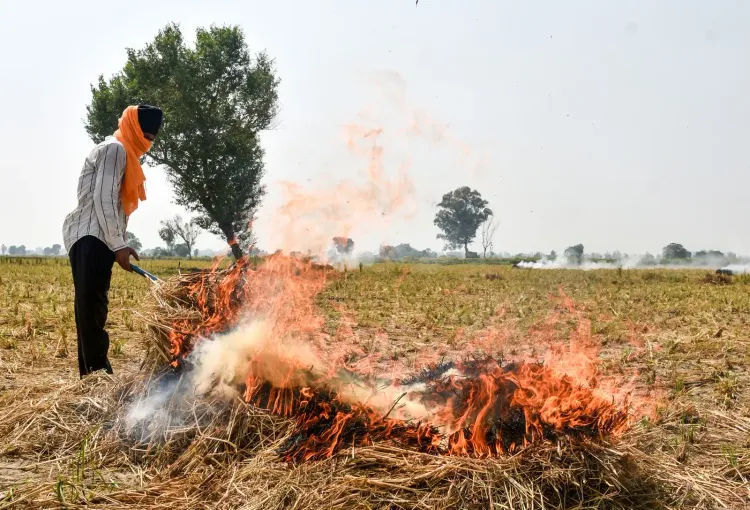
Synopsis
Punjab has logged 6,874 stubble-burning cases even as paddy harvesting nears completion, with ₹11.94 crore in environmental fines imposed but barely a third recovered. Ferozepur tops the district tally at 892 incidents, and no supervisory official has been suspended — pointing to a stubborn enforcement gap that repeats itself every post-harvest season.
Key Takeaways
6,874 stubble-burning incidents recorded in Punjab as of 19 November , per the CAQM report.
Burning confirmed at 2,704 of 6,425 inspected sites; paddy harvesting 99.10% complete on 32.87 lakh hectares .
Environmental compensation of ₹11.94 crore imposed in 2,372 cases ; only ₹4.27 crore recovered — a ~36% recovery rate.
2,066 FIRs registered under Section 223 of the BNS ; red entries in land records made in 2,200 cases .
Ferozepur leads district-wise with 892 incidents, followed by Sangrur ( 787 ) and Tarn Taran ( 710 ).
No supervisory official has been suspended or charge-sheeted despite prosecution proceedings in 41 cases .
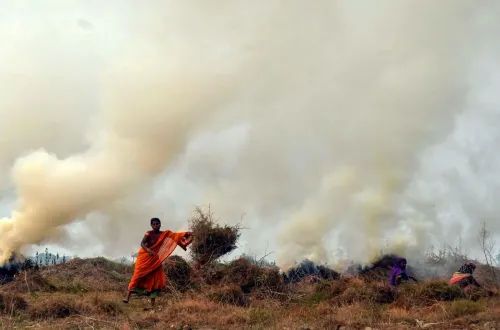
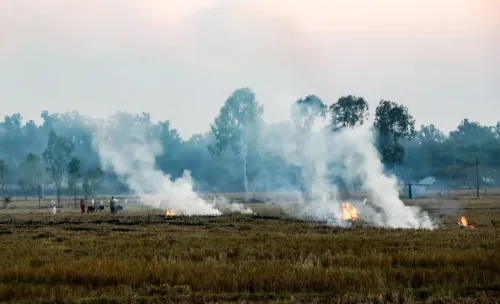
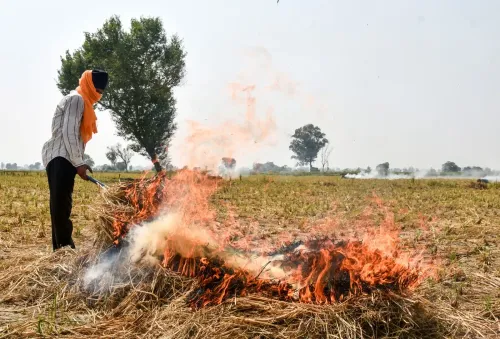
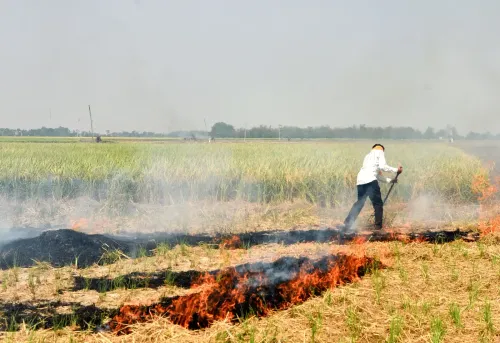
Punjab has recorded 6,874 stubble-burning incidents as of 19 November, even as paddy harvesting approaches completion across the state, according to a report by the Commission for Air Quality Management (CAQM). Environmental compensation of ₹11.94 crore has been imposed in 2,372 cases, though recoveries remain partial at ₹4.27 crore so far.
Scale of the Problem
Of the 6,874 reported incidents, 6,425 locations have been physically inspected, and stubble burning has been confirmed at 2,704 sites. Paddy harvesting has been completed on 99.10 per cent of the state's total 32.87 lakh hectares under cultivation — meaning the bulk of the agricultural activity that triggers burning is already over, yet fresh incidents continue.
The persistence of crop-residue fires this late in the season underscores a recurring enforcement gap. This is not an isolated year: Punjab has featured prominently in annual CAQM reports for over a decade, and the state's stubble smoke is a primary driver of Delhi's post-harvest air-quality crisis each October and November.
Legal and Financial Action
Authorities have registered 2,066 FIRs under Section 223 of the Bharatiya Nyaya Sanhita (BNS) in connection with the incidents. Red entries — a form of adverse notation — have been made in the land revenue records of farmers in 2,200 cases. An additional 2,051 warning and show-cause notices have been issued to farmers across the state.
On the administrative accountability front, prosecution proceedings have been initiated against officials in 41 cases. Notably, no charge sheets have been issued to any nodal or supervisory officers so far, and no official has been suspended, the CAQM report stated.
District-wise Breakdown
Ferozepur recorded the highest number of stubble-burning incidents in the state at 892, followed by Sangrur (787), Tarn Taran (710), Bathinda (631), Patiala (441), and Barnala (384).
In Patiala district specifically, harvesting has been completed on 99.70 per cent of its 2.314 lakh hectares of paddy land. The district logged 441 burning incidents, of which 417 were inspected and burning was confirmed at 260 locations. Traces of burning were additionally found at four fields in non-AFL (Acute Fire Line) areas.
Patiala saw environmental compensation of ₹10.65 lakh imposed in 213 cases, with ₹3.50 lakh recovered. The district has registered 246 FIRs, made red entries in 194 revenue records, and issued 689 warning and show-cause notices.
Recovery Gap Signals Enforcement Challenge
Across Punjab, the gap between penalties imposed and amounts recovered tells its own story: only ₹4.27 crore of the ₹11.94 crore in environmental compensation has been collected — a recovery rate of roughly 36 per cent. Critics argue that incomplete recovery dilutes the deterrent effect of financial penalties, allowing a cycle of non-compliance to persist year after year.
With harvesting nearly complete, the number of fresh burning incidents is expected to taper in the coming days — but the question of whether this year's enforcement measures will translate into lasting behavioural change among farmers remains open.
Point of View
But recoveries barely scraping 36 per cent and not a single supervisory officer suspended. Penalising farmers without fixing the incentive structure — affordable alternatives to burning, timely payment of compensation for in-situ management — means enforcement produces paperwork more than behaviour change. The CAQM data also arrives at a moment when Delhi's air quality typically peaks in toxicity; Punjab's fires are not a local story. Until administrative accountability matches farmer-level accountability, the annual cycle will repeat.
NationPress
20 Nov 2026
Frequently Asked Questions
How many stubble-burning cases have been recorded in Punjab this season?
Punjab has recorded 6,874 stubble-burning incidents as of 19 November , according to the CAQM report. Burning has been confirmed at 2,704 sites out of 6,425 inspected.
What is the environmental compensation imposed for stubble burning in Punjab?
Environmental compensation totalling ₹11.94 crore has been imposed across 2,372 cases in Punjab. Of this, only ₹4.27 crore — roughly 36 per cent — has been recovered so far.
Which district in Punjab has the most stubble-burning incidents?
Ferozepur recorded the highest number at 892 incidents , followed by Sangrur (787), Tarn Taran (710), Bathinda (631), Patiala (441), and Barnala (384).
What legal action has been taken against farmers for stubble burning?
Authorities have filed 2,066 FIRs under Section 223 of the Bharatiya Nyaya Sanhita (BNS) and made red entries in land revenue records in 2,200 cases . An additional 2,051 warning and show-cause notices have been issued.
Have any government officials been held accountable for stubble burning?
Prosecution proceedings have been initiated in 41 cases against officials, but no charge sheets have been issued to nodal or supervisory officers and no official has been suspended, according to the CAQM report.