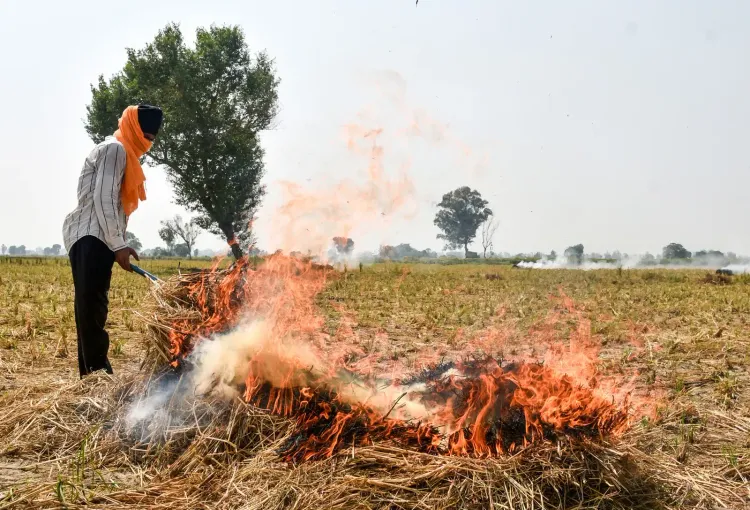
Punjab stubble burning: 5,972 cases recorded, fines in 2,219 incidents
Synopsis
Punjab's post-harvest stubble-burning crackdown has yielded 5,972 recorded incidents, 1,859 FIRs, and ₹1.11 crore in fines — but recoveries stand at barely a third of levied penalties, no supervisory officials have been suspended, and North India's smog season is far from over.
Key Takeaways
The Punjab Pollution Control Board (PPCB) has recorded 5,972 stubble-burning incidents as of 16 November 2026 .
Environmental compensation totalling ₹1,11,85,000 has been imposed in 2,219 cases ; only ₹40,55,000 recovered so far.
1,859 FIRs registered under Section 223 of the BNS ; adverse 'red entries' made in 2,046 land records.
Ferozepur tops district-wise incidence with 817 cases, followed by Tarn Taran (700) and Sangrur (689) .
Prosecution initiated against supervisory officials in 35 cases under the CAQM Act, but no charge-sheets or suspensions issued yet.
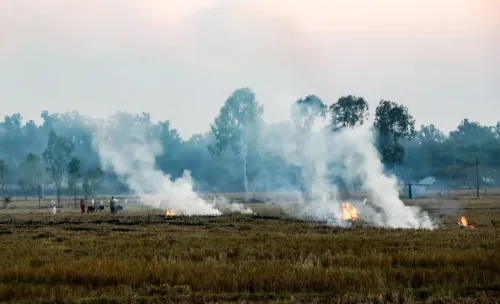
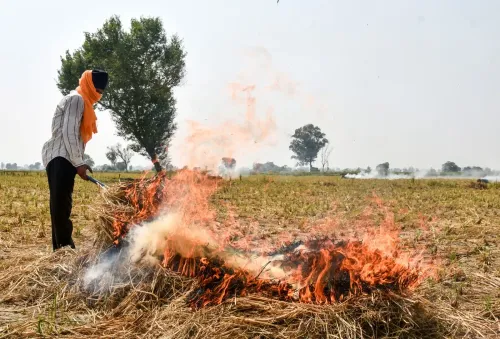
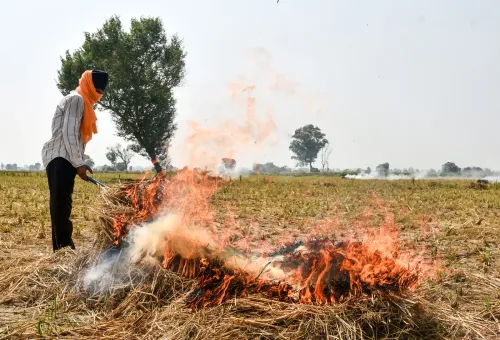
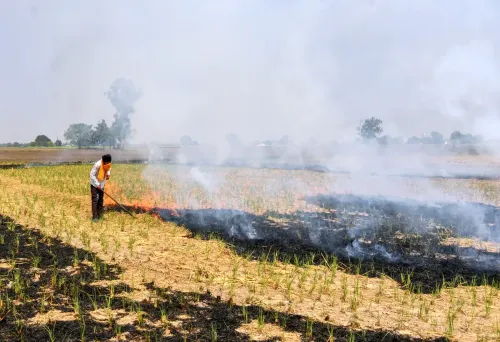
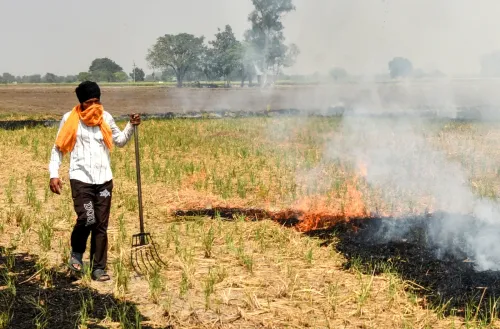
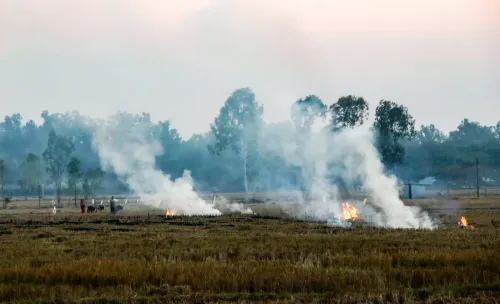
The Punjab Pollution Control Board (PPCB) has recorded 5,972 stubble-burning incidents across Punjab following the paddy harvest season, according to its latest enforcement report covering the period up to Sunday, 16 November 2026. The figures arrive as North India continues to reel under severe air pollution, with farm fires widely identified as a key seasonal contributor.
Scale of Enforcement Action
Authorities have physically inspected 5,616 farm sites across the state, with on-ground verification confirming stubble burning at 2,478 locations. Environmental compensation (EC) has been imposed in 2,219 cases, with a total penalty of ₹1,11,85,000 levied — of which ₹40,55,000 has been recovered so far, officials said.
In a significant legal escalation, authorities have registered 1,859 FIRs under Section 223 of the Bharatiya Nyaya Sanhita (BNS). Additionally, adverse 'red entries' — remarks that could affect land record credibility and future credit access for farmers — have been recorded in 2,046 cases, signalling a broadened deterrence approach beyond monetary fines.
Districts with Highest Incidence
Ferozepur leads all districts with 817 confirmed stubble-burning incidents, followed by Tarn Taran with 700 cases and Sangrur with 689. Patiala district has reported 396 incidents during the review period.
In Patiala, 360 farm sites were inspected, with stubble burning confirmed at 227 locations. Environmental compensation was imposed in 167 cases, with a total of ₹8.4 lakh levied and ₹3.1 lakh recovered. The district has also registered 219 FIRs, recorded 140 red entries, and issued 390 show-cause notices.
Supervisory Action — and Its Limits
Prosecution proceedings have been initiated against supervisory officials in 35 cases across Punjab under Section 14 of the Commission for Air Quality Management (CAQM) Act. However, no charge-sheets have been issued and no suspensions of nodal or supervisory officials have been ordered — a detail likely to draw scrutiny from both courts and air quality regulators monitoring North India's winter pollution crisis.
Notably, 264 farm sites inspected across Punjab showed no evidence of stubble burning, suggesting that monitoring operations are also documenting compliance where it exists. Officials acknowledged variations in environmental compensation recovery rates across districts, pointing to uneven enforcement capacity on the ground.
Broader Context
Stubble burning in Punjab and neighbouring Haryana is a recurrent flashpoint each October–November, contributing significantly to hazardous air quality in Delhi and the wider Indo-Gangetic Plain. Despite years of government schemes promoting mechanised crop-residue management and in-situ decomposition, farm fires persist — driven by the tight window between paddy harvest and wheat sowing. This season's data continues that pattern, even as enforcement intensity has visibly increased. How quickly the PPCB converts FIRs and EC notices into full recoveries will determine whether this year's crackdown translates into lasting behavioural change or remains a statistical exercise.
Point of View
The deterrence signal is blunted. Punjab's stubble-burning problem is structural — farmers face a narrow sowing window and inadequate subsidy support for alternatives — and punitive action without complementary economic incentives risks being an annual ritual rather than a turning point. Delhi's winter air quality will, once again, be the most visible referendum on whether this season's crackdown was more than a headline.
NationPress
16 Nov 2026
Frequently Asked Questions
How many stubble-burning cases have been recorded in Punjab this season?
The Punjab Pollution Control Board has recorded 5,972 stubble-burning incidents across the state following the paddy harvest, as of 16 November 2026. Physical verification confirmed burning at 2,478 of the 5,616 farm sites inspected.
What penalties have been imposed for stubble burning in Punjab?
Environmental compensation totalling ₹1,11,85,000 has been levied in 2,219 cases, though only ₹40,55,000 has been recovered so far. Additionally, 1,859 FIRs have been registered and adverse red entries made in 2,046 land records.
Which Punjab district has the most stubble-burning incidents?
Ferozepur leads with 817 confirmed incidents, followed by Tarn Taran with 700 and Sangrur with 689. Patiala has recorded 396 incidents with 219 FIRs and 390 show-cause notices issued.
Have any government officials been suspended for failing to prevent stubble burning?
Prosecution proceedings have been initiated against supervisory officials in 35 cases under Section 14 of the CAQM Act, but no charge-sheets have been issued and no suspensions have been ordered so far.
Why does stubble burning persist in Punjab despite bans and penalties?
Stubble burning recurs each October–November because farmers face a narrow window between paddy harvest and wheat sowing, making mechanised crop-residue management or in-situ decomposition difficult without adequate subsidy support. Despite government schemes promoting alternatives, compliance remains incomplete across the state.