Punjab stubble burning: 6,433 incidents logged, fines cross ₹1.12 crore
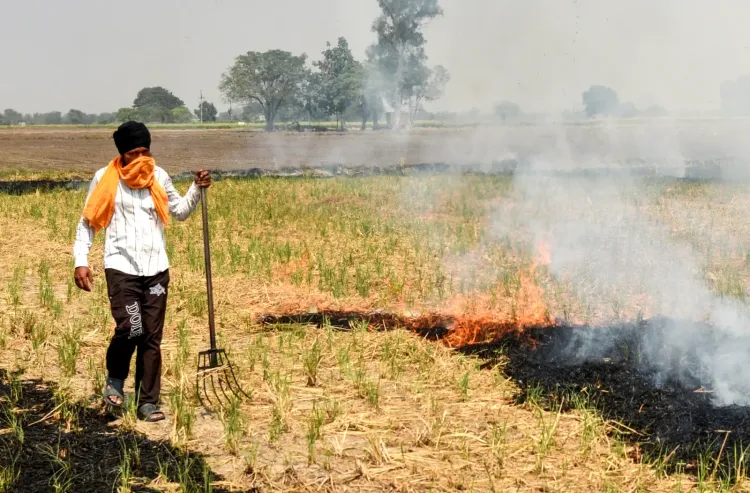
Synopsis
Punjab has logged 6,433 stubble-burning cases and slapped ₹1.12 crore in fines — but has recovered barely a third of the money. With 35 monitoring officials facing prosecution yet no charge sheets filed and no one suspended, the enforcement machinery is active on paper but incomplete in practice.
Key Takeaways
Punjab has recorded 6,433 stubble-burning incidents as of 16 November 2026 , per PPCB data.
Environmental compensation fines of ₹1,12,95,000 have been imposed; only ₹40,60,000 recovered so far.
1,971 cases registered under Section 223 of the BNS ; red entries made in 2,066 revenue records .
Prosecution proceedings initiated against officials in 35 cases under the CAQM Act , but no charge sheets filed and no suspensions ordered.
Ferozepur leads with 847 incidents , followed by Sangrur ( 741 ) and Tarn Taran ( 705 ).
Paddy harvesting completed on 98.50% of the state's 32.87 lakh hectares under cultivation.
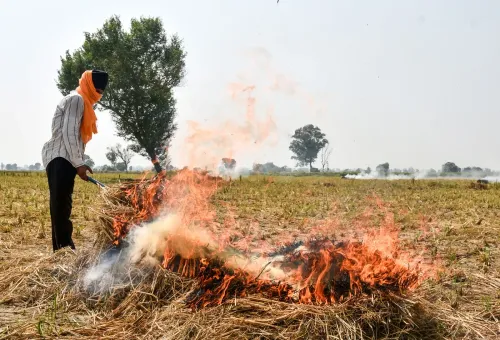
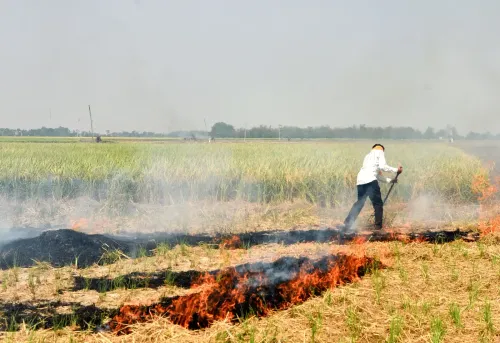
Punjab has recorded 6,433 stubble-burning incidents as of 16 November 2026, with the Punjab Pollution Control Board (PPCB) imposing environmental compensation fines totalling ₹1,12,95,000 against violators across the state. The figures, released by the PPCB, come as paddy harvesting nears completion on 98.50 per cent of the state's 32.87 lakh hectares of cultivated paddy land.
Scale of Violations Confirmed on Ground
Authorities inspected 5,721 fields in connection with reported incidents. Of these, crop residue burning was confirmed at 2,524 locations. An additional 294 fields categorised as 'Non-AFL' (Non-Active Fire Location) — where satellite-based fire alerts had not been triggered — also yielded evidence of burning upon ground inspection, underscoring the limits of remote-sensing monitoring alone.
Following field inspections, authorities initiated 2,252 Environmental Compensation (EC) cases. Of the ₹1,12,95,000 in fines levied, only ₹40,60,000 — roughly 36 per cent — has been recovered so far, according to the PPCB data.
Legal Action and Revenue Record Penalties
Beyond monetary fines, 1,971 cases have been registered under Section 223 of the Bharatiya Nyaya Sanhita (BNS), while 'red entries' — a revenue-record penalty that can complicate land transactions and benefit disbursements — have been recorded in 2,066 cases. A total of 1,607 warning and show-cause notices have also been issued across the state.
Notably, prosecution proceedings have been initiated against monitoring officials in 35 cases under Section 14 of the Commission for Air Quality Management (CAQM) Act. However, no charge sheets have been filed against the officials named, and no suspension has been ordered so far — a gap that critics argue weakens accountability within the enforcement chain.
District-wise Hotspots: Ferozepur Leads
Ferozepur has reported the highest number of stubble-burning incidents in Punjab, with 847 cases recorded. Sangrur follows with 741 incidents, and Tarn Taran has logged 705 cases. Bathinda has registered 591 incidents, while Patiala accounts for 416 cases.
In Patiala, authorities inspected 366 fields and confirmed burning at 230 locations. The district has initiated 170 environmental compensation cases, imposing fines of ₹8.45 lakh, of which ₹3.10 lakh has been recovered. 222 FIRs have been filed and red entries made in 141 revenue records, with 390 warning and show-cause notices issued locally.
Context: Why Stubble Burning Remains a Persistent Problem
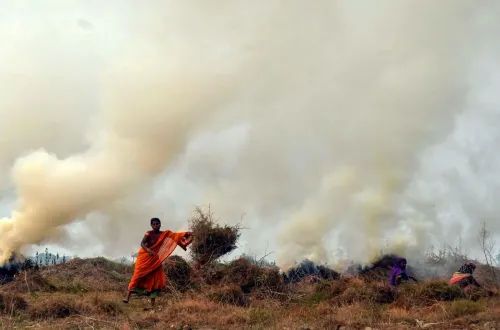
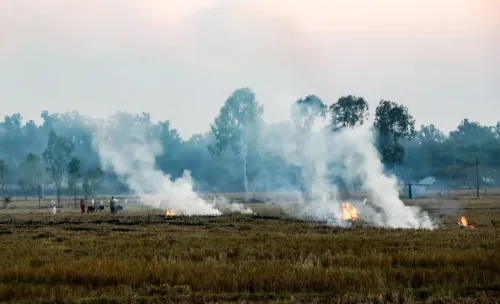
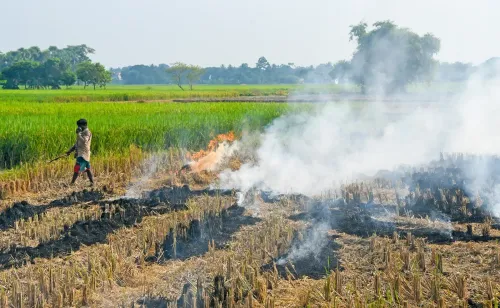
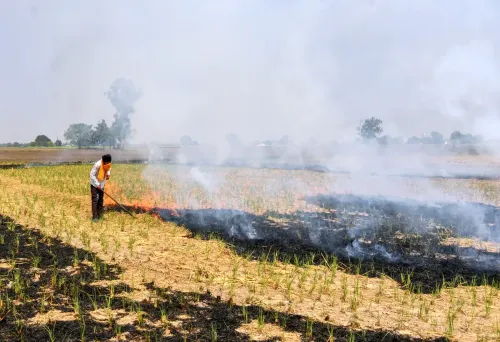
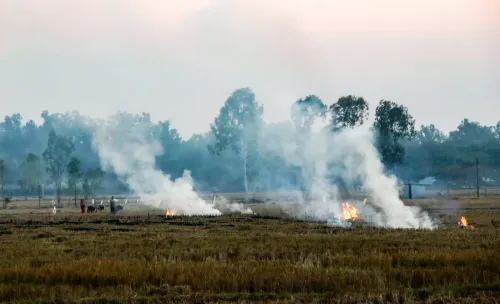
Paddy stubble burning in Punjab and neighbouring Haryana is a leading contributor to the annual air quality crisis that blankets northern India — including New Delhi — in hazardous smog between October and November. Despite years of enforcement, bans, and subsidy schemes for in-situ residue management, farmers cite the high cost of mechanised alternatives and the narrow window between paddy harvest and wheat sowing as drivers of the practice.
This comes amid sustained pressure from the CAQM, which has repeatedly flagged Punjab and Haryana for failing to curb farm fires. The PPCB and district administrations say monitoring and enforcement will continue as the harvesting season approaches its final phase.
Point of View
Prosecution proceedings launched but not pursued to charge sheets, officials named but not suspended. With barely 36 per cent of levied compensation recovered, the financial deterrent is largely notional. The 294 Non-AFL detections — fields where satellite fire alerts missed actual burning — also raise a quiet but important question about how much of the problem the monitoring system is actually capturing. Punjab's stubble-burning season is a recurring public health emergency dressed up as an enforcement challenge; until recovery rates climb and official accountability is enforced beyond paper notices, the annual cycle is unlikely to break.
NationPress
17 Nov 2026
Frequently Asked Questions
How many stubble-burning incidents have been recorded in Punjab this season?
Punjab has recorded 6,433 stubble-burning incidents as of 16 November 2026 , according to the Punjab Pollution Control Board. Authorities confirmed burning at 2,524 locations after inspecting 5,721 fields, with an additional 294 cases found in areas not flagged by satellite fire alerts.
What fines have been imposed for stubble burning in Punjab?
The PPCB has imposed environmental compensation fines totalling ₹1,12,95,000 across 2,252 cases. Of this amount, only ₹40,60,000 — roughly 36 per cent — has been recovered so far.
Which districts in Punjab have the highest stubble-burning cases?
Ferozepur leads with 847 incidents , followed by Sangrur (741) and Tarn Taran (705). Bathinda has registered 591 cases and Patiala accounts for 416 incidents.
What legal action has been taken against farmers and officials?
1,971 cases have been registered under Section 223 of the Bharatiya Nyaya Sanhita, and red entries have been made in 2,066 revenue records. Prosecution proceedings have been initiated against monitoring officials in 35 cases under the CAQM Act, though no charge sheets have been filed and no official has been suspended.
Why does stubble burning persist despite enforcement action?
Farmers cite the narrow window between paddy harvest and wheat sowing, and the high cost of mechanised crop-residue management, as reasons for burning. Critics also point to low fine-recovery rates and the absence of meaningful official accountability as factors that blunt deterrence.