Punjab logs 5,835 stubble burning cases; Patiala leads with 391 incidents
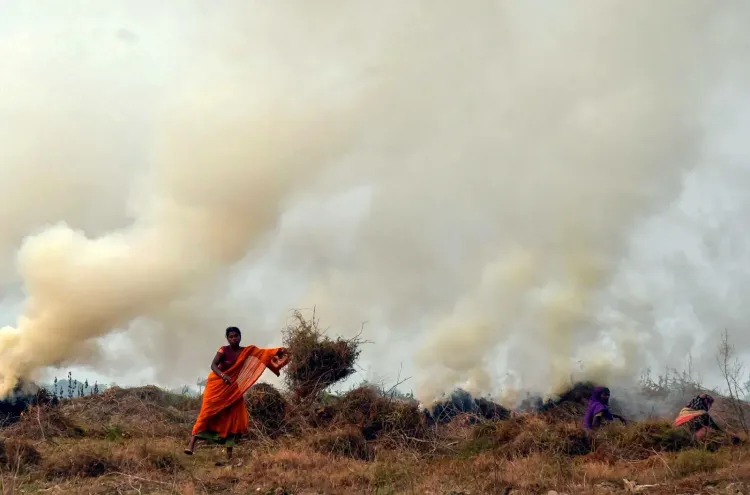
Synopsis
Despite 1,834 FIRs, ₹1.08 crore in fines, and thousands of revenue record flags, Punjab has logged 5,835 stubble burning cases this post-harvest season — with Patiala alone accounting for 391. The numbers expose a stubborn gap between enforcement intent and ground-level deterrence, even as 98 per cent of the paddy crop has already been harvested.
Key Takeaways
Punjab recorded 5,835 stubble burning incidents across 23 districts after the paddy harvest, per a CAQM report dated 15 November 2026 .
Patiala led the state with 391 cases , 215 FIRs , and a total penalty of ₹8.35 lakh — the highest in Punjab.
State-wide Environmental Compensation penalties total ₹1,08,55,000 , of which only ₹40,40,000 (about 37%) has been recovered.
Across Punjab, 1,834 FIRs filed and 'red entries' made in revenue records in 2,015 cases.
Prosecution proceedings initiated against officials in 35 cases statewide; no prosecutions, charge sheets, or suspensions recorded in Patiala so far.
Approximately 98 per cent of Punjab's 32.87 lakh hectares under paddy had been harvested by the reporting date.
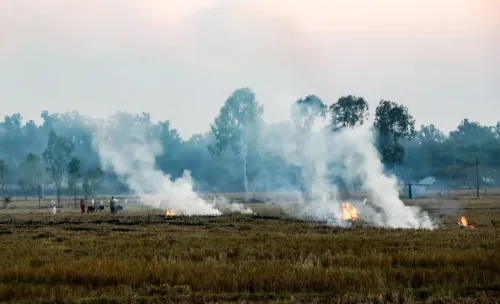
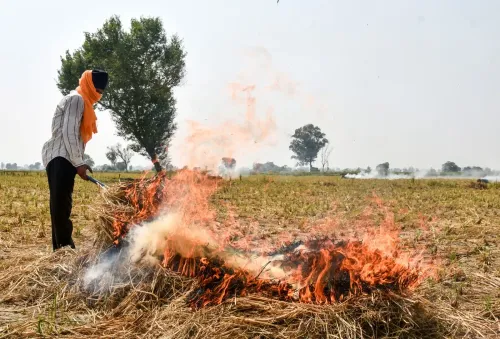
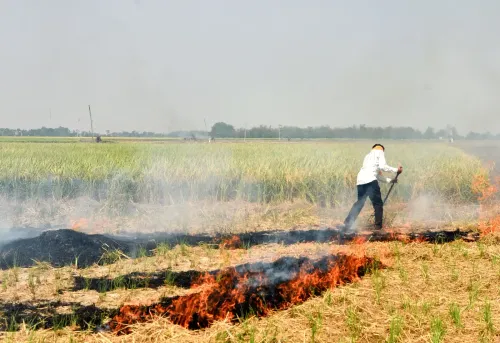
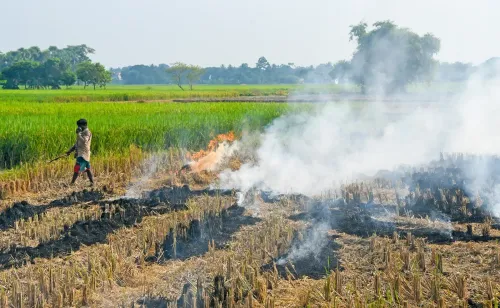
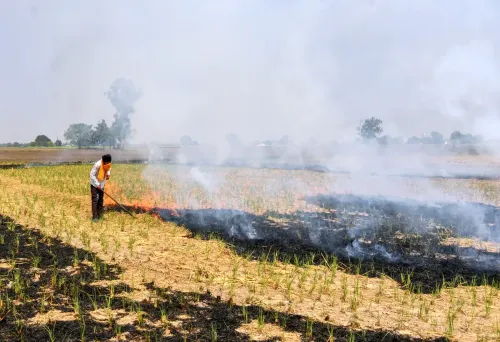
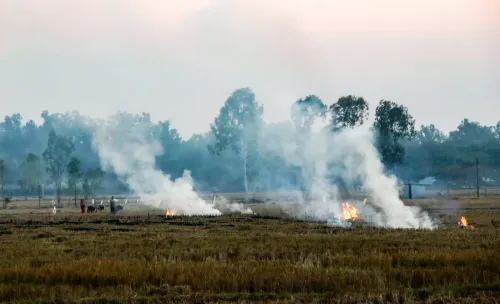
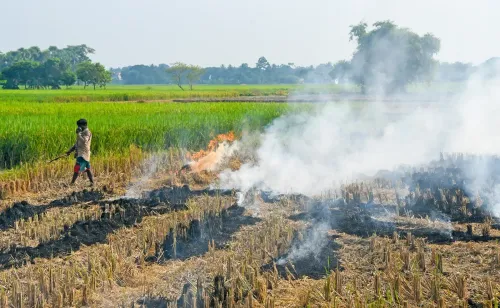
Punjab has recorded 5,835 stubble burning incidents across 23 districts following the paddy harvest season, with Patiala district alone accounting for 391 cases, according to a report released by the Commission for Air Quality Management (CAQM). The data, compiled up to Saturday, 15 November 2026, paints a stark picture of the scale of crop residue burning despite an ongoing enforcement drive across the state.
Scale of Incidents and Field Inspections
Of the 5,835 total incidents reported statewide, field-level inspections were carried out at 5,539 locations. Authorities confirmed crop residue burning at 2,442 of those sites. Punjab's total area under paddy cultivation stands at 32.87 lakh hectares, of which approximately 98 per cent had been harvested by the reporting date — meaning the bulk of fire-risk activity is now concentrated in the post-harvest window.
Notably, this phase of maximum stubble burning coincides with the onset of winter atmospheric inversion, when smoke traps close to the ground and significantly worsens air quality in Punjab, Haryana, and the National Capital Region (NCR).
Patiala: Maximum Fines and FIRs in the State
In Patiala, inspections were conducted at 356 of the 391 reported sites, with crop residue burning confirmed at 225 locations. Environmental Compensation (EC) has been imposed in 166 cases, generating a total penalty of ₹8.35 lakh — the highest in the state — of which ₹3.10 lakh has been recovered so far.
Authorities have registered 215 First Information Reports (FIRs) in the district and recorded 'red entries' in revenue records in 139 cases. Red entries are administrative flags against a farmer's land record, intended to restrict access to subsidies and government schemes, and represent one of the more consequential non-monetary deterrents available to officials.
The district administration has also issued 390 warning and show-cause notices to nodal and supervisory officers. However, the CAQM report noted that no prosecutions, charge sheets, or suspensions of officials had been recorded in Patiala as of the reporting date — a gap that critics argue weakens the deterrent effect of the enforcement framework.
State-Wide Enforcement Action
Across Punjab, Environmental Compensation has been levied in 2,152 cases, with cumulative penalties amounting to ₹1,08,55,000. Of this, only ₹40,40,000 — roughly 37 per cent — has been recovered so far, suggesting a persistent gap between penalties imposed and amounts actually collected.
A total of 1,834 FIRs have been filed across the state, and 'red entries' have been entered in revenue records in 2,015 cases. Prosecution proceedings have been initiated against officials in 35 cases statewide, while 1,607 warning and show-cause notices have been issued to officials at various levels.
Why Stubble Burning Persists Despite Penalties
Stubble burning remains entrenched in Punjab's post-harvest cycle primarily because it is the fastest and cheapest method for farmers to clear fields between the paddy and wheat cropping seasons. Alternative machinery such as the Happy Seeder and Super SMS attachments, which chop and mix residue into the soil, have been subsidised by both the Centre and state governments, but adoption has been uneven. Smaller landholdings and the compressed 20-25-day turnaround between crops limit the time available for mechanised alternatives.
This is not the first year enforcement has struggled to match the scale of the problem. Despite year-on-year increases in penalties and FIRs, incident counts have remained in the thousands annually, underscoring what analysts describe as a structural mismatch between punitive measures and the economic compulsions driving the practice.
What Happens Next
With harvesting nearing completion at 98 per cent of the cultivated area, the volume of fresh burning incidents is expected to taper in the coming days. However, authorities say surveillance will continue as late-harvesting pockets complete operations. The CAQM report indicates that state departments are maintaining strict monitoring across agricultural zones, and further enforcement actions — including possible escalation of prosecution proceedings — are likely before the season closes.
Point of View
Lakh-rupee penalties, revenue record flags — yet stubble burning incidents continue to run into the thousands each season. The recovery rate of barely 37 per cent on imposed fines signals either reluctance or inability to collect, both of which undercut deterrence. More telling is the absence of any prosecution, charge sheet, or official suspension in Patiala despite 391 incidents — a pattern that shifts accountability from farmers to the oversight apparatus itself. Until economic alternatives to burning become genuinely accessible to small and marginal farmers within the tight inter-crop window, enforcement alone is unlikely to move the needle.
NationPress
15 Nov 2026
Frequently Asked Questions
How many stubble burning cases has Punjab recorded this season?
Punjab has recorded 5,835 stubble burning incidents across 23 districts following the paddy harvest, according to a report by the Commission for Air Quality Management (CAQM) covering data up to 15 November 2026. Field inspections confirmed crop residue burning at 2,442 of the 5,539 locations inspected.
Why does Patiala have the highest stubble burning fines in Punjab?
Patiala reported the highest number of incidents in the state at 391 cases , leading to Environmental Compensation being imposed in 166 of those cases and a total penalty of ₹8.35 lakh . The district also recorded the most FIRs — 215 — making it the focal point of the state's enforcement drive this season.
What is a 'red entry' in the context of stubble burning?
A 'red entry' is an administrative flag recorded in a farmer's revenue land record as a punitive measure for stubble burning. It can restrict the farmer's access to government subsidies and schemes, serving as a non-monetary deterrent alongside fines and FIRs. Punjab has recorded 2,015 such entries statewide this season.
How much of the stubble burning penalty has been recovered in Punjab?
Of the cumulative penalty of ₹1,08,55,000 imposed under Environmental Compensation across Punjab, only ₹40,40,000 — roughly 37 per cent — had been recovered as of the reporting date. The low recovery rate raises questions about the effectiveness of financial penalties as a deterrent.
Will stubble burning incidents in Punjab continue to rise?
With approximately 98 per cent of Punjab's 32.87 lakh hectares under paddy already harvested by 15 November 2026, the volume of fresh incidents is expected to taper. However, authorities say surveillance will continue across late-harvesting pockets, and further enforcement action is likely before the season formally closes.