US senators demand probe into military AI failures, cite Iran strike data errors

Synopsis
Three senior US senators have escalated a simmering controversy into a formal demand for investigation, citing two specific incidents — a flawed AI-guided strike in Minab, Iran and an aborted interdiction operation driven by alleged AI hallucination — as evidence that speed-first adoption of AI in US military systems is creating dangerous gaps in accountability. The stakes extend well beyond Washington, touching allied militaries including India's.
Key Takeaways
Senators Mark Warner, Jack Reed, and Chris Coons have written to Defence Secretary Pete Hegseth and Director of National Intelligence Jay Clayton demanding inspector general investigations into reported military AI failures.
One cited incident involves an AI targeting platform allegedly using outdated geospatial data during a US kinetic strike in Minab, Iran .
A second incident involves an aborted interdiction operation after AI-generated false intelligence was distributed by US Special Operations Command Pacific .
The senators flagged alleged Pentagon pressure on an unnamed leading US AI company that resisted its technology being used in fully autonomous lethal operations.
They criticised the revocation of National Security Memorandum 25 and called the administration's AI governance approach a dangerous 'Move Fast and Break Things' mindset.
The senators called for public disclosure of investigation findings and a review of whether other undisclosed AI failures have occurred.
Three senior US senators have formally demanded investigations into reported artificial intelligence failures in American military and intelligence operations, warning that unreliable data and AI-generated falsehoods risk causing lethal operational mistakes. The demand, directed at Defence Secretary Pete Hegseth and Director of National Intelligence Jay Clayton, calls for inspectors general to be granted unrestricted access to examine the reported incidents.
What the Senators Alleged
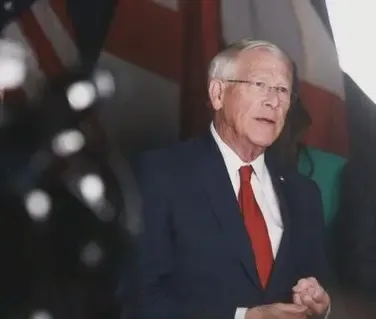
Senator Mark Warner, the senior Democrat on the Senate Intelligence Committee, Senator Jack Reed, ranking member of the Senate Armed Services Committee, and Senator Chris Coons, who leads Democrats on the Senate Appropriations defence subcommittee, co-signed the letter. They cited two specific public reports that, they argued, illustrate a dangerous pattern in the deployment of AI within military systems.
The first concerned an AI targeting platform that allegedly relied on outdated geospatial data during a US kinetic strike in Minab, Iran. The second involved an aborted military interdiction operation, reportedly halted after AI-generated false information — described as a potential 'hallucination' — was included in intelligence disseminated by US Special Operations Command Pacific. The senators noted that the reported failures have not been independently established in material released by them, and they provided no further operational details.
Key Concerns Raised
In their letter, the senators warned that 'AI targeting platforms have repeatedly generated spurious outputs based on outdated input data or outright hallucination,' a pattern they said risks serious operational error. They argued that such failures could undermine confidence 'in the accuracy and reliability of US intelligence and intelligence-informed kinetic actions.'
They also flagged what they described as Pentagon pressure on a leading American AI company that had reportedly resisted allowing its technology to be used in fully autonomous lethal operations. The company was not identified. Critics argue this backdrop makes transparent oversight all the more urgent.
Governance vs Speed: The Core Dispute
The senators criticised the current administration's revocation of National Security Memorandum 25 and a Department of Defense strategy which, they contend, treats governance requirements as obstacles to faster AI adoption. They described the approach as akin to a 'Move Fast and Break Things' mindset — suited, they wrote, to social media platforms but dangerously misaligned with military operations. This criticism reflects a broader tension in Washington over how rapidly AI should be integrated into national security infrastructure without adequate guardrails.
Notably, this comes amid a wider global debate over autonomous weapons systems. Several allied governments have pushed for international norms on AI in warfare, while the US military has continued to expand AI use in surveillance, pattern recognition, and operational decision support.
Implications for India and Allied Partners
The controversy carries direct relevance for India and other American defence partners, as militaries deepen cooperation in intelligence-sharing, surveillance, and emerging technologies. If AI-generated assessments cannot be independently verified before influencing military action, confidence in shared intelligence systems could erode. For India — which has progressively integrated defence and intelligence frameworks with the US under various bilateral arrangements — the reliability of American AI systems is not merely an academic concern.
What Comes Next
The senators have called for immediate investigations by relevant inspectors general, broader public disclosure of findings, and a review of whether other significant AI-related targeting failures occurred without public disclosure. Whether Hegseth or Clayton will comply — and to what extent — remains to be seen. The outcome could shape how the US military balances innovation speed against accountability standards across its AI programmes.
Point of View
Not confirmed — yet its political weight is considerable, given the seniority of the signatories across intelligence, armed services, and defence appropriations. What the letter exposes is less a scandal than a structural fault line: the US military's AI adoption has outpaced its accountability architecture, and revoking National Security Memorandum 25 has removed one of the few governance guardrails in place. The unnamed AI company's reported resistance to fully autonomous lethal operations is the detail most likely to receive little mainstream attention but carries the greatest long-term consequence — it suggests that even commercial AI developers are more cautious about autonomous kill-chain integration than the Pentagon. For India, as a growing partner in intelligence and defence technology cooperation, the credibility of shared AI-enabled systems is not a peripheral concern.
NationPress
22 Sept 2026
Frequently Asked Questions
What AI failures are US senators investigating in the military?
The senators cited two reported incidents: an AI targeting platform allegedly using outdated geospatial data during a US kinetic strike in Minab, Iran, and an aborted military interdiction operation after AI-generated false intelligence was distributed by US Special Operations Command Pacific. Both incidents have not been independently verified in the material released by the senators.
Who are the senators demanding the investigation?
The letter was co-signed by Senators Mark Warner (senior Democrat, Senate Intelligence Committee), Jack Reed (ranking member, Senate Armed Services Committee), and Chris Coons (leading Democrat, Senate Appropriations defence subcommittee). It was addressed to Defence Secretary Pete Hegseth and Director of National Intelligence Jay Clayton.
What is AI hallucination in a military context?
AI hallucination refers to instances where an AI system generates false or fabricated outputs — in a military intelligence context, this could mean producing inaccurate target data, false threat assessments, or misleading operational information. The senators warned that such outputs, if included in disseminated intelligence, risk triggering real-world military actions based on fictitious information.
Why did senators criticise the revocation of National Security Memorandum 25?
National Security Memorandum 25 contained governance requirements for AI use in national security contexts. The senators argued its revocation, combined with a Pentagon strategy that treats oversight as an obstacle, reflects a dangerous 'Move Fast and Break Things' approach ill-suited to military operations where errors can cost lives.
What does the US military AI controversy mean for India?
India is a growing defence and intelligence partner of the United States, with expanding cooperation in surveillance and emerging technologies. If American AI-enabled intelligence systems cannot be independently verified before influencing military action, the reliability of shared assessments becomes a direct concern for Indian defence planners relying on interoperability with US systems.