Cuba accuses US of pressuring govts to cut healthcare, fuel ties
Synopsis
Cuba's Deputy Foreign Minister says Washington is running a coordinated global campaign to kill Cuba's overseas healthcare programmes and enforce its fuel ban — while Trump cryptically told a North Dakota crowd that Cuba is 'coming our way.' The two signals contradict each other sharply, and neither comes with an explanation.
Key Takeaways
Cuban Deputy Foreign Minister Carlos Fernandez de Cossio accused the US of pressuring governments worldwide to end bilateral healthcare deals with Cuba .
The US is also reportedly pushing nations to drop their traditional opposition to the American economic blockade at the UN .
Cuba has received just one oil tanker in the past six months ; it needs roughly eight per month to operate normally.
President Donald Trump said Cuba is 'coming our way' at a North Dakota event on Wednesday but offered no policy details.
Cuban authorities have characterised Washington's energy restrictions as an act of genocide and collective punishment causing daily blackouts and shortages.
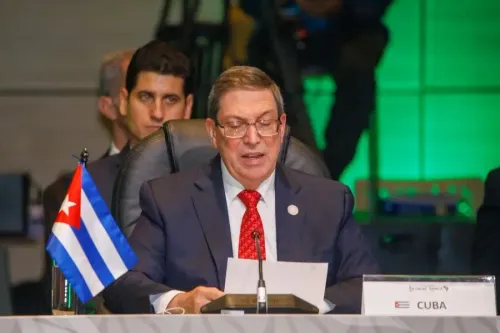
Cuban Deputy Foreign Minister Carlos Fernandez de Cossio has accused the United States of systematically pressuring governments worldwide to terminate bilateral healthcare agreements with Cuba, warning that the campaign has already deprived numerous communities of essential medical services. The remarks, shared on Facebook, come amid a broader escalation of Washington's economic pressure on the island nation.
Healthcare Programs Under Threat
According to Fernandez de Cossio, the US-led effort to dismantle Cuba's overseas healthcare partnerships has had a direct humanitarian cost. “To deprive many communities of access to health services,” he wrote, describing the consequence of governments yielding to Washington's pressure. Cuba operates bilateral medical programmes across Latin America, Africa, and parts of Asia, deploying thousands of doctors abroad — a cornerstone of its foreign policy for decades.
Energy Blockade and Its Consequences
Beyond healthcare, Fernandez de Cossio alleged that the US is successfully compelling other governments to enforce Washington's fuel export ban against Cuba. He also claimed the US is pressuring nations to abandon their traditional opposition to the American economic blockade at the United Nations — and in some cases, to refuse even to discuss the matter in that forum.
Cuban authorities have repeatedly characterised Washington's energy restrictions as an act of genocide and a form of collective punishment. The practical fallout has been severe: extended daily blackouts, transportation shortages, and widespread obstacles to economic activity across the island.
Over the past six months, Cuba — which is heavily dependent on fuel imports — has received just one oil tanker, the Russian vessel Anatoly Kolodkin, carrying approximately 100,000 tonnes of crude oil. According to official Cuban sources, the country requires roughly eight fuel tankers per month to function at normal capacity, making the current supply level a fraction of what is needed.
Trump's Cryptic Cuba Remark
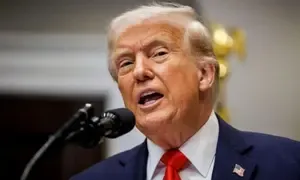
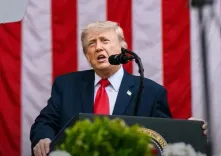
Against this backdrop of mounting pressure, US President Donald Trump made an unexplained comment suggesting a possible shift in American policy toward Cuba. Speaking at the dedication of the Theodore Roosevelt Presidential Library in Medora, North Dakota, on Wednesday, Trump said: “Speaking of Cuba, after many, many decades, it’s coming our way, coming our way.”
The remark came during a broader discussion of Theodore Roosevelt's foreign policy legacy, including US influence in the Western Hemisphere, the construction of the Panama Canal, and the outcome of the Spanish-American War. Trump noted that following that conflict, Spain “relinquish(ed) their grip on Cuba and Guam, the Philippines and Puerto Rico” — before appending his brief, unelaborated reference to Cuba.
The President offered no policy specifics and made no formal announcement. The White House has not followed up with any clarification on what the remark was intended to signal.
Wider Context: A Decades-Long Standoff
The US economic blockade on Cuba has been in place for over six decades, surviving multiple administrations and repeatedly drawing condemnation at the UN General Assembly, where resolutions calling for its end have historically passed by overwhelming margins. Cuba's argument that the blockade constitutes collective punishment has found support among a broad coalition of nations — a coalition that, according to Fernandez de Cossio, Washington is now actively working to erode.
Whether Trump's comment foreshadows a genuine policy recalibration or was simply rhetorical remains unclear. Given the simultaneous pressure campaign described by Cuban officials, the two signals point in contradictory directions — and the world will be watching which one, if either, translates into action.
Point of View
Or there is a back-channel dynamic that neither government is disclosing. The fuel situation, meanwhile, is a genuine humanitarian crisis: one tanker in six months against a stated need of eight per month is not a squeeze, it is near-strangulation. Mainstream coverage has focused on Trump's quip; the more consequential detail is the systematic dismantling of Cuba's medical diplomacy network, which affects patient communities far beyond the island itself.
NationPress
3 Jul 2026
Frequently Asked Questions
What did Cuba's Deputy Foreign Minister say about US pressure?
Carlos Fernandez de Cossio said the US is pressuring governments globally to end bilateral healthcare agreements with Cuba and to comply with Washington's fuel export ban. He also alleged the US is pushing nations to abandon their opposition to the American economic blockade at the UN .
How severe is Cuba's fuel shortage?
Cuba has received only one oil tanker — the Russian vessel Anatoly Kolodkin , carrying approximately 100,000 tonnes of crude — over the past six months . Official Cuban sources say the country needs about eight tankers per month to operate normally, making the current supply critically low.
What did Trump say about Cuba and what does it mean?
President Donald Trump said Cuba is 'coming our way' at the Theodore Roosevelt Presidential Library dedication in Medora, North Dakota on Wednesday, but offered no elaboration or policy announcement. The White House has not clarified what the remark was intended to signal.
How has Cuba described the US economic blockade?
Cuban authorities have repeatedly characterised Washington's energy restrictions as an act of genocide and a form of collective punishment. The practical consequences include extended daily blackouts, transportation shortages, and widespread obstacles to economic activity across the island.
What is Cuba's bilateral healthcare programme?
Cuba deploys thousands of doctors and medical personnel abroad under bilateral agreements with countries in Latin America , Africa , and parts of Asia — a long-standing pillar of its foreign policy. According to Fernandez de Cossio , US pressure to end these programmes has already deprived communities in several countries of access to health services.