Is the US Resuming Talks on Regime Change in Venezuela and Iran?
Click to start listening
Synopsis
Explore the renewed discussions among US lawmakers regarding potential regime change in Venezuela and Iran. As frustrations grow over previous strategies, influential figures weigh in on the implications for US foreign policy. Can these talks lead to meaningful change, or are they merely rhetorical?
Key Takeaways
- U.S. lawmakers are re-engaging in discussions about regime change in Venezuela and Iran.
- Frustration over previous strategies has prompted renewed rhetoric.
- Support for Iranian protesters is linked to U.S. national security interests.
- Sanctions have had severe impacts on civilian populations in Venezuela.
- Experts warn that regime change might not be achievable through sanctions alone.
Washington, Jan 19 (NationPress) Prominent US lawmakers, former officials, and foreign policy analysts have begun to openly debate the prospect of political change in Venezuela and Iran, bringing back the discourse on regime change that the US has tried to avoid in recent years.
This shift in tone highlights frustration with pressure tactics that have not yielded tangible outcomes, even as both nations continue to face unrest and economic hardship.
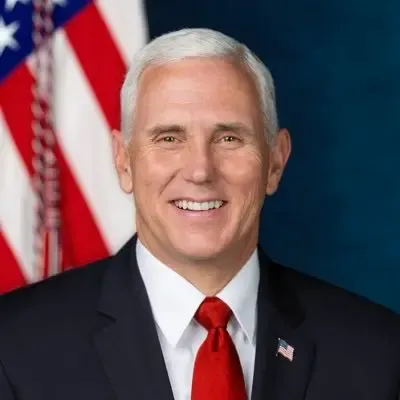
On CNN’s State of the Union, former Vice President Mike Pence characterized Iran as “the foremost state sponsor of terror globally,” asserting that fostering change in Tehran aligns with America’s interests. While he connected support for Iranian protesters to US national security, he did not provide a specific strategy for achieving regime change.
Defending the previous administration’s strategies regarding Venezuela, Pence claimed that sanctions and recognizing the opposition had diminished the power of President Nicolás Maduro. Nevertheless, he conceded that the political shift has stagnated and emphasized that restoring democracy through elections remains the goal.
Speaking on CBS’s Face the Nation, Senator Mark Warner, the leading Democrat on the Senate Intelligence Committee, pointed out that years of sanctions have not succeeded in removing Maduro while severely impacting civilians. He cautioned that the frequent mention of regime change could inadvertently aid US adversaries, particularly Russia and China, who benefit from instability in global affairs.
Warner also warned that exaggerated rhetoric may undermine US credibility, insisting that pressure campaigns require achievable objectives and defined boundaries.
Responding to a question on CBS, Congressman Mike Turner of Ohio, a key member of the House Intelligence Committee, acknowledged the US interest in Venezuela's future but highlighted Washington's limited influence. He cautioned against raising expectations that sanctions alone could bring about regime change.
In a conversation on NBC’s Meet the Press, Senator Rand Paul from Kentucky raised concerns about unilateral executive action, noting that the Constitution assigns war-making authority to Congress. Senator Tim Kaine, a Democrat from Virginia, supported this perspective, stating that escalating coercive measures without congressional consent would repeat past US errors.
On CNN’s Fareed Zakaria GPS, a robust debate unfolded between Richard Haass, president emeritus of the Council on Foreign Relations and a former senior State Department official, and Anne-Marie Slaughter, CEO of New America and a former policy planning director at the State Department.
When discussing Venezuela, Haass contended that the US is not pursuing traditional regime change. Instead, he framed the current situation as a limited leadership transition that maintains the broader political framework. He argued that Washington has effectively settled for a pragmatic relationship focused on oil access and minimal engagement, rather than striving for democratic reform.
Slaughter remarked that outright regime change in Venezuela is politically unfeasible. She noted that US rhetoric suggests a preference for “friendly governments” over genuine democratic outcomes, cautioning that public statements often exceed Washington's capacity to influence events on the ground.
Haass was particularly pointed when the discussion shifted to Iran. He asserted that encouraging protests without a plan is reckless and endangers civilians. He emphasized that Iran is not on the brink of collapse and that US claims to the contrary misinterpret the regime's resilience and the loyalty of its security forces. He stated that the US “cannot instigate regime change or similar actions from abroad.”
This viewpoint was echoed by Narges Bajoghli, a professor at Johns Hopkins University and an expert on Iranian society, who later appeared on the same show. Bajoghli noted that while Iranians are deeply frustrated with economic and political conditions, protests have faced violent suppression. She cautioned that there is no unified opposition capable of overthrowing the regime and warned against assuming a repeat of the 1979 revolution.
Point of View
It’s crucial to analyze the discourse surrounding regime change in Venezuela and Iran without bias. While these discussions reflect a growing frustration with existing policies, it's essential to consider the complexity of international relations and the potential repercussions of such rhetoric. The U.S. must navigate these waters carefully, balancing its interests with the realities on the ground.
NationPress
19/01/2026
Frequently Asked Questions
What is the current political situation in Venezuela?
Venezuela faces ongoing economic turmoil and political unrest, largely attributed to the Maduro regime's policies, with various international sanctions in place.
How does the U.S. view Iran's government?
The U.S. government frequently labels Iran as a leading state sponsor of terrorism, emphasizing concerns over its nuclear program and regional influence.
What are the implications of U.S. sanctions?
U.S. sanctions aim to weaken targeted regimes, but they also significantly affect civilian populations, often leading to humanitarian crises.
Who are the key figures in the U.S. discussions about regime change?
Prominent figures include former Vice President Mike Pence, Senator Mark Warner, and influential foreign policy analysts like Richard Haass.
Is regime change a feasible option for the U.S.?
Experts suggest that outright regime change is politically unrealistic and that any U.S. strategy must consider the complexities of local dynamics.