Is Pragmatic India Redefining Balance in Global Politics?
Synopsis
As the global landscape evolves, India is strategically hedging its relationships with the US and China. CNN's Fareed Zakaria highlights this shift, emphasizing India's role in shaping a multipolar world driven by pragmatism rather than ideology. Discover the implications for India's global stance and the emerging trends in international relations.
Key Takeaways
India is hedging rather than aligning firmly with the US.
China's trade influence is growing as US exports decline.
India maintains trade relationships with both the US and China.
Public support for US-led alliances is waning in emerging powers.
Strategic autonomy is crucial for India’s diplomatic posture.
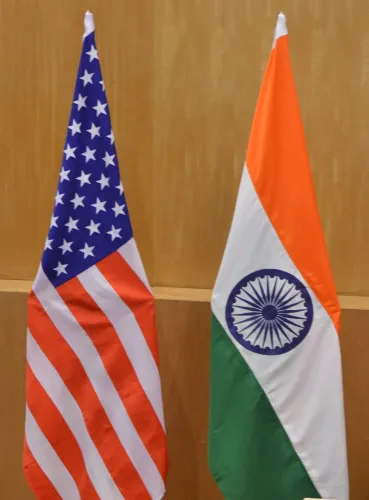
Washington, Jan 19 (NationPress) According to CNN host Fareed Zakaria, India is increasingly adopting a hedging strategy rather than firmly aligning itself with the United States as China expands its global trade influence and confidence in US leadership diminishes. He highlighted data and opinion polls that indicate a broader global recalibration.
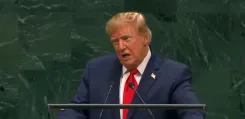
On the show Fareed Zakaria GPS, Zakaria explained that this shift is not about nations endorsing Beijing’s political framework but rather about minimizing exposure to Washington’s unpredictability. He emphasized that India is among the significant powers opting for flexibility over steadfast allegiance.
“The global landscape is no longer being constructed upon an American foundation,” Zakaria stated. “It is evolving around it.”
Zakaria, a prominent American journalist and foreign policy analyst, pointed to trade patterns as evidence for why nations like India are hedging. He noted that while China’s exports to the United States have seen a steep decline, its overall exports continue to rise as Beijing reorients trade toward Asia, Europe, Latin America, and Africa.
By 2025, China’s trade surplus is projected to reach nearly $1.2 trillion, highlighting its capacity to withstand tariffs by diversifying its markets. Zakaria argued that this resilience complicates Washington’s attempts to economically isolate China.
For India, the statistics are crucial. New Delhi has broadened trade with both the US and China while resisting pressure to commit to any one bloc. Zakaria indicated that this strategy reflects a calculated decision rather than mere indecision.
He referenced polling data from the European Council on Foreign Relations, revealing a decrease in support for joining a US-led alliance across key emerging powers, including India, Brazil, and South Africa. In India’s instance, he mentioned that the drop reflects skepticism regarding American reliability, not an endorsement of China.
Zakaria noted that nations are hedging due to recent actions by the US that have unsettled its allies. He cited the imposition of tariffs against partners and a more transactional approach to alliances as factors that are eroding trust.
India remains cautious of China’s regional ambitions, particularly along its borders. Meanwhile, New Delhi is preserving its strategic autonomy—enhancing cooperation with Washington while keeping economic and diplomatic avenues open.
This trend extends beyond Asia. Zakaria observed that many European nations now regard the United States as an important partner rather than a reliable ally, even as they stabilize relationships with China and increase trade engagements with Southeast Asia and Latin America.
He argued that China has taken this opportunity to establish a more resilient economic framework.
Despite this, Zakaria acknowledged that the United States still possesses significant advantages, including advanced technology, capital, and a vast network of allies. In theory, these strengths could serve as a stable counterbalance to China.
However, in practice, he contended that Washington is retreating from that role. “For generations, the global order was founded on an American platform,” he said. “That platform still exists, but the world is no longer constructing upon it.”
For India, the consequences are immediate. As the rivalry between the US and China escalates, New Delhi is positioning itself to leverage both relationships while steering clear of permanent commitments—an approach Zakaria described as increasingly prevalent among nations in the Global South.
The outcome, he stated, is a swift transition towards a multipolar world driven less by ideology and more by pragmatism, with India playing a pivotal role in shaping that equilibrium rather than taking sides.
Point of View
India’s pragmatic approach illustrates a calculated strategy to maintain autonomy and leverage its relationships with both the United States and China. This perspective aligns with the nation’s long-term interests and reflects a broader trend among emerging powers.
NationPress
22 Sept 2026
Frequently Asked Questions
Why is India choosing to hedge its relationships?
India is adopting a hedging strategy to minimize exposure to the unpredictability of US leadership while maintaining trade relations with both the US and China.
What does Fareed Zakaria mean by a multipolar world?
A multipolar world refers to a global order where multiple countries hold significant power, allowing for a balance that is less ideologically driven and more pragmatic.
How is China adapting its trade strategies?
China is redirecting its trade towards Asia, Europe, Latin America, and Africa, resulting in a growing trade surplus despite declining exports to the US.
What is the significance of India's strategic autonomy?
Strategic autonomy allows India to deepen its cooperation with the US while keeping diplomatic and economic options open, ensuring flexibility in international relations.
What are the implications of recent polling data on US-led blocs?
Polling indicates a decline in support for joining US-led blocs among key emerging powers, reflecting skepticism towards American reliability rather than an endorsement of China.