Quad central to US Indo-Pacific strategy, says Trump administration
Synopsis
The Trump administration has explicitly reaffirmed the Quad as a cornerstone of its Indo-Pacific strategy — not just a talking point. With Secretary Rubio's New Delhi vision now being operationalised across critical minerals, maritime security, and emerging tech, and Vietnam being courted to anchor a China-free supply chain, Washington is moving from doctrine to architecture.
Key Takeaways
Assistant Secretary Michael G.
DeSombre testified before the House Foreign Affairs Subcommittee on 26 June , calling the Indo-Pacific 'vital' to US interests.
The Trump administration is deepening Quad cooperation with India , Japan , and Australia across critical minerals, maritime security, and emerging technologies.
Washington reaffirmed its Taiwan policy is unchanged, guided by the Taiwan Relations Act and six assurances.
Chinese activities in the South China Sea were described as of 'utmost concern'; the US is working to ensure deterrence along the first island chain.
Vietnam has been identified as a key partner to build a critical mineral supply chain that bypasses China .
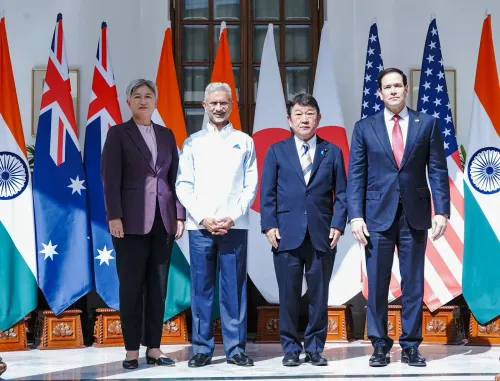
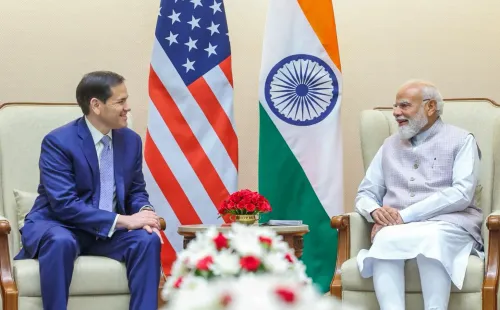
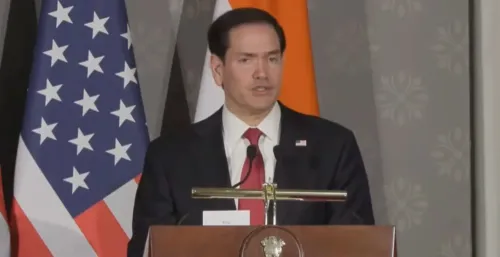
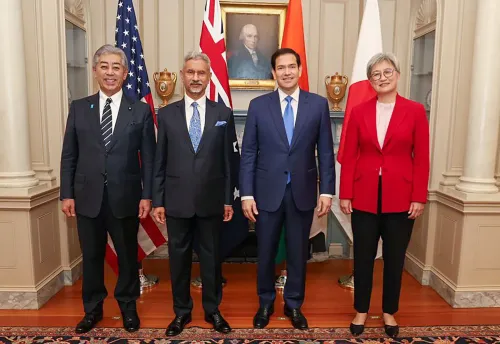
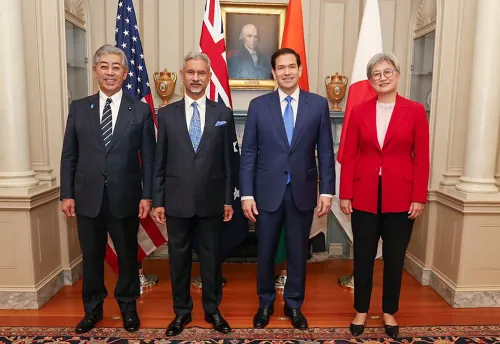
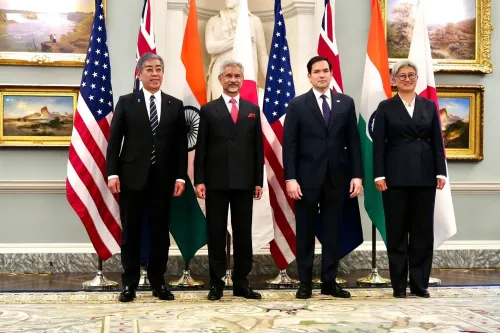
Secretary of State Marco Rubio 's vision from the New Delhi Quad meeting is now being implemented across five priority areas.
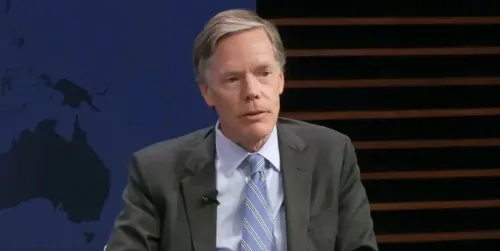
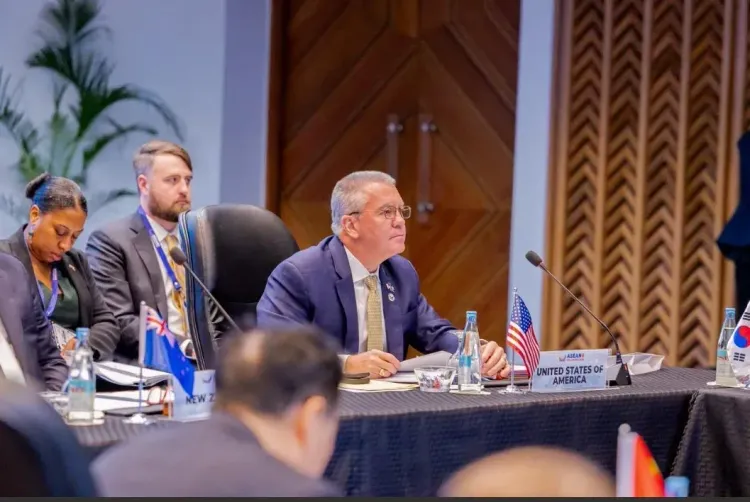
Michael G. DeSombre, Assistant Secretary of State for East Asian and Pacific Affairs, told the House Foreign Affairs Subcommittee on East Asia and the Pacific on 26 June that the Trump administration is deepening cooperation with India through the Quad and actively working to diversify critical mineral supply chains away from China as core pillars of its America First Indo-Pacific strategy. DeSombre described the region as being of 'vital strategic importance' to the United States, signalling continuity of strategic intent even as the administration reframes its foreign policy posture.
Key Commitments on the Indo-Pacific
'Our commitment to a free and open Indo-Pacific is unwavering,' DeSombre told lawmakers. He outlined Washington's approach as one rooted in 'strengthening alliances and deepening relations with the Quad and trilateral cooperation with Japan, the Republic of Korea and the Philippines, and through our key partnerships such as AUKUS.'
DeSombre said the administration was focused on preserving peace across the Taiwan Strait, protecting freedom of navigation, strengthening maritime law enforcement, and reducing dependence on China for critical minerals. On Taiwan, he was explicit: 'Our long standing policy on Taiwan has not changed,' adding that it remained guided by the Taiwan Relations Act, the three joint communiques, and the six assurances.
India's Role in the Quad
Ranking Member Ami Bera underlined India's centrality in the grouping, saying the country played a 'critical role' in the region through the Quad — the four-nation security dialogue comprising the United States, Japan, Australia, and India. DeSombre said Washington was advancing new cooperation within the Quad, implementing a vision laid out by Secretary of State Marco Rubio and his Quad counterparts in New Delhi across 'critical minerals, maritime security, infrastructure development, energy security and emerging technologies.'
China Concerns: South China Sea and Rare Earths
Subcommittee chair Representative Young Kim said the United States must work with allies to defend freedom of navigation and uphold international law in the South China Sea, accusing Beijing of attempting to dominate international waters beyond the Taiwan question. DeSombre described Chinese activities in the South China Sea as of 'utmost concern,' adding that Washington was working with allies along the first island chain to ensure deterrence and maintain stability.
Representative Joaquin Castro raised concerns about China's coercive use of rare earth minerals against Japan and other countries. DeSombre said Washington was 'laser focused' on removing that dependency from the United States and its allies.
Critical Minerals and Vietnam's Emerging Role
DeSombre highlighted Vietnam as a country with significant mineral resources, noting that many deposits remain unmapped. He said the United States hoped to assist Vietnam in identifying its critical mineral reserves and integrating it into a supply chain 'that doesn't run through China.' This comes amid broader US efforts to build a parallel critical minerals ecosystem spanning allied and partner nations across Asia and beyond.
Notably, this hearing reflects the third consecutive congressional review of Indo-Pacific strategy since the start of the Trump administration's second term, underscoring sustained legislative attention on China competition. With Quad ministerial-level coordination already underway and critical mineral diplomacy accelerating, the next visible milestone will be the formal Quad Leaders' Summit expected later this year.
Point of View
Not just what it declares. The Rubio-led Quad meeting in New Delhi has produced a working agenda — critical minerals, maritime security, infrastructure, energy, and emerging tech — which is more concrete than the grouping has historically delivered. The Vietnam angle is the sharpest signal: Washington is actively trying to build a China-bypass supply chain in Southeast Asia, not merely criticise Beijing's dominance. The real question is whether US partners, particularly India, can absorb the pace of coordination being demanded across so many simultaneous tracks without the bureaucratic bandwidth to match the ambition.
NationPress
26 Jun 2026
Frequently Asked Questions
What did the Trump administration say about the Quad on 26 June 2025?
The Trump administration reaffirmed the Quad as central to its Indo-Pacific strategy, with Assistant Secretary DeSombre telling Congress that Washington is advancing new cooperation with India, Japan, and Australia across critical minerals, maritime security, infrastructure, energy security, and emerging technologies.
What is the US position on Taiwan?
DeSombre stated that US policy on Taiwan 'has not changed,' reaffirming it is guided by the Taiwan Relations Act, the three joint communiques, and the six assurances. Washington said it remains committed to preserving peace across the Taiwan Strait.
Why is the US concerned about China's control of critical minerals?
China has previously used its dominance of rare earth and critical mineral supply chains coercively against countries like Japan. The US is working with allies to diversify sourcing and build alternative supply chains that do not run through China, with Vietnam identified as a key potential partner.
What role does India play in the Quad?
Ranking Member Ami Bera described India as playing a 'critical role' in the Indo-Pacific through the Quad. The US is implementing a cooperative agenda with India and other Quad members based on a vision set out by Secretary of State Marco Rubio and his counterparts at a meeting in New Delhi.
What is the US strategy in the South China Sea?
The US views Chinese activities in the South China Sea as of 'utmost concern' and is working with allies to defend freedom of navigation, uphold international law, and maintain deterrence along the first island chain, according to DeSombre's congressional testimony.