PAID OFF Act: US Senate advances bill to curb foreign lobbying by China, Russia
Synopsis
For the first time in nearly three decades, the US Senate is moving to overhaul the Foreign Agents Registration Act — and China, Russia, Iran, North Korea, and Cuba are explicitly in the crosshairs. The PAID OFF Act, backed by both parties, would force agents of these governments to register publicly, closing loopholes that lawmakers say have allowed covert influence campaigns to quietly shape American policy.
Key Takeaways
The PAID OFF Act cleared the Senate Foreign Relations Committee on 23 June with bipartisan support.
The bill would amend FARA to require mandatory registration for agents of China, Russia, Iran, North Korea, and Cuba .
FARA has not been substantially updated since the 1990s , according to the bill's sponsors.
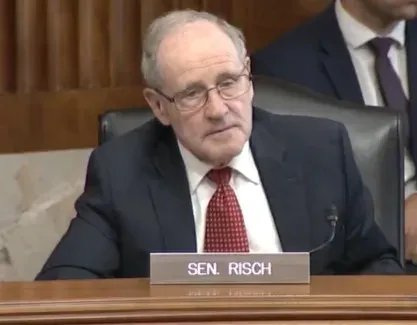
Committee Chairman Jim Risch cited Russia's Nord Stream 2 lobbying and Hikvision's sanctions evasion as examples of exploited loopholes.
The measure includes a five-year sunset clause and gives the US Secretary of State power to recommend changes to the countries-of-concern list.
The bill must clear a full Senate vote and the House before becoming law.
A bipartisan bill designed to close longstanding loopholes in US foreign lobbying law cleared the Senate Foreign Relations Committee on 23 June, marking a significant step toward tightening oversight of influence operations linked to adversaries including China, Russia, and Iran. The legislation — formally titled the Preventing Adversary Influence, Disinformation and Obscured Foreign Financing (PAID OFF) Act — would overhaul key provisions of the Foreign Agents Registration Act (FARA) and mandate broader disclosure from individuals and entities acting on behalf of designated foreign governments and their commercial arms.
What the PAID OFF Act Would Change
According to the bill's sponsors, FARA has not been substantially updated since the 1990s and has struggled to keep pace with modern influence campaigns. Current exemptions allow certain foreign-linked agents to sidestep registration by invoking commercial activity, domestic interest, or Lobbying Disclosure Act carve-outs.
Under the proposed legislation, agents working on behalf of the governments of China, Russia, Iran, North Korea, or Cuba — as well as related commercial entities — would be required to register under FARA. The measure would expire after five years unless renewed by Congress. It also creates a mechanism allowing the US Secretary of State to recommend additions or removals from the designated list of countries of concern, subject to congressional approval through a joint resolution.
What Committee Leaders Said
Senate Foreign Relations Committee Chairman Jim Risch, announcing the panel's approval, said foreign adversaries had exploited weaknesses in US lobbying law for years. He cited Russia's efforts to prevent sanctions against its Nord Stream 2 pipeline and Chinese surveillance firm Hikvision's attempts to avoid sanctions as concrete examples.
'For years, the United States' biggest adversaries have exploited loopholes in US lobbying laws to influence senior government officials and advance their geopolitical goals,' Risch said. 'This provision will close key loopholes to ensure transparency and accountability of malign foreign lobbying efforts in the United States.'
Senator John Cornyn, one of the bill's lead sponsors, framed the measure as a safeguard for American policymaking. 'American policy should not in any way reflect the handiwork of foreign adversaries who are actively working to tip the scales in their favor and undermine our interests,' he said. 'By exposing the efforts of countries of concern like China or Russia to exert malign influence, this legislation would better safeguard US decision making.'
Bipartisan Support Across the Committee
Senator Sheldon Whitehouse warned that when foreign adversaries exploit loopholes to lobby Congress, 'they directly threaten our democracy.' Senator Thom Tillis stated that 'foreign adversaries like China and Russia should never be allowed to covertly influence American policy or public opinion.'
Senator Chuck Grassley argued that Americans deserved full transparency on foreign government attempts to shape domestic policy debates. Senator Peter Welch linked the issue to declining public trust in institutions, contending that foreign adversaries had worsened the problem by exploiting gaps in existing lobbying law. Senator John Kennedy said foreign agents working for adversaries like China and Iran 'shouldn't be able to hide in the shadows while they try to bend American policy to their will.'
Context and What Comes Next
The bill's committee passage reflects a rare moment of bipartisan consensus in a deeply divided Senate, underscoring the degree to which foreign influence operations have become a cross-party concern. This comes amid a broader push in Washington to harden defences against foreign interference following documented influence campaigns tied to multiple US election cycles.
The PAID OFF Act must now advance to a full Senate vote before it can be sent to the House. If enacted, it would represent the most significant update to FARA's enforcement architecture in roughly three decades. Analysts note that the five-year sunset clause and the Secretary of State's role in managing the countries-of-concern list will likely face scrutiny during floor debate.
Point of View
But the harder test lies ahead on the Senate floor and in the House, where commercial lobbying interests — including those with ties to the very countries named in the bill — have historically diluted reform efforts. The five-year sunset clause is a telling hedge: lawmakers are not yet confident enough to make these changes permanent. More fundamentally, FARA's weakness has never been just a drafting problem — enforcement has been chronically under-resourced at the Justice Department. Without a parallel commitment to investigative capacity, tighter registration rules risk becoming a paper tiger that adversaries learn to navigate just as they did the last version.
NationPress
23 Jun 2026
Frequently Asked Questions
What is the PAID OFF Act?
The PAID OFF Act — short for Preventing Adversary Influence, Disinformation and Obscured Foreign Financing — is a bipartisan US Senate bill that would amend the Foreign Agents Registration Act (FARA) to require agents of China, Russia, Iran, North Korea, and Cuba to publicly register their lobbying activities. It cleared the Senate Foreign Relations Committee on 23 June.
Why is FARA being updated now?
According to the bill's sponsors, FARA has not been substantially updated since the 1990s and its current exemptions allow foreign-linked agents to avoid registration by claiming commercial activity or domestic interest. Lawmakers argue adversaries have exploited these gaps to covertly shape US policy.
Which countries are named in the PAID OFF Act?
The bill specifically targets agents acting on behalf of the governments of China, Russia, Iran, North Korea, and Cuba, as well as related commercial entities. The US Secretary of State can recommend additions or removals from this list, subject to congressional approval.
How long would the PAID OFF Act remain in effect?
The legislation includes a five-year sunset clause, meaning it would expire unless Congress votes to renew it. This provision is expected to be a point of debate during the full Senate vote.
What happens next for the PAID OFF Act?
Having cleared the Senate Foreign Relations Committee, the bill must now pass a full Senate vote and then advance through the House of Representatives before it can be signed into law. Its bipartisan committee support improves its prospects, but floor amendments and lobbying industry opposition remain potential obstacles.