US Senate bill targets China grey-zone tactics in Indo-Pacific

Synopsis
A bipartisan US Senate bill introduced by Duckworth and Blackburn would require the State Department to build a formal strategy against China's grey-zone playbook — cyberattacks, economic coercion, and information warfare — and establish a task force reporting directly to Congress. For India and other Quad partners, it signals that Washington is moving from rhetoric to legislative architecture on Indo-Pacific deterrence.
Key Takeaways
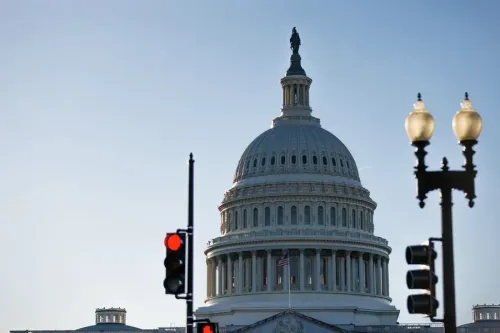
Senators Tammy Duckworth (Democrat, Illinois) and Marsha Blackburn (Republican, Tennessee) introduced bipartisan legislation on 30 July to counter China's grey-zone tactics in the Indo-Pacific.
The bill defines grey-zone tactics as cyberattacks , economic coercion , and information warfare — actions designed to destabilise without triggering open military conflict.
The US Secretary of State would be required to submit a formal monitoring strategy, and a dedicated task force would report progress to Congress .
The State Department would be directed to identify new collaboration areas with Indo-Pacific allies and private stakeholders.
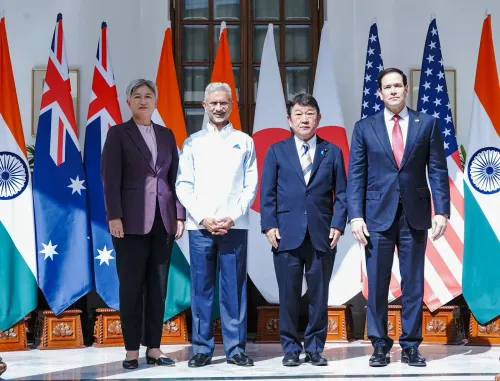
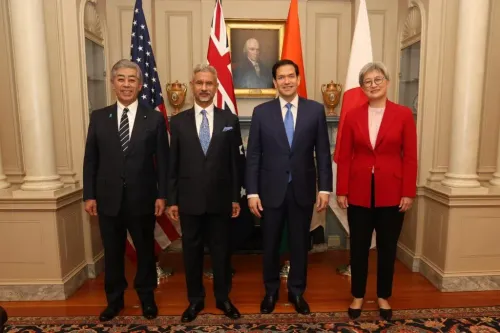
India , as a Quad partner alongside Japan and Australia, stands among the key allies the bill is designed to support.
Duckworth's related bills — the Strategy for Crisis Management Act and South China Sea Strategy Act — have cleared committee and await a full Senate vote.
A bipartisan group of US senators introduced legislation on Wednesday, 30 July aimed at bolstering Washington's capacity to counter what they describe as the People's Republic of China's 'grey-zone' tactics in the Indo-Pacific — coercive actions that stop short of open military conflict but, the senators argue, pose a direct threat to regional stability, US national security, and allied nations across the region.
The Bill and Its Sponsors
The legislation was introduced by Senator Tammy Duckworth, a Democrat from Illinois, and Senator Marsha Blackburn, a Republican from Tennessee, making it one of the more prominent bipartisan security measures targeting Chinese behaviour in the Indo-Pacific this congressional session.
'Increasing PRC aggression in the Indo-Pacific doesn't just impact our partners in the region — it threatens America's economic and national security,' Duckworth said at the announcement. 'We are a Pacific nation, and we depend on a free and open Indo-Pacific,' she added, warning that Beijing's grey-zone methods pose 'a real threat to our security.'
Blackburn framed the threat in sharper terms: 'Communist China is constantly devising ways to evade detection and act maliciously towards our allies through cyberattacks, economic coercion, information warfare, and other grey-zone tactics that undermine the US and our allies without using open military conflict.'
Key Provisions of the Legislation
Under the bill, the US Secretary of State would be required to submit a formal strategy to improve monitoring of Chinese behaviour across the Indo-Pacific and identify government branches, programmes, and actors capable of strengthening oversight. A dedicated task force would be established to track, formulate, and strengthen tools to counter and mitigate Chinese grey-zone operations, with progress evaluated through performance indicators and findings reported directly to Congress.
The State Department would also be directed to identify new areas of collaboration with Indo-Pacific allies, partners, and private stakeholders to build collective deterrence capabilities. According to the senators, the bill is designed to advance US national interests, protect the global economy, and improve regional security.
What Grey-Zone Tactics Include
The senators define 'grey-zone tactics' as actions engineered to destabilise without triggering conventional armed conflict. The bill's supporting documentation specifically cites cyberattacks, economic coercion, and information warfare as methods China reportedly employs across the region. This framing aligns with assessments from US defence and intelligence agencies, which have increasingly flagged sub-threshold operations as a primary vector of Chinese strategic competition.
Duckworth's Broader Indo-Pacific Legislative Push
The bill is part of Duckworth's wider legislative focus on Indo-Pacific security. Her office noted she has sponsored the Strategy for Crisis Management Act and the South China Sea Strategy Act, both of which have cleared committee and await a full Senate vote. Provisions she backed in this year's National Defence Authorisation Act (NDAA) are also intended to improve crisis management, partner cooperation, asymmetric operations, and medical preparedness across the region.
India's Role and the Quad Connection
India has emerged as an increasingly significant partner in the US Indo-Pacific strategy, particularly through the Quad framework — which also includes Japan and Australia. New Delhi and Washington have expanded defence cooperation, intelligence sharing, and maritime coordination in recent years. Both governments have repeatedly stressed the importance of a free, open, and rules-based Indo-Pacific order, positioning the new legislation as broadly consistent with shared strategic interests.
The bill now moves to the broader legislative process; its passage would mark a significant institutional step in formalising US grey-zone response mechanisms at a time of heightened tensions across the South China Sea and the wider Indo-Pacific.
Point of View
The legislation reinforces the strategic logic of the Quad, but New Delhi will watch closely whether the task force's mandate extends to South Asian maritime corridors or remains narrowly focused on the South China Sea. The harder question the bill does not answer is enforcement: monitoring and reporting tools are only as effective as the political will to act on their findings.
NationPress
13 Sept 2026
Frequently Asked Questions
What is the US Senate bill targeting China's grey-zone tactics?
It is a bipartisan bill introduced on 30 July by Senators Tammy Duckworth and Marsha Blackburn that would require the US State Department to develop a formal strategy to monitor and counter China's grey-zone activities — including cyberattacks, economic coercion, and information warfare — in the Indo-Pacific. A dedicated task force would be established to track progress and report findings to Congress.
What are grey-zone tactics as defined in the bill?
Grey-zone tactics, as cited in the legislation, are actions designed to undermine regional stability and coerce adversaries without crossing the threshold of open military conflict. The bill specifically identifies cyberattacks, economic coercion, and information warfare as methods China reportedly employs in the Indo-Pacific.
Why is India relevant to this US legislation?
India is an increasingly central partner in US Indo-Pacific strategy, particularly through the Quad framework alongside Japan and Australia. New Delhi and Washington have expanded defence cooperation, intelligence sharing, and maritime coordination in recent years, making India one of the key allies the bill is designed to support.
What would the bill require the US State Department to do?
The State Department would be required to submit a strategy to improve monitoring of Chinese behaviour in the Indo-Pacific, identify government branches and programmes that can strengthen oversight, and identify new areas of collaboration with Indo-Pacific allies, partners, and private stakeholders to build collective deterrence capabilities.
What other Indo-Pacific security legislation has Senator Duckworth sponsored?
Senator Duckworth has also sponsored the Strategy for Crisis Management Act and the South China Sea Strategy Act, both of which have cleared committee and await a full Senate vote. She also backed provisions in this year's National Defence Authorisation Act aimed at improving crisis management and partner cooperation across the Indo-Pacific.