US Senate names China top threat, calls for deeper India ties via Quad
Synopsis
In a rare show of bipartisan unity, US senators have formally labelled China America's 'foremost rival', demanding stronger Quad engagement with India, tighter tech controls, and freedom of navigation in the Taiwan Strait. Though non-binding, the resolution maps out Washington's strategic consensus on China — and New Delhi is squarely at the centre of the counter-strategy.
Key Takeaways
A bipartisan group of US senators introduced a resolution on 8 May naming China the "foremost rival and strategic competitor" of the United States.
The resolution was introduced by Senator Chris Coons with Republican and Democratic co-sponsors.
It calls for deeper US engagement with India , specifically through the Quadrilateral Security Dialogue (Quad) .
China is accused of expanding nuclear, cyber, maritime, and space military capabilities and supporting adversaries Iran , North Korea , and Russia .
The measure urges US dominance in artificial intelligence and quantum computing and calls for tighter export controls and investment restrictions.
The resolution is non-binding but reflects growing bipartisan consensus on the China threat in Washington .
A bipartisan group of US senators on 8 May introduced a resolution formally designating China as the "foremost rival and strategic competitor" of the United States, while calling for deeper engagement with India and stronger Indo-Pacific alliances to counter Beijing. The resolution, though non-binding, reflects a rare moment of cross-party consensus in Washington on the China threat.
Key Accusations Against China
The resolution, introduced by Senator Chris Coons alongside Republican and Democratic co-sponsors, states that China possesses the "intent and capacity to undermine the security, economic prosperity, and strategic interests" of the US and its allies. Lawmakers accused Beijing of rapidly expanding its military capabilities across nuclear, cyber, maritime, and space domains.
The measure further alleged that China is employing "coercive, aggressive, and deceptive activities" across the Indo-Pacific and attempting to alter the status quo in the Taiwan Strait through coercion or force. It also accused Beijing of supporting US adversaries — including Iran, North Korea, and Russia — through the transfer of military technology and materiel.
Economic and Technology Concerns
Senators warned that China is leveraging state-backed economic and industrial policies to erode American competitiveness and dominate strategic sectors. The resolution cited intellectual property theft, forced technology transfers, export controls, and barriers to market access as specific instruments of economic coercion.
Notably, lawmakers flagged the race for dominance in artificial intelligence and quantum computing, describing these technologies as likely to define "twenty-first century economic and military power." The resolution urged the US to "dominate the artificial intelligence and other foundational technologies sectors" relative to China and other competitors. The resolution also linked China to the flow of precursor chemicals used to manufacture illicit fentanyl and nitazenes entering the United States.
India and the Quad in Focus
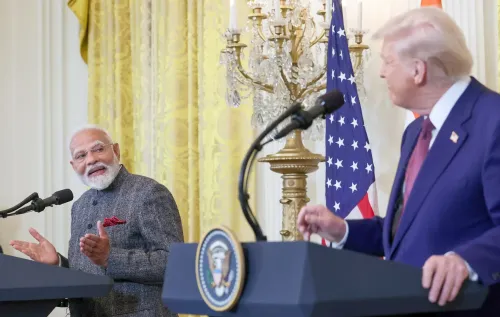
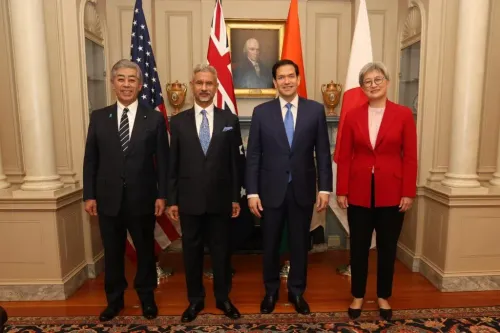
In a section closely watched in New Delhi, the Senate resolution explicitly called for "broadening United States engagement with India, including through the Quadrilateral Security Dialogue" — commonly known as the Quad. The Quad brings together India, the United States, Japan, and Australia, and has gained significant prominence amid rising tensions with China in the Indo-Pacific.
This comes amid a broader US push to deepen strategic partnerships across the region. The resolution reaffirmed Washington's security commitments to allies including Japan, South Korea, Australia, and the Philippines, and backed stronger trilateral cooperation among Indo-Pacific partners.
What the Resolution Demands
Beyond declaratory language, the measure called for stronger deterrence against China, tighter export controls, restrictions on foreign investments in strategic US industries, and sustained efforts to maintain freedom of navigation in the South China Sea and Taiwan Strait. It stressed the need to preserve peace and stability in the Taiwan Strait — a flashpoint that has drawn increasing global attention.
While the resolution carries no legislative force, it signals the direction of bipartisan thinking in Washington and could shape future policy debates on trade, defence spending, and alliance architecture in the months ahead.
Point of View
Not a diplomatic courtesy. Yet India has historically been cautious about being cast as a frontline state in any US-China framework, preferring strategic autonomy. The resolution's sweeping accusations — from fentanyl precursors to Taiwan coercion — also risk hardening the diplomatic environment at a moment when back-channel US-China communication remains critical. Bipartisan unity on China is real, but translating it into coherent policy across trade, tech, and defence remains Washington's unfinished business.
NationPress
9 May 2026
Frequently Asked Questions
What does the US Senate resolution on China say?
The resolution formally designates China as the 'foremost rival and strategic competitor' of the United States, accusing Beijing of expanding military capabilities, undermining US economic competitiveness, and supporting adversaries including Russia, Iran, and North Korea. It is non-binding but reflects broad bipartisan consensus in Washington.
Why does the resolution mention India and the Quad?
The resolution calls for 'broadening United States engagement with India, including through the Quadrilateral Security Dialogue (Quad)' as part of a strategy to build stronger Indo-Pacific alliances to counter China. The Quad groups India, the US, Japan, and Australia and has grown in prominence amid rising China tensions.
Who introduced the US Senate China resolution?
The resolution was introduced by Senator Chris Coons, along with a bipartisan group of Republican and Democratic lawmakers. Its cross-party backing underscores the depth of concern in Washington over China's military rise and economic practices.
Is the US Senate resolution on China legally binding?
No, the resolution is non-binding, meaning it does not carry the force of law or compel the executive branch to take specific action. However, it signals legislative intent and could influence future policy debates on trade, defence, and alliance strategy.
What technology concerns does the resolution raise about China?
The resolution warns that China is seeking to overtake the US in artificial intelligence and quantum computing, technologies it describes as defining 'twenty-first century economic and military power.' It urges the US to dominate these foundational technology sectors and calls for tighter export controls to prevent technology transfers to China.