US senator probes Flock Safety's 120,000-camera AI surveillance network

Synopsis
A US Senate investigation has put a little-known AI surveillance company under the spotlight. Flock Safety's network of 120,000 cameras processes 20 billion vehicle scans a month across 49 states — with no congressional authorisation and, critics argue, insufficient safeguards. Cases of personal misuse, false arrests, and a 71% false-alert rate at one department suggest the risks are not theoretical.
Key Takeaways
Senator Josh Hawley has opened a formal investigation into Flock Safety 's AI-powered camera surveillance network.
The network spans more than 120,000 cameras across 49 US states , processing over 20 billion vehicle scans per month.
Documented incidents include a Florida woman jailed for 13 days on eight felony charges later dismissed, and 161 wrongful vehicle stops by the Los Angeles Police Department .
One California police department found 71% of Flock Safety alerts were incorrect.
Hawley has questioned whether driver data — tied to the company's reported $8.3 billion valuation — is being sold commercially.
Flock Safety has until 8 September to respond to the senator's document demands.
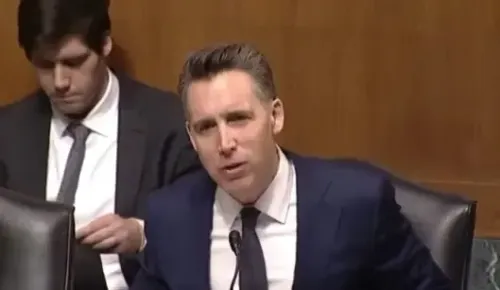
Republican Senator Josh Hawley of Missouri has launched a formal investigation into Flock Safety, an artificial intelligence-powered camera surveillance company operating a network of more than 120,000 cameras across 49 US states, citing serious concerns about the collection and potential misuse of Americans' location and vehicle data. The inquiry, announced on Wednesday, targets how the company collects, retains, and distributes information gathered by its cameras.
Scale of the Surveillance Network
Hawley, who chairs the Senate Judiciary Subcommittee on Crime and Counterterrorism, described Flock Safety's infrastructure as an 'unprecedented national surveillance network' assembled in a matter of years. According to his letter to Flock Safety chief executive Garrett Langley, the network processes more than 20 billion vehicle scans each month, capturing licence plate and vehicle data that is made searchable by law enforcement agencies and other customers. The senator has demanded that Langley disclose the safeguards used to protect this data, with a deadline of 8 September to respond.
Documented Cases of Misuse and False Alerts
Hawley cited several incidents to substantiate his concerns, drawing on examples from Missouri, Wisconsin, Florida, and California. The examples and figures were presented in his letter and have not been independently verified in material released by his office.
In Missouri, the St. Charles County Police Department reportedly terminated its contract with Flock Safety after an internal audit found that a civilian employee had conducted searches for personal reasons. In Wisconsin, a Milwaukee police officer was prosecuted after allegedly searching his girlfriend's licence plate 124 times and her former boyfriend's plate 55 times.
A case in Florida drew particular attention: a woman spent 13 days in jail and faced eight felony charges after investigators used the camera network to search for a vehicle matching a description. Prosecutors later dismissed all charges and arrested a different individual, according to Hawley's letter. Separately, one California police department found that 71 per cent of its Flock Safety alerts were incorrect. The Los Angeles Police Department ended its contract with the company after an audit found that officers had stopped 161 vehicles wrongly identified as stolen over just two months.
Privacy Rights and Commercial Data Concerns
Beyond law enforcement misuse, Hawley questioned whether data gathered from drivers could be sold or used for commercial purposes. He cited Flock Safety's reported valuation of $8.3 billion and sought information on how driver records are stored or sold to third parties. 'Americans do not surrender their privacy rights when they drive to work, drop their kids off at school, or go to church,' Hawley wrote in his letter.
The senator argued that Congress had never authorised such a surveillance network, and warned that the company's own internal policies currently serve as the primary — and arguably only — protection for the personal data of hundreds of millions of Americans. He demanded documents detailing who can search the database, how the company monitors access, and whether information is shared with outside organisations.
What Flock Safety Has Said
Flock Safety's response was not included in the senator's public announcement. The company has until 8 September to reply to Hawley's demands. The investigation could lay the groundwork for congressional hearings or potential federal legislation governing AI-powered surveillance networks used by law enforcement.
Point of View
The commercial incentive to expand data collection is substantial, and the absence of congressional authorisation means the company's own internal rules are effectively the law. That is precisely the kind of regulatory vacuum that historically ends badly for the public.
NationPress
27 Aug 2026
Frequently Asked Questions
What is the Flock Safety AI camera network?
Flock Safety operates a network of more than 120,000 AI-powered cameras across 49 US states, which capture vehicle and licence plate information that can be searched by law enforcement agencies and other customers. The network reportedly processes over 20 billion vehicle scans each month and has been described by Senator Hawley as 'an unprecedented national surveillance network.'
Why is Senator Josh Hawley investigating Flock Safety?
Hawley launched the probe over concerns that Flock Safety's network collects and potentially misuses Americans' location and vehicle data without sufficient safeguards or congressional authorisation. He cited documented cases of misuse by law enforcement personnel, high rates of false alerts, and questions about whether driver data is being sold commercially.
What incidents of misuse has Hawley cited?
Hawley cited a Florida woman who spent 13 days in jail on eight felony charges later dismissed after Flock Safety data pointed to the wrong vehicle; 161 wrongful vehicle stops by the Los Angeles Police Department over two months; a Milwaukee officer prosecuted for running personal searches; and a California department that found 71% of its Flock alerts were incorrect. These figures come from Hawley's letter and have not been independently verified.
What has Hawley demanded from Flock Safety?
Hawley has asked Flock Safety CEO Garrett Langley to disclose the safeguards protecting collected data, detail who can search the database, explain how access is monitored, and clarify whether driver records are stored or sold to outside organisations. The company has until 8 September to respond.
Could this investigation lead to new US surveillance laws?
The investigation could lay the groundwork for congressional hearings or federal legislation governing AI-powered surveillance networks used by law enforcement. Hawley has noted that Congress has never authorised the Flock Safety network, leaving the company's internal policies as the primary protection for the data of hundreds of millions of Americans.