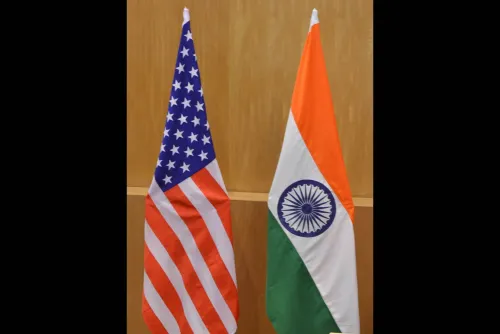
Is the US tariff reduction to 10 percent a relief for India and other emerging economies?

Synopsis
The recent decision by the US to cut tariffs to 10% is a significant relief for emerging economies, particularly India. This change is expected to normalize global trade and instill confidence among investors. With this adjustment, businesses can look forward to clearer trade regulations and improved market conditions.
Key Takeaways
The US has reduced tariffs to 10% from 25%.
This change will last for the next 150 days.
The move is seen as beneficial for emerging markets.
It aims to normalize global trade.
Investors may gain more confidence in developing economies.
New Delhi, Feb 21 (NationPress) An expert described the US decision to lower tariffs to 10 percent as a very encouraging development for emerging markets, stating that this action aids in the normalization of global trade and provides essential clarity for businesses and investors.
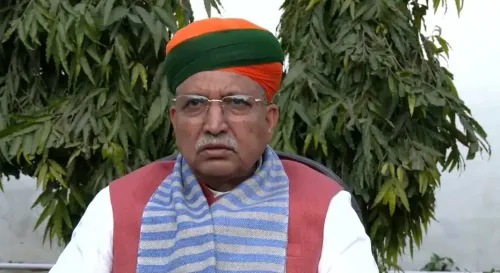
During an interview with IANS at an event hosted by the All India Management Association (AIMA), Vishal Kampani, Senior Vice President of AIMA and Vice Chairman & Managing Director of JM Financial Limited, expressed that the US adjustment of tariffs from 25 percent to 10 percent is a significant and welcome change, which will be applicable for the next 150 days.
“This is a very positive development for emerging markets. The reduction in tariffs from 25 percent to 10 percent is noteworthy,” he stated.
“While we anticipated the tariffs to stabilize around 18 percent, they have been reduced to 10 percent for the forthcoming 150 days,” Kampani remarked to IANS.
He elaborated that this change fosters consistency in global trade. Previously, different countries maintained various tariff rates, but a 10 percent rate universally helps streamline the system. “This effectively brings us back to a familiar position,” he noted.
Nevertheless, Kampani advised caution, mentioning that the US possesses numerous policy tools that could change these rules.
“We should monitor what strategies they adopt to modify some of these regulations,” he commented to IANS, indicating that internal disputes within the US could impact future policy choices.
Regarding the AIMA event, Kampani expressed his pleasure in being part of the leadership team during its 70th anniversary.
He characterized the event as invigorating, with topics spanning politics, economics, finance, and various other critical issues.
The US decision to decrease tariffs to 10 percent for countries like India is viewed as a substantial relief for emerging markets burdened by elevated trade barriers.
Market stakeholders believe this initiative could enhance trade flows and bolster investor confidence in developing economies.
Point of View
The decision by the US to lower tariffs to 10 percent reflects a strategic move that could significantly benefit emerging economies, including India. As we navigate these changes, it is vital to remain vigilant and monitor potential policy shifts that may arise from domestic considerations within the US.
NationPress
25 Sept 2026
Frequently Asked Questions
What is the new US tariff rate?
The new US tariff rate has been reduced to 10 percent from the previous 25 percent.
How long will the new tariff rate remain in effect?
The revised tariff rate will remain in place for the next 150 days.
Why is this tariff reduction significant for emerging markets?
This reduction is significant as it helps normalize global trade and provides clarity for businesses and investors.
What impact could this have on trade flows?
Market participants believe this move could enhance trade flows and increase investor confidence in developing economies.
What should we watch for moving forward?
It is important to monitor potential policy changes from the US, as various internal factors may influence future decisions.