Trump admin threatens to cut election funds over voter roll security
Synopsis
The Trump administration has put states on notice: tighten election security or lose federal funding. With DHS claiming 250,000 non-citizens on voter rolls in four states and threatening prosecutions, the move dramatically escalates federal pressure on state-run election systems ahead of the midterms — and is almost certain to trigger legal challenges.
Key Takeaways
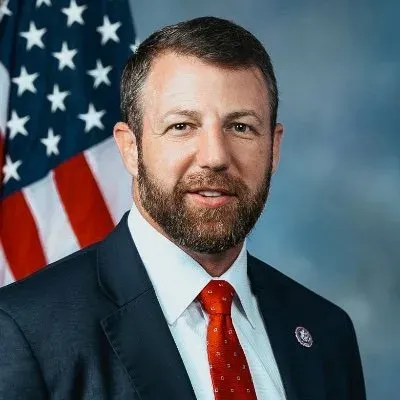
Homeland Security Secretary Markwayne Mullin on 18 July warned states they could lose federal election funding for non-compliance with new security requirements.
DHS claims it identified 250,000 non-citizens registered to vote in California , Pennsylvania , New Jersey , and Nevada .
An additional 28,000 non-citizens were reportedly found on voter rolls in 23 states working with the department, along with 400,000 deceased registrants .
The Cybersecurity and Infrastructure Security Agency (CISA) is set to release an updated election infrastructure plan within 30 days .
Individuals found to have voted illegally will be referred for prosecution, Mullin said.
Under US law, elections are administered by states; critics say the funding conditions may face legal challenges as federal overreach.
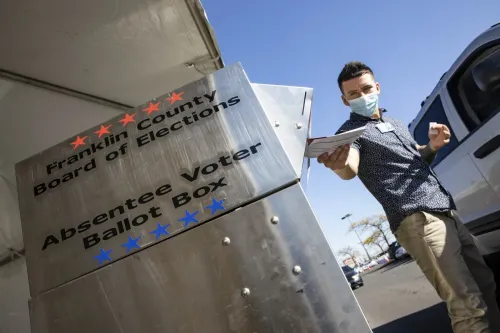
The Trump administration on Friday, 18 July warned that US states risk losing federal election funding unless they adopt new security measures, citing concerns about non-citizens on voter rolls and vulnerabilities in voting machines ahead of the midterm elections. The announcement marks one of the most aggressive federal interventions in state-administered election infrastructure in recent memory.
What the Administration Announced
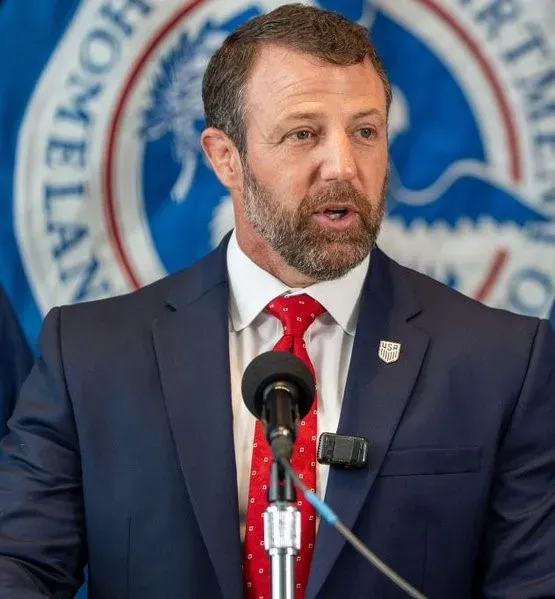
Homeland Security Secretary Markwayne Mullin said states seeking federal grants or reimbursements for conducting federal elections would be required to strengthen voting systems and conduct thorough reviews of their voter registration lists. 'We are not going to spend taxpayer dollars reimbursing a state that is refusing to secure their elections,' Mullin said at a news conference. He framed the policy in transactional terms: 'If you do it, we'll reimburse you. If you don't, we won't.'
The Voter Roll Claims
Mullin alleged that the Department of Homeland Security (DHS) had identified 250,000 non-citizens registered to vote across California, Pennsylvania, New Jersey, and Nevada. An additional 28,000 non-citizens were reportedly found on voter rolls in 23 states cooperating with the department. The department also reportedly identified 400,000 deceased individuals who remained on registration lists, according to Mullin. He acknowledged that officials had not yet determined how many of these registrants had actually cast ballots, saying records were being reviewed individually.
Prosecution Threat and Foreign Interference Claims
Mullin issued a stark warning to those found to have voted illegally: 'If you are an illegal or you're voting illegally, we will hunt you down, we will find you and we will prosecute you.' He also alleged that Iran had hacked state voter files and attempted to compromise systems used by military personnel to vote. The administration said it was working with Defence Secretary Pete Hegseth to protect military voting systems. The Cybersecurity and Infrastructure Security Agency (CISA) is expected to release an updated election infrastructure plan within 30 days.
The SAVE Programme and State Participation
Mullin noted that 23 states are currently participating in the department's SAVE programme, which allows officials to cross-check voter rolls. He urged remaining states to join, describing election security as a national security matter that should command bipartisan backing. Officials who deliberately withheld intelligence about election vulnerabilities from the public, Congress, or the executive branch could face criminal charges or administrative penalties, he added.
Constitutional and Structural Context
Under the US Constitution, state and local authorities administer elections, while the federal government provides security assistance, intelligence, and financial support. Voter eligibility and registration procedures vary by state, though participation in federal elections is restricted to US citizens. Critics argue that conditioning federal funding on compliance with DHS directives could amount to federal overreach into a domain traditionally reserved for states — a tension that is likely to face legal scrutiny.
Point of View
And conditioning federal reimbursements on DHS-defined security benchmarks sets up a confrontation with states — particularly Democratic-led ones — that will likely end in court. The 250,000 non-citizen figure is significant but unverified in terms of actual votes cast; Mullin himself conceded that individual record reviews are still underway. Historically, voter roll inflation — deceased or moved registrants — is a data maintenance problem, not evidence of fraud. Conflating the two, as this announcement does, muddies the policy debate. The real question is whether CISA's forthcoming infrastructure plan offers concrete, nonpartisan security upgrades, or whether this is primarily a political pressure campaign timed to the midterm cycle.
NationPress
18 Jul 2026
Frequently Asked Questions
Why is the Trump administration threatening to cut election funding to US states?
The Trump administration says states that refuse to adopt new election security measures — including voter roll reviews and voting machine safeguards — will not receive federal grants or reimbursements for conducting federal elections. Homeland Security Secretary Markwayne Mullin framed it as a condition for taxpayer-funded support.
How many non-citizens does DHS claim are on US voter rolls?
DHS claims it identified 250,000 non-citizens registered to vote across California, Pennsylvania, New Jersey, and Nevada, with an additional 28,000 found in 23 other states cooperating with the department. Officials have not yet confirmed how many, if any, of these registrants actually cast ballots.
What is the SAVE programme mentioned by Mullin?
The SAVE (Systematic Alien Verification for Entitlements) programme allows government officials to cross-check voter registration lists against federal immigration databases. Mullin said 23 states are currently participating and urged the remaining states to join.
What action will be taken against those found to have voted illegally?
Mullin said individuals found to have voted illegally will be referred for prosecution. He also warned that officials who deliberately withheld intelligence about election vulnerabilities could face criminal charges or administrative penalties.
Can the federal government legally dictate how states run elections?
Under the US system, elections are administered by state and local authorities, with the federal government providing funding, security assistance, and intelligence. Conditioning that funding on compliance with DHS directives is likely to face legal challenges, as critics argue it encroaches on constitutionally reserved state powers.