USCIS revises Form I-485 from September 18: Green Card applicants must act
Synopsis
USCIS is replacing Form I-485 on 18 September 2026 with zero tolerance — submit the old edition on or after that date and it gets rejected before anyone reads it. For Indian professionals already deep in the employment-based queue, a procedural slip on this one could undo years of waiting.
Key Takeaways
USCIS will publish a revised Form I-485 on 18 September 2026 , replacing the 20 January 2025 edition.
There is no grace period — both editions are not accepted simultaneously at any point.
The old edition is rejected if postmarked or electronically filed on or after 18 September 2026 ; the new edition is rejected if submitted before that date.
The revision aligns the form with a new final rule on the public-charge ground of inadmissibility .
Indian nationals in the employment-based immigration queue are among the most closely affected, given prolonged waits under per-country visa caps.
No changes to filing fees or processing timelines were announced alongside the form update.
The US Citizenship and Immigration Services (USCIS) will roll out a revised edition of Form I-485 — the primary application for adjusting status to lawful permanent residence — on 18 September 2026, with a strict cut-off that leaves no grace period for older versions. The update is expected to draw close attention from Indian nationals navigating the employment- and family-based immigration queues, many of whom have waited years for an immigrant visa number to become available.
What Is Changing and When
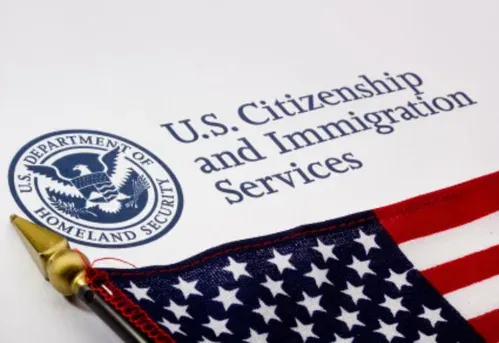
The new edition of Form I-485, Application to Register Permanent Residence or Adjust Status, carries an edition date of 18 September 2026 and will replace the edition dated 20 January 2025. USCIS has already released a preview of the revised form and its accompanying instructions to give applicants and immigration lawyers advance notice.
The agency has been explicit: there will be no overlap period during which both editions are accepted. The filing date — whether by postmark or electronic submission — is the sole determining factor.
The Hard Deadline Applicants Must Know
USCIS will continue to accept the 20 January 2025 edition if it is postmarked or electronically submitted before 18 September 2026. Any application using that edition postmarked or filed on or after that date will be rejected outright, without consideration of its merits.
Equally, applicants should not submit the new 18 September 2026 edition before the effective date — USCIS will only accept it when postmarked or electronically filed on or after that date. Using the wrong edition on the wrong date is sufficient grounds for rejection before the application is reviewed on substance.
Why the Form Is Being Revised
USCIS said the revised Form I-485 has been updated to align the adjustment-of-status process with a recently announced final rule on the public-charge ground of inadmissibility. The public-charge provision assesses whether an applicant is likely to become primarily dependent on government assistance for subsistence. Its interpretation has shifted under successive US administrations and has repeatedly become a contested element of immigration policy.
The agency did not announce any change in filing fees or processing timelines alongside this notification. Applicants were directed to the official Form I-485 webpage for the preview edition and full instructions.
Impact on Indian Applicants
Indian professionals constitute a significant share of the employment-based immigration pipeline, concentrated in technology, medicine, engineering, and other specialised fields. Per-country annual caps on immigrant visas mean many Indian nationals face multi-year — and in some cases multi-decade — waits before they can file for adjustment of status.
For those whose priority dates become current around the transition window, the edition deadline adds an additional layer of procedural risk. Immigration lawyers have flagged that the narrow transition makes precise filing-date tracking critical. Notably, applicants with pending Form I-485 cases may also apply for related employment authorisation and advance parole travel documents while their permanent residence applications remain pending.
What Applicants Should Do Next
Legal practitioners advise verifying the postmark or electronic submission date against the edition being used, well ahead of 18 September 2026. USCIS has made the preview edition available for review, giving applicants and their counsel time to prepare. Those planning to file close to the transition date are advised to consult an immigration attorney to avoid a procedural rejection that could set back a years-long process.
Point of View
And it puts the burden squarely on applicants who may be filing at the tail end of years-long waits. For Indian employment-based applicants, where a single misstep can mean restarting a queue, the stakes of a wrong-edition rejection are disproportionately high. The public-charge alignment also signals that the current administration is tightening the self-sufficiency assessment at the adjustment stage — a policy direction worth watching as further rulemaking unfolds. Mainstream coverage tends to treat form updates as administrative housekeeping; the interaction with per-country backlog realities makes this one anything but routine.
NationPress
21 Aug 2026
Frequently Asked Questions
What is changing with USCIS Form I-485 in September 2026?
USCIS is releasing a new edition of Form I-485 — the application used to seek a Green Card while already in the United States — on 18 September 2026. The new edition replaces the 20 January 2025 version and has been updated to align with a final rule on the public-charge ground of inadmissibility.
Is there a grace period where both old and new Form I-485 editions are accepted?
No. USCIS has confirmed there is no grace period. The old edition is accepted only if postmarked or electronically submitted before 18 September 2026; on or after that date, it will be rejected. The new edition must not be submitted before 18 September 2026 either.
Why is USCIS revising Form I-485?
USCIS said the revision is needed to align the adjustment-of-status process with a recently announced final rule on the public-charge ground of inadmissibility — the provision that assesses whether an applicant is likely to become primarily dependent on government support. No fee changes were announced alongside the update.
How does this affect Indian nationals applying for a Green Card?
Indian nationals are among the most affected because they make up a large share of employment-based immigration applicants and often face multi-year waits under per-country visa caps. For those whose priority dates become current around the 18 September transition, filing the wrong edition could result in rejection before the case is reviewed on its merits, potentially setting back a years-long process.
Where can applicants find the new Form I-485 and its instructions?
USCIS has made a preview of the revised form and its accompanying instructions available on the official Form I-485 webpage. Applicants and immigration lawyers are advised to review the preview well ahead of 18 September 2026 and consult legal counsel if filing close to the transition date.