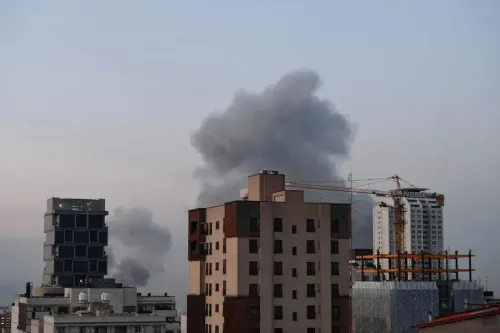
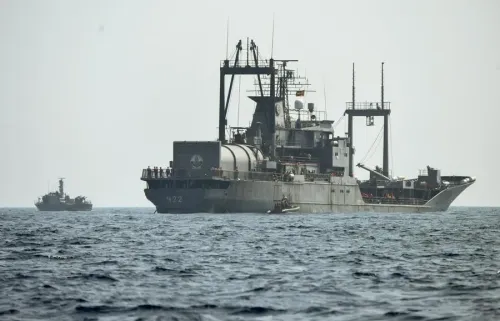
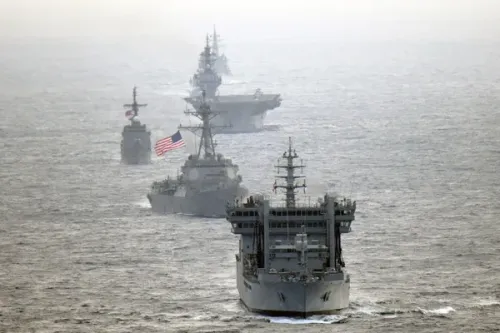
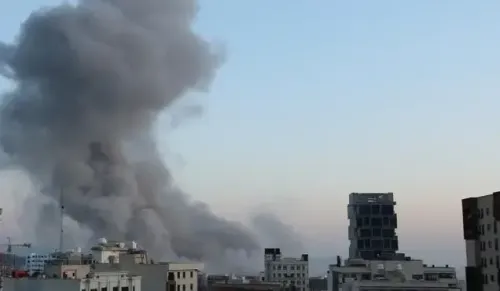
USS Truxtun, USS Mason transit Strait of Hormuz amid Iranian missile and drone barrage
Synopsis
Two US Navy destroyers pushed through the Strait of Hormuz under Iranian fire — missiles, drones, and small boats — without a single vessel being struck. The incident tests a ceasefire that has already shown cracks, and President Trump's contradictory responses have only deepened ambiguity about Washington's red lines.
Key Takeaways
USS Truxtun and USS Mason successfully transited the Strait of Hormuz on Monday, 5 May 2025 amid Iranian fire.
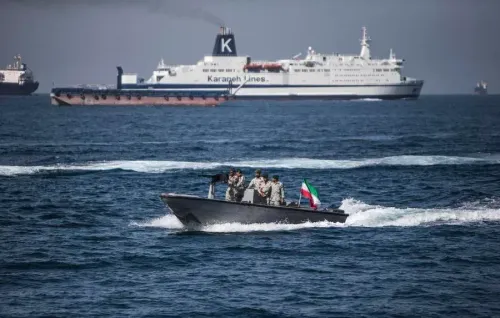
Iran launched cruise missiles, drones, and small boats ; no US vessel was struck.
US Central Command chief Brad Cooper confirmed US forces sank six Iranian small boats and intercepted several missiles and drones.
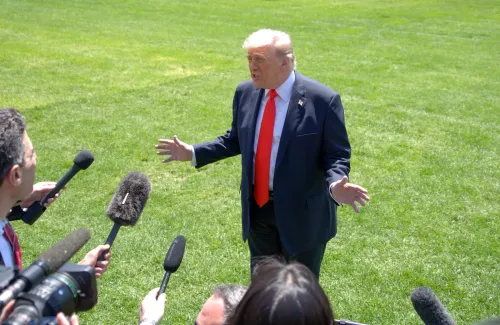
President Donald Trump downplayed the attacks, calling them "not heavy firing," while threatening Iran would be "blown off the face of the Earth" if attacks continued.
Iran denied the US account, saying no commercial vessels or oil tankers had transited the strait.
A US-Iran ceasefire has been in effect since 8 April 2025 ; post-ceasefire talks in Islamabad ended without a deal.
Two US Navy destroyers, the USS Truxtun and the USS Mason, have successfully transited the Strait of Hormuz and entered the Gulf after navigating a sustained barrage of Iranian missiles, drones, and small boats, according to a report by CBS News citing anonymous Pentagon officials. The passage, which took place on Monday, marks a significant escalation in tensions between Washington and Tehran following a fragile ceasefire that took effect in April 2025.
What Happened During the Transit
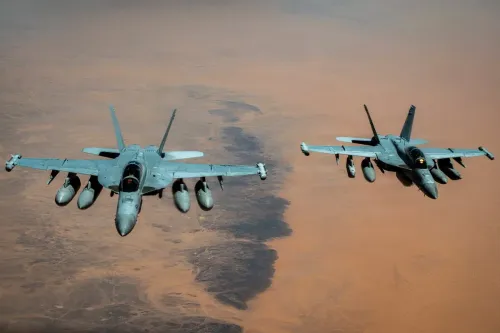
The two destroyers, supported by Apache helicopters and additional aircraft, faced a series of coordinated threats as they moved through the strategically vital waterway, according to Pentagon officials who spoke on condition of anonymity. Iran reportedly launched small boats, cruise missiles, and drones in what officials described as a sustained barrage. No US warship was struck, and none of the projectiles reached the vessels, the officials said. The US military, bolstered by air support, successfully intercepted or deterred each incoming threat, according to the report.
What US Military and Political Leaders Said
Brad Cooper, chief of the US Central Command, told reporters on Monday that Iranian forces had launched
Point of View
Functionally, no ceasefire at all. The Strait of Hormuz remains the world's most consequential chokepoint, and the US decision to force a transit under fire raises the stakes considerably: if Iran escalates further, Washington's red-line ambiguity becomes a strategic liability, not a negotiating asset.
NationPress
16 Sept 2026
Frequently Asked Questions
What happened to USS Truxtun and USS Mason in the Strait of Hormuz?
The two US Navy destroyers transited the Strait of Hormuz on 5 May 2025 while facing Iranian missiles, drones, and small boats. No US vessel was struck, and US forces intercepted or deterred all incoming threats, according to Pentagon officials cited by CBS News.
Did Iran violate the US-Iran ceasefire with these attacks?
President Donald Trump stopped short of declaring the Monday attacks a ceasefire violation in an interview with ABC News, calling the firing 'not heavy.' However, US Central Command confirmed Iranian forces launched multiple cruise missiles, drones, and small boats at vessels under US protection, raising serious questions about the ceasefire's durability.
What did US Central Command say about the incident?
Brad Cooper, chief of US Central Command, confirmed that Iranian forces launched multiple cruise missiles, drones, and small boats at ships under US protection. He added that US forces sank six Iranian small boats and intercepted several Iranian missiles and drones during the operation.
Why is the Strait of Hormuz significant in this conflict?
The Strait of Hormuz is one of the world's most critical shipping lanes, through which a significant share of global oil exports pass. Iran restricted passage through the strait for vessels linked to Israel and the United States following joint US-Israeli strikes on Tehran on 28 February 2025 that killed then-Supreme Leader Ali Khamenei.
What is the background to the current US-Iran tensions?
On 28 February 2025, the United States and Israel launched joint strikes on Tehran and other Iranian cities, killing then-Supreme Leader Ali Khamenei along with senior military commanders and civilians. Iran responded with waves of missile and drone attacks on Israel and US targets across the region. A ceasefire took effect on 8 April 2025, but subsequent talks in Islamabad ended without a deal.