Vietnam envoy meets Tamil Nadu officials to deepen trade and investment ties
Synopsis
Vietnam is actively courting Tamil Nadu as a strategic industrial partner, with its ambassador and trade delegation pushing concrete B2B deals across EVs, logistics, pharma, and green energy. The VinFast Thoothukudi project anchors the pitch — and direct Chennai-Vietnam sea routes could be the next tangible outcome.
Key Takeaways
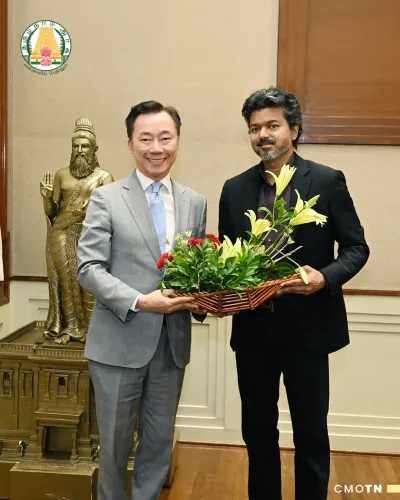
Vietnam's Ambassador Trinh Minh Manh and a delegation held talks in Tamil Nadu from 20 to 22 September 2026 .
Meetings included Dr.
Vijayakumar , Additional Chief Secretary, Tamil Nadu Industries Department, as well as CII and FICCI .
VinFast 's EV project in Thoothukudi was cited as a model for deeper bilateral industrial cooperation.
Trade Counsellor Bui Trung Thuong proposed direct maritime links between Chennai , Thoothukudi , and major Vietnamese ports to cut transport costs.
Priority sectors include EVs, electronics, pharma, logistics, green energy, AI, and higher education.
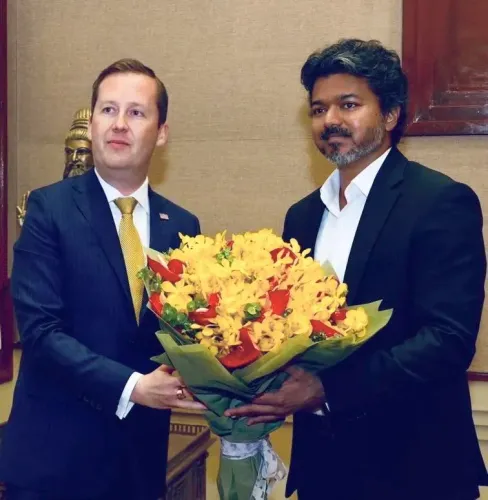
Vietnam's Ambassador to India, Trinh Minh Manh, along with an embassy delegation, held structured talks with Tamil Nadu state officials and leading industry bodies from 20 to 22 September 2026, aimed at expanding bilateral investment, production links, and technology cooperation. The meetings signal a deliberate push by Hanoi to deepen economic engagement with one of India's most industrially advanced southern states.
Key Meetings and Agenda
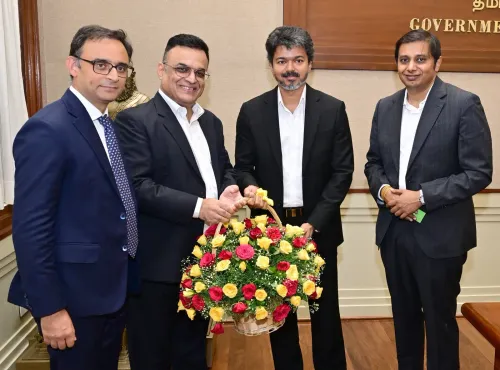
The delegation held discussions with Dr. S. Vijayakumar, Additional Chief Secretary at Tamil Nadu's Industries, Investment Promotion and Commerce Department, focusing on expanding investment flows, production connectivity, and business-to-business linkages. Both sides urged a shift away from general introductions toward concrete, project-level collaboration.
Separately, the delegation met representatives of the Confederation of Indian Industry (CII) and the Federation of Indian Chambers of Commerce and Industry (FICCI), identifying priority sectors including logistics and supply chains, technology, engineering, aviation, chemicals and metals, hospitality, AI, healthcare, automobiles, maritime transport, green energy, higher education, and business incubation.
VinFast and the EV Opportunity
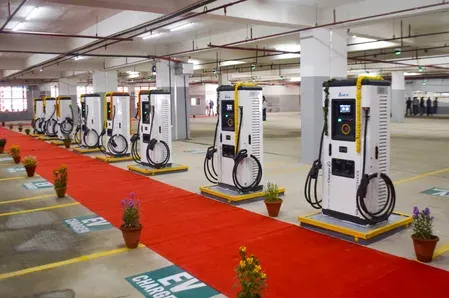
A standout example of the growing bilateral relationship is VinFast's electric vehicle project in Thoothukudi, which both sides cited as a template for deeper industrial cooperation. The project opens potential collaboration across EV components, batteries, charging infrastructure, logistics, research and development, and supply chains — sectors where Tamil Nadu already holds significant industrial capability.
Maritime Links and Manufacturing Hubs
Vietnamese Trade Counsellor and Head of the Vietnam Trade Office in India, Bui Trung Thuong, highlighted what he described as untapped potential in agriculture, fisheries, food processing, ports, logistics, and industrial infrastructure. Thuong specifically advocated for direct maritime connections between Chennai and Thoothukudi and major Vietnamese ports, arguing that shorter sea routes would reduce transport costs and accelerate bilateral trade volumes.
Thuong also proposed that Tamil Nadu businesses in electronics, auto parts, mechanical engineering, pharmaceuticals, chemicals, plastics, food technology, textiles, and supporting industries explore Vietnam as a manufacturing base, a sourcing destination, and a location for research and development.
Why This Engagement Matters
This visit comes amid a broader global realignment of supply chains, with multinational companies increasingly seeking alternatives to concentrated manufacturing in a single geography. Tamil Nadu — already home to automobile clusters, IT corridors, and a growing renewable energy base — is well-positioned as an investment partner for Vietnam's expanding industrial park ecosystem. Industry chambers such as CII and FICCI are expected to serve as institutional bridges, translating diplomatic interest into binding commercial deals. The next steps will likely involve sector-specific task forces and pilot B2B exchanges.
Point of View
While also pulling Vietnamese investment southward. The VinFast anchor is strategically clever — it makes the EV sector a proof-of-concept for the entire relationship. What the engagement still lacks is a binding institutional mechanism; CII and FICCI as 'bridges' is familiar language that has often not translated into deal flow. The real test will be whether the proposed maritime route between Chennai and Vietnamese ports gains government backing on both sides, which would shift this from a trade mission talking point into infrastructure with measurable impact.
NationPress
23 Sept 2026
Frequently Asked Questions
Why did Vietnam's ambassador visit Tamil Nadu in September 2026?
Ambassador Trinh Minh Manh and an embassy delegation visited Tamil Nadu from 20 to 22 September 2026 to promote investment, trade, and technology cooperation between Vietnam and the state. The visit included meetings with senior state officials and national industry bodies CII and FICCI.
What role does VinFast play in Vietnam-Tamil Nadu ties?
VinFast's electric vehicle project in Thoothukudi is the flagship example of Vietnam-Tamil Nadu industrial cooperation, serving as a model for collaboration on EV components, batteries, charging infrastructure, logistics, and supply chains. Both delegations cited it as a template for expanding bilateral ties in the EV sector.
Which sectors are being targeted for Vietnam-Tamil Nadu cooperation?
Priority sectors include electric vehicles, electronics, IT, pharmaceuticals, chemicals, logistics and supply chains, green energy, maritime transport, AI, healthcare, aviation, higher education, and business incubation. Tamil Nadu's existing strengths in automobiles and manufacturing make it a natural fit for Vietnamese industrial partnerships.
What maritime connectivity did Vietnam propose with Tamil Nadu?
Trade Counsellor Bui Trung Thuong proposed direct sea links between Chennai and Thoothukudi and major Vietnamese ports, arguing this would shorten transport times, reduce costs, and meaningfully boost bilateral trade volumes.
What is the next step following the Vietnam-Tamil Nadu delegation meetings?
Both sides urged a shift from general business introductions to concrete, project-level B2B connections, with CII and FICCI expected to act as institutional bridges. Sector-specific task forces and pilot exchanges are anticipated as the follow-up to the September 2026 meetings.