White House: All Democrats Voted Against Trump Tax Cuts
Synopsis
The White House announced on October 2, 2026 that every Democratic member of Congress voted against President Trump's tax-cut package, framing the unanimous opposition as a stark partisan divide on economic priorities.
Key Takeaways
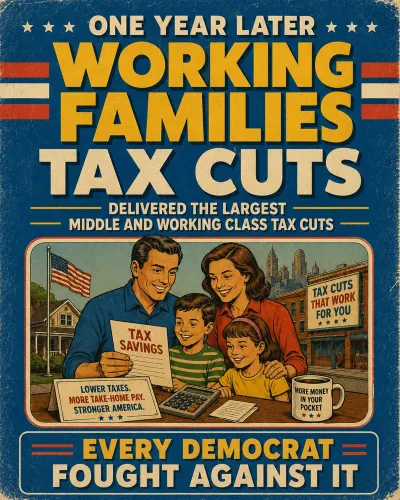
The White House declared on October 2, 2026 that every single Democrat voted against President Trump's tax-cut bill.
The administration characterised the legislation as 'historic tax cuts that put Americans first.' A unanimous party-line opposition mirrors the pattern set during the 2017 Tax Cuts and Jobs Act , which also passed without any Democratic votes.
The White House's framing signals the tax issue will be a central electoral contrast going forward.
For India, US corporate and personal tax changes carry downstream effects on IT exports, foreign investment flows , and diaspora remittances.
A unified Democratic bloc in Congress stood against President Donald Trump's tax legislation, the White House declared on Friday, October 2, 2026 — framing the vote as a clean partisan line that put the administration's economic agenda in sharp relief.
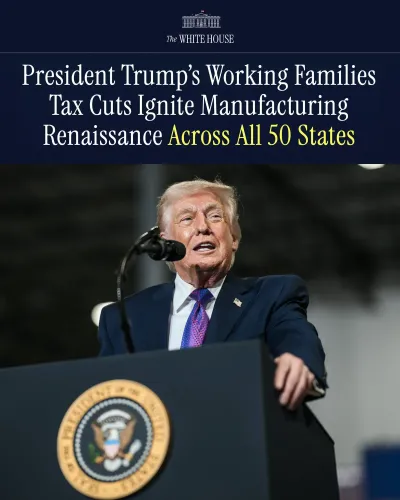
The official White House account posted on X that 'every single Democrat voted against President Trump's historic tax cuts that put Americans first,' signalling the administration's intent to draw a clear electoral contrast on the tax issue heading into the political calendar.
A Party-Line Vote and What It Means
A unanimous Democratic 'no' vote — if confirmed — would represent one of the cleanest partisan splits on a major fiscal bill in recent American legislative history. Party-line tax votes have become a defining feature of contemporary US politics, with the 2017 Tax Cuts and Jobs Act having passed without a single Democratic vote in either chamber, setting a precedent the current administration appears to be invoking again.
The White House's framing — 'put Americans first' — is a deliberate echo of Trump's signature policy language, designed to cast Democratic opposition as a vote against working families rather than a disagreement over revenue, deficits, or distributional effects. That framing will be contested; Democratic critics of supply-side tax cuts have long argued such legislation disproportionately benefits corporations and high-income earners.
Why Indians Are Watching US Tax Policy
For India, American tax legislation carries real downstream consequences. Changes to the US corporate tax rate affect where multinational firms book profits, how much they invest in offshore operations, and the competitiveness of Indian IT and services exporters whose largest single market remains the United States. A lower US corporate rate, in particular, can incentivise American companies to repatriate earnings rather than deploy capital in overseas markets — a dynamic Indian policymakers have tracked closely since 2017.
The Indian diaspora in the US — among the highest-earning demographic groups and a significant source of remittances — is also directly affected by personal income tax changes embedded in any broad tax-cut package.
Point of View
When a party-line tax vote became a durable Republican talking point. The absence of any bipartisan cover gives Democrats a platform to counter with distributional arguments, setting up a classic 'growth versus fairness' framing battle that will dominate US fiscal debate well into the next electoral cycle.
NationPress
2 Oct 2026
Frequently Asked Questions
Did all Democrats vote against Trump's tax cuts in 2026?
According to the official White House account, every single Democratic member of Congress voted against President Trump's tax-cut legislation, representing a complete party-line split.
What are Trump's 2026 tax cuts about?
The White House describes them as 'historic tax cuts that put Americans first,' though specific provisions were not detailed in the post. They are framed as a broad fiscal relief package.
How do US tax cuts affect India?
US corporate tax cuts can influence where multinationals invest, potentially affecting Indian IT exporters and services firms. Personal tax changes also affect the Indian-American diaspora and remittance flows to India.
Did any Democrats vote for Trump's tax cuts?
The White House stated that 'every single Democrat' voted against the legislation, implying zero Democratic support in either chamber of Congress.
Is this the first time Democrats unanimously opposed a Trump tax bill?
No — the 2017 Tax Cuts and Jobs Act also passed without a single Democratic vote, making a complete party-line split on Trump tax legislation a repeating pattern.