White House Announces 2026 NATO Summit in Ankara, Turkey
Synopsis
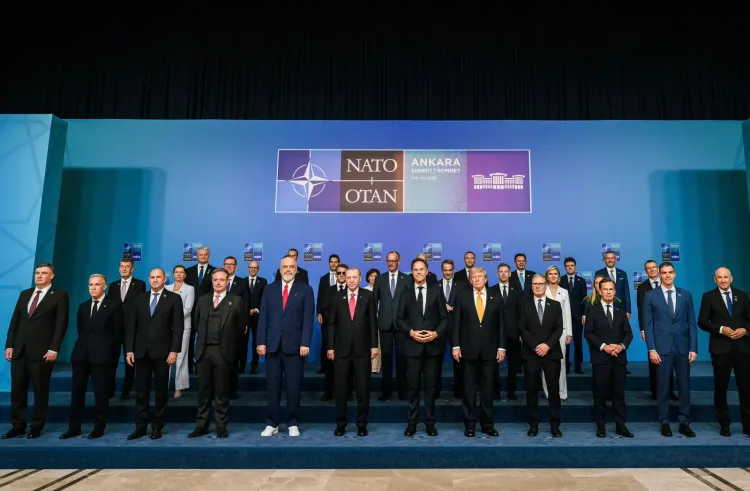
The White House has announced that the 2026 NATO Summit will be held in Ankara, Turkey — the first time the Turkish capital hosts the alliance's flagship leadership gathering. The announcement follows the 2024 Washington summit and comes as NATO navigates debates over Ukraine, defence spending, and enlargement.
Key Takeaways
The White House announced on 8 July 2026 that Ankara, Turkey will host the 2026 NATO Summit .
This marks the first time Ankara has been chosen as the NATO Summit host city.
Turkey has been a NATO member since 1952 and controls access to the Black Sea , hosting key alliance infrastructure including Incirlik Air Base .
The previous summit was held in Washington, D.C. in 2024 , marking NATO's 75th anniversary .
Key anticipated agenda items include the alliance's posture on Ukraine , defence spending targets, and Indo-Pacific security frameworks.
Formal summit dates and a detailed agenda are yet to be confirmed.
The White House, the official communications account of the Executive Office of the President of the United States, announced on Wednesday, 8 July 2026 that the next NATO Summit will be held in Ankara, Turkey, marking the first time the Turkish capital will host the marquee alliance gathering.
Context
The White House post, comprising just four words and a location — '2026 NATO SUMMIT | Ankara, Turkey' — signals a formal confirmation of the summit venue from the United States side. Turkey has been a NATO member since 1952 and its capital Ankara now takes centre stage as the host city for the alliance's next major leadership conclave.
The announcement follows the 2024 NATO Summit held in Washington, D.C., which marked the alliance's 75th anniversary and reaffirmed long-term collective support for Ukraine. Summit host selections rotate among member nations and are widely read as signals of geopolitical priorities within the alliance.
Policy Backdrop
NATO, founded in 1949, is a 32-member collective defence alliance bound by Article 5 — the mutual defence clause that treats an attack on one member as an attack on all. Turkey's geographic position is strategically significant: it controls access to the Black Sea and hosts critical alliance infrastructure, including Incirlik Air Base.
Ankara's selection as host comes at a moment when the alliance is navigating complex debates over defence spending targets, the ongoing war in Ukraine, and questions around further enlargement. Turkey has historically played a bridging role between European and Middle Eastern security architectures, lending added weight to the choice of venue.
Stakeholders and Impact
All 32 NATO member states are direct stakeholders in the summit's outcome. For India, which maintains a longstanding policy of strategic autonomy and engages with NATO members bilaterally, the summit's agenda — particularly on Ukraine and any discussion of Indo-Pacific security — will be closely watched by New Delhi's foreign policy establishment.
The Turkish government under Ankara's leadership stands to gain significant diplomatic visibility as host. Turkey has at times been a contentious voice within the alliance, having previously delayed membership bids and maintained independent energy ties, making the choice of Ankara a nuanced one for alliance optics.
What's Next
Formal confirmation of summit dates, a detailed agenda, and pre-summit bilateral meetings — particularly between U.S. and Turkish leadership — are expected to follow this initial announcement. Key agenda items anticipated include the alliance's posture on Ukraine, burden-sharing among members, and an evolving framework for engaging with security challenges in the Indo-Pacific.
As the host nation, Turkey will have considerable influence over the summit's tone and optics, and Ankara's diplomatic positioning in the months ahead will be scrutinised by alliance partners and observers worldwide. The 2026 NATO Summit in Ankara has the potential to redefine the alliance's strategic priorities for the decade ahead.
Point of View
The optics of a summit on Turkish soil offer an opportunity to reset or reinforce bilateral ties. From an Indian perspective, the summit's agenda on Ukraine and any Indo-Pacific dimension will be watched closely, as New Delhi calibrates its own relationships with both Western alliances and Moscow.
NationPress
8 Jul 2026
Frequently Asked Questions
Where will the 2026 NATO Summit be held?
The 2026 NATO Summit will be held in Ankara, the capital of Turkey, as announced by the White House on 8 July 2026.
Has Turkey hosted a NATO Summit before?
Ankara hosting the 2026 NATO Summit marks the first time the Turkish capital has been chosen as the venue for the alliance's flagship leadership gathering.
Why is Turkey important to NATO?
Turkey has been a NATO member since 1952 and holds strategic importance due to its control over Black Sea access and its hosting of key alliance infrastructure, including Incirlik Air Base.
What was decided at the last NATO Summit?
The 2024 NATO Summit was held in Washington, D.C. and marked the alliance's 75th anniversary, with members reaffirming long-term collective support for Ukraine.
What issues will the 2026 NATO Summit in Ankara address?
While the formal agenda is yet to be confirmed, key anticipated topics include NATO's posture on the war in Ukraine, defence spending targets among members, and evolving frameworks for Indo-Pacific security.