White House Backs Bill Pulte as Acting Director of National Intelligence

Synopsis
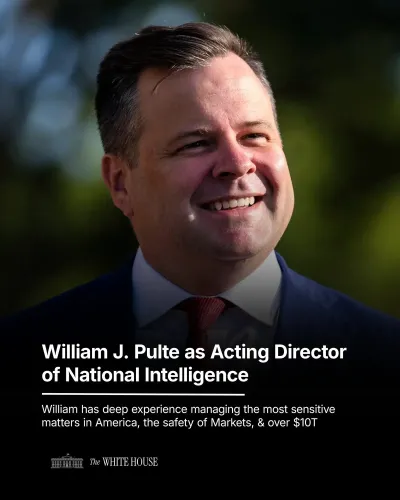
The White House has publicly backed Bill Pulte as the incoming Acting Director of National Intelligence, calling him 'outstanding' for the role that coordinates the 18-agency U.S. Intelligence Community. The endorsement signals immediate leadership change at the Office of the Director of National Intelligence pending any formal Senate nomination.
Key Takeaways
The White House endorsed Bill Pulte as Acting Director of National Intelligence on June 4, 2026 .
Pulte is a business executive known for real estate finance and Republican political support.
The ODNI coordinates the United States' 18-agency Intelligence Community .
The DNI role was created by the Intelligence Reform and Terrorism Prevention Act of 2004 .
A permanent nominee would require Senate Intelligence Committee confirmation.
Allied partners, including India, will track continuity in intelligence-sharing channels.
The White House on Thursday, June 4, 2026, publicly endorsed Bill Pulte as the incoming Acting Director of National Intelligence, signalling confidence in the businessman-turned-administration ally as he steps into one of the most consequential national security coordination roles in the United States government. The endorsement was issued through the Executive Office of the President's official channel.
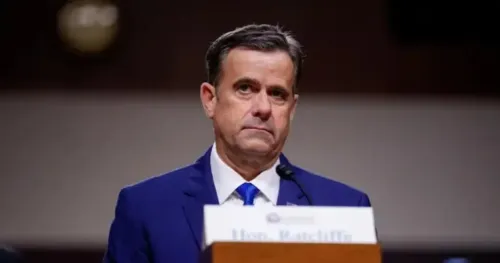
In its post, the White House said, 'Bill Pulte will be an outstanding Acting Director of National Intelligence,' framed under a 'WHAT THEY'RE SAYING' tag that typically aggregates supportive commentary. The brief message, accompanied by a single image, did not specify when Pulte would assume charge or name the official he succeeds.
Context
Bill Pulte is a business executive and investor best known in American public life for his work in real estate finance and his visible support for Republican political causes. His elevation to an acting role atop the U.S. Intelligence Community marks a significant pivot from the private sector to the apex of federal national security coordination.
Acting appointments allow a President to install leadership immediately while a permanent nominee is processed through the Senate. The White House's endorsement post is consistent with administration practice of front-loading public support for incoming officials before formal Senate engagement begins.
Policy backdrop
The Office of the Director of National Intelligence (ODNI) coordinates the United States' 18-agency Intelligence Community and serves as the principal intelligence advisor to the President. The post was created by the Intelligence Reform and Terrorism Prevention Act of 2004, enacted in the aftermath of the 9/11 Commission's recommendations to break down silos among American spy agencies.
The DNI's writ extends across human intelligence, signals intelligence, geospatial, and counter-terrorism portfolios, and includes responsibility for the President's Daily Brief. Past acting DNIs have ranged from career intelligence professionals, such as Joseph Maguire who served in 2019-2020, to political appointees brought in during transitions.
Stakeholders and impact
The decision will be closely tracked by the broader U.S. national security establishment, including officials at the CIA, NSA, FBI's intelligence branch, and the Defence Intelligence Agency, all of whom report into the DNI's coordinating framework. Allied partners that share intelligence with Washington — including the Five Eyes network and India's own security agencies that interface with U.S. counter-terrorism channels — will be watching for any shifts in tone or priority.
For New Delhi, continuity in U.S. intelligence cooperation matters across counter-terror coordination, maritime domain awareness in the Indo-Pacific, and information-sharing on cyber threats. Indian security planners typically track DNI transitions for signals on whether established bilateral intelligence channels will retain bandwidth.
The choice of a business executive over a career intelligence official also reopens a recurring American debate about the balance between policy alignment with the President and deep institutional expertise at the top of the Intelligence Community. Supporters argue outsiders bring managerial discipline, while critics contend the role's complexity demands tradecraft fluency.
What's next
Attention now turns to whether the White House will send a formal nomination for a permanent Director of National Intelligence to the Senate, and how the Senate Select Committee on Intelligence approaches any confirmation hearing. Acting tenures are statutorily limited in duration, which creates a clock for the administration to decide on a long-term pick.
In the interim, Pulte's early decisions on staffing the ODNI front office, his engagement with intelligence agency heads, and the tenor of his first public briefings will set expectations for how the office functions under his stewardship. For partners abroad, including India, the practical test will be whether intelligence cooperation tempo and existing dialogues continue uninterrupted through the transition.
Point of View
The practical question is operational continuity in counter-terror and Indo-Pacific information-sharing channels. The early signal to watch is who Pulte retains in the ODNI front office.
NationPress
18 Oct 2026
Frequently Asked Questions
What does the Director of National Intelligence do?
The Director of National Intelligence leads the Office of the Director of National Intelligence and coordinates the 18-agency U.S. Intelligence Community, serving as the principal intelligence advisor to the President of the United States.
When was the DNI position created?
The Director of National Intelligence position was created by the Intelligence Reform and Terrorism Prevention Act of 2004, following recommendations from the 9/11 Commission to improve coordination among American intelligence agencies.
Does an Acting DNI need Senate confirmation?
No, acting appointments do not require Senate confirmation and allow the President to install leadership immediately. A permanent Director of National Intelligence, however, must be confirmed by the U.S. Senate.
How does this affect India?
India's security agencies interface with U.S. intelligence on counter-terrorism, cyber threats, and Indo-Pacific maritime awareness. New Delhi will track the transition for continuity in established bilateral intelligence-sharing channels.