White House Touts US Jobs Numbers in Punchy Post

Synopsis
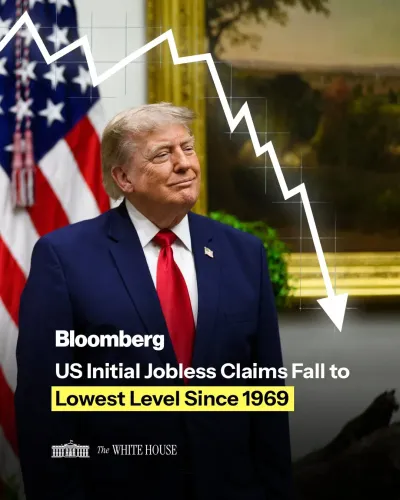
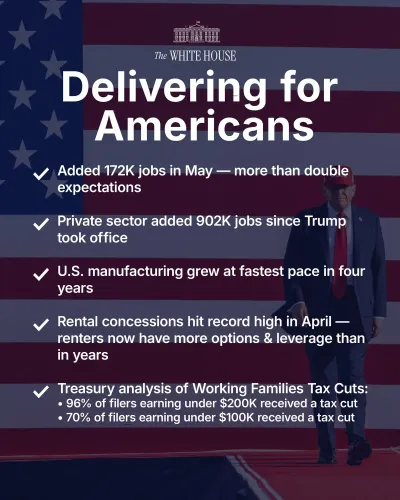
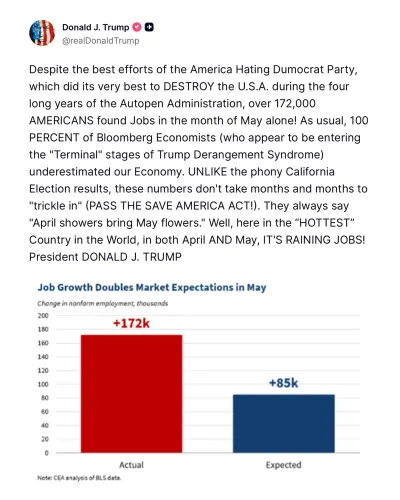
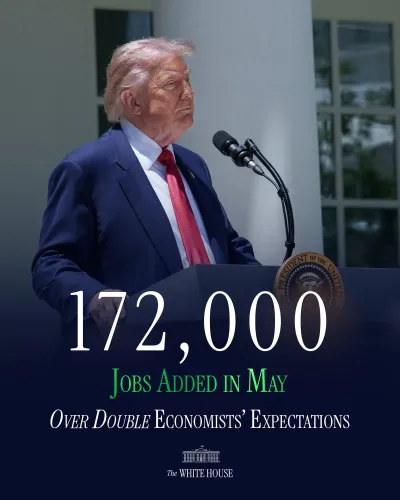
The White House on June 6, 2026 posted a punchy all-caps message on X celebrating the latest US employment figures from the Bureau of Labor Statistics, declaring 'THE NUMBERS DON'T MISS' — continuing a bipartisan tradition of amplifying favourable jobs data through official channels.
Key Takeaways
The White House posted an emphatic jobs-celebration message on X on June 6, 2026 , coinciding with the routine monthly BLS Employment Situation release.
The post used all-caps text and a fire emoji, consistent with the administration's social-media strategy to maximise reach on economic data days.
The Bureau of Labor Statistics is the federal agency responsible for publishing nonfarm payroll and unemployment figures each month, typically on the first Friday.
Amplifying BLS jobs data via official White House channels is a pattern that spans both Republican and Democratic administrations, intensifying after the COVID-19 downturn.
A strong US labour market has downstream implications for India , supporting demand for Indian IT services, pharmaceuticals, and export goods.
Full sectoral details, wage growth figures, and labour-force participation data from the underlying BLS report will be the focus of follow-on analysis.
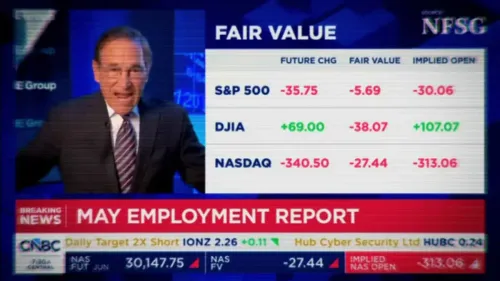
The White House, the official communications account of the Executive Office of the President of the United States, on Saturday, June 6, 2026, posted a sharp, emphatic message on X celebrating the latest employment figures, declaring 'JOBS, JOBS, JOBS' and asserting that 'THE NUMBERS DON'T MISS.'
Context
The post accompanied a video and was timed to coincide with the routine monthly release of the Employment Situation report by the Bureau of Labor Statistics (BLS), the federal statistical agency responsible for publishing nonfarm payroll, unemployment rate, and labour-force participation data. The BLS typically releases this report on the first Friday of each month, making June 6 a natural date for such a communication push.
The language — all-caps, exclamatory, with a fire emoji — reflects a deliberate social-media strategy to amplify what the administration regards as a favourable economic signal to a broad public audience.
Policy Backdrop
Spotlighting monthly BLS jobs data through official White House channels is a well-established pattern that spans administrations of both parties. The practice intensified significantly after the COVID-19 economic downturn, when month-on-month job gains became one of the most closely watched metrics of recovery and policy effectiveness.
A comparable post following the May 2023 BLS report — which showed 339,000 jobs added — drew widespread attention and set a template for this style of data-driven social communication. The current post follows that same playbook: short, punchy, and anchored to a headline number without elaborating on sectoral breakdowns or wage growth figures.
Stakeholders and Impact
The primary audience for such communications is American workers, voters, and financial markets, all of whom track employment data as a barometer of economic health. Labour economists note that headline payroll numbers, while significant, must be read alongside wage growth, labour-force participation rates, and the quality of jobs created — details that a social-media post cannot convey.
For India, which maintains deep trade and investment ties with the United States, a robust American labour market generally signals sustained consumer demand, which can support Indian export sectors including information technology services, pharmaceuticals, and textiles.
What's Next
Attention will now turn to the full BLS Employment Situation release for granular data on which sectors drove the gains, whether wage growth kept pace with inflation, and how the labour-force participation rate shifted. Congressional committees that oversee economic policy are also expected to scrutinise any revisions to prior months' figures.
The White House is likely to follow up with more detailed economic messaging across its official channels, using the jobs report as a foundation for broader arguments about the direction of the US economy heading into the second half of 2026.
Point of View
All-caps post is a textbook example of modern executive communications: using the credibility of a federal data release as a policy shield while stripping away the nuance that economists would demand. By saying 'the numbers don't miss' without specifying what those numbers are, the administration invites the public to fill in the blank with optimism. This strategy has proven durable across administrations precisely because it is difficult to rebut without appearing to argue against employment itself. For Indian observers, the post is a reminder that US domestic economic messaging has direct downstream consequences for bilateral trade sentiment and investment flows.
NationPress
21 Oct 2026
Frequently Asked Questions
What did the White House post about jobs on June 6 2026?
The White House posted an emphatic message on X on June 6, 2026 , saying 'JOBS, JOBS, JOBS. THE NUMBERS DON'T MISS,' accompanied by a video, timed to coincide with the monthly BLS Employment Situation report.
What is the Bureau of Labor Statistics jobs report?
The Bureau of Labor Statistics publishes the monthly Employment Situation report, which includes nonfarm payroll additions, the unemployment rate, and labour-force participation data — typically released on the first Friday of each month.
Why does the White House post about jobs numbers every month?
Presidential administrations of both parties have used official channels to highlight favourable employment data as evidence of policy success, a practice that became especially prominent after the COVID-19 economic downturn.
How do US jobs numbers affect India?
A strong US labour market supports consumer spending, which in turn sustains demand for Indian exports including IT services, generic pharmaceuticals, and manufactured goods, making BLS data relevant to Indian businesses and policymakers.
What should I watch after the White House jobs post?
Watch for the full BLS Employment Situation report detailing sectoral job gains, wage growth, and labour-force participation, as well as any congressional hearings on labour-market revisions in the weeks ahead.