White House Credits Trump's Law and Order Push for Rise in Incarcerations
Synopsis
The White House on June 26, 2026, posted on X crediting President Trump's law-and-order policies for an increase in incarcerations, framing higher prison numbers as a direct result of the administration's enforcement agenda and signalling it as a governance benchmark.
Key Takeaways
The White House posted on June 26, 2026 , attributing rising incarcerations to President Trump 's law-and-order policies.
The administration frames higher incarceration numbers as a deliberate and positive policy outcome.
Trump's enforcement posture traces back to a 2017 executive order directing the DOJ to prioritise violent crime reduction.
Operation Legend in 2020 previously deployed federal agents to high-crime cities, resulting in hundreds of arrests.
The Bureau of Justice Statistics annual reports will be the empirical check on the White House's claim.
Criminal-justice reform advocates argue that incarceration volume alone is not a reliable indicator of public safety.
The White House on Friday, June 26, 2026, posted on X attributing a rise in criminal incarcerations directly to President Donald Trump's law-and-order policy agenda, calling the outcome straightforward and deliberate.
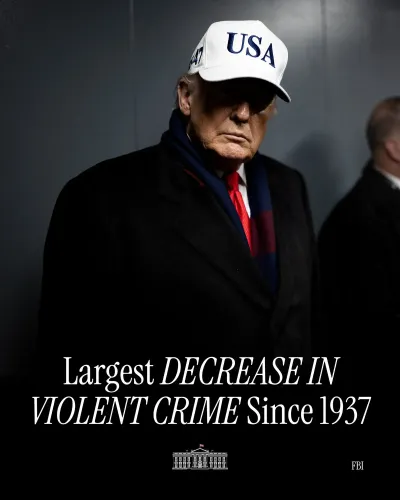
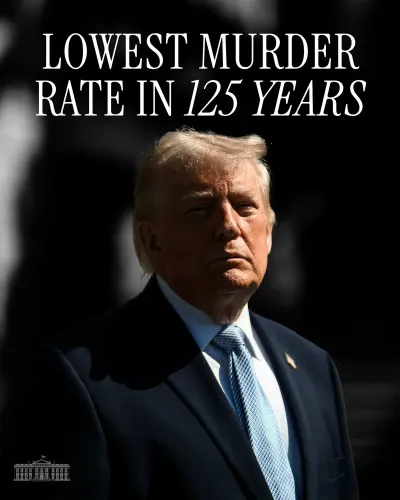
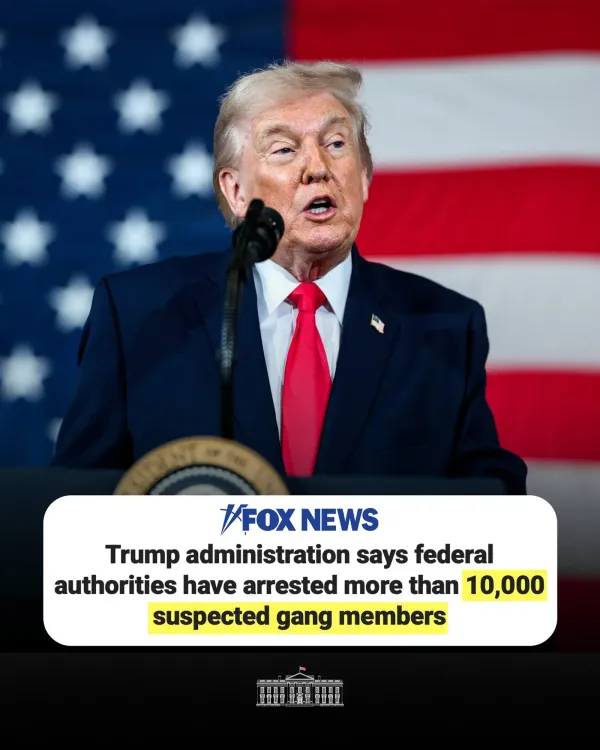
The official post read: 'It's simple: President Trump's LAW AND ORDER policies lead to more criminals behind bars.' The statement was accompanied by an image and signals the administration's intent to frame elevated incarceration numbers as a governance achievement heading into the second half of 2026.
Context
The 'law and order' framing has been a defining pillar of Trump's political identity across both his presidential terms. During his first term (2017–2021), Trump signed an executive order directing the Department of Justice (DOJ) to prioritise violent crime reduction and full enforcement of federal law. That order set the tone for a prosecutorial posture that favoured longer sentences and aggressive federal charging decisions.
The current post suggests the administration is actively tracking and publicising incarceration metrics as a benchmark of success, a departure from the bipartisan sentencing-reform consensus that had gained ground in the late 2010s.
Policy Backdrop
Trump's enforcement approach draws on a lineage of tough-on-crime federal policy stretching back to the 1990s, when sweeping federal crime legislation dramatically expanded the prison population. His 2020 initiative, Operation Legend, deployed federal agents to cities experiencing surges in violent crime, resulting in hundreds of arrests across multiple states.
The current administration's DOJ has reportedly continued that posture, emphasising maximum-penalty charging guidelines and resisting the sentencing-leniency measures advanced under previous leadership. The Bureau of Prisons, which sits under DOJ authority, would be the primary agency reflecting any population increases in federal custody.
Stakeholders and Impact
The principal beneficiaries of the administration's framing are federal law enforcement agencies, local police departments that receive federal grants tied to enforcement priorities, and federal prosecutors whose charging decisions shape incarceration rates. Critics of mass-incarceration policies — including civil liberties organisations and criminal-justice reform advocates — argue that higher incarceration numbers do not automatically translate into safer communities and that the costs fall disproportionately on lower-income and minority populations.
For India and other countries, the US posture on criminal justice carries indirect relevance: American policy debates around policing and incarceration often inform global conversations on governance models, and bilateral cooperation on extradition and transnational crime is shaped in part by the two governments' respective enforcement philosophies.
What's Next
The Bureau of Justice Statistics releases annual incarceration reports that will serve as the empirical test of the White House's claim. Any new DOJ charging or sentencing guidance issued in the coming months will be closely watched by legal scholars, reform advocates, and lawmakers on both sides of the aisle. The administration's decision to highlight this metric publicly suggests it intends to make criminal-justice enforcement a central talking point through the remainder of 2026.
Point of View
A move that reflects the administration's broader strategy of equating enforcement intensity with governance competence. This approach revives a tough-on-crime rhetorical tradition that dominated American politics in the 1980s and 1990s, and stands in direct tension with the bipartisan sentencing-reform consensus that had slowly built over the preceding decade. For the administration, the messaging serves a dual purpose: energising a core electoral base that prioritises public safety while putting reform-minded opponents on the defensive. The longer-term risk is that the metric can be contested — higher incarceration rates have historically been challenged on both fiscal and social-outcome grounds — making the Bureau of Justice Statistics' forthcoming data a critical moment of accountability.
NationPress
27 Jun 2026
Frequently Asked Questions
What did the White House say about Trump's law and order policies?
The White House posted on June 26, 2026, stating that President Trump's law-and-order policies have led to more criminals being incarcerated, framing the rise in prison numbers as a direct and intended result of the administration's enforcement agenda.
What is Trump's law and order policy?
Trump's law-and-order policy centres on aggressive federal criminal enforcement, maximum-penalty charging by the Department of Justice, and support for local law enforcement. It traces to a 2017 executive order prioritising violent crime reduction and was operationalised through initiatives such as Operation Legend in 2020.
How does the Trump administration measure criminal justice success?
The current administration appears to use incarceration volume — the number of criminals placed behind bars — as a key performance indicator, a metric that will be formally tested by annual Bureau of Justice Statistics reports.
What is Operation Legend and how does it relate to Trump's crime policy?
Operation Legend was a 2020 federal initiative that deployed DOJ and other federal agents to cities with high violent-crime rates. It resulted in hundreds of arrests and is one of the concrete enforcement actions the administration points to as evidence of its tough-on-crime approach.
What do critics say about higher incarceration rates as a policy goal?
Criminal-justice reform advocates argue that higher incarceration numbers do not automatically produce safer communities, impose significant fiscal costs, and tend to fall disproportionately on lower-income and minority populations. They favour sentencing reform and rehabilitation over expanded incarceration.