White House: Democrats Block Stop Insider Trading Act
Synopsis
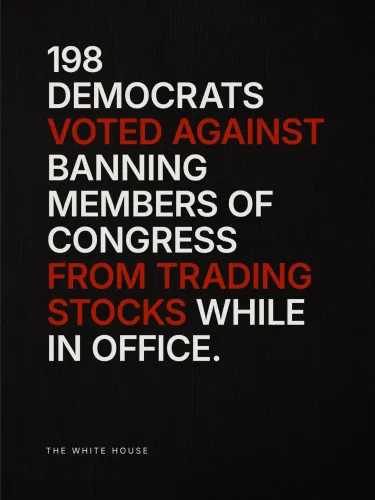
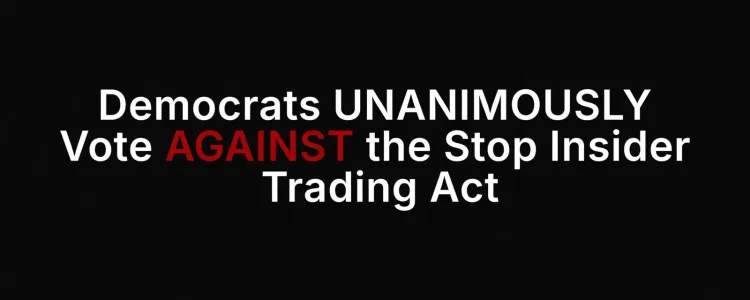
The White House announced that Democrats unanimously voted against the Stop Insider Trading Act on October 1, 2026. The bill sought to curb lawmakers from trading stocks using privileged information, reigniting a long-running debate over congressional financial conflicts of interest and accountability.
Key Takeaways
The White House announced on October 1, 2026 that Democrats voted unanimously against the Stop Insider Trading Act .
The bill aimed to prevent members of Congress from profiting off trades made using non-public or privileged information.
The White House framed the unanimous 'No' vote as a political contrast message against the Democratic Party.
Congressional stock trading reform has stalled repeatedly over the years despite bipartisan public support for restrictions.
The administration appears to be positioning the bill's defeat as a campaign issue heading into the 2026 midterm cycle.
Every single Democratic lawmaker voted against the Stop Insider Trading Act — a bill the White House says would have barred elected officials from profiting off stock trades made on the back of non-public information. The vote, flagged by the White House on Thursday, October 1, 2026, has reignited one of Washington's most combustible debates: whether members of Congress should be allowed to trade individual stocks at all.
What the Stop Insider Trading Act would have done
The bill, as its name signals, targeted the practice of lawmakers using privileged knowledge gained through committee hearings, classified briefings, or pending legislation to make or direct financial trades before that information reaches the public. Critics of congressional stock trading argue this is a structural conflict of interest baked into how Capitol Hill functions — lawmakers regulate industries they simultaneously bet on.
Supporters of reform contend the fix is straightforward: ban members of Congress, and potentially their spouses and dependents, from holding or trading individual stocks while in office. The Stop Insider Trading Act appears to have pursued exactly that mandate.
A unanimous Democratic 'No' and what it means
The White House's framing is pointed and deliberate — 'UNANIMOUSLY' in all-caps signals this is being positioned as a political liability for the Democratic Party, not a routine procedural defeat. When every member of an opposition caucus votes the same way on a reform bill, it hands the other side a ready-made attack line. Democrats will need to answer whether their opposition was to the bill's specific mechanism, its scope, or its political timing — and that answer will matter to voters who rank congressional accountability high.
It is worth noting: reform bills targeting congressional stock trading have historically attracted bipartisan opposition — incumbents of both parties have proved reluctant to constrain their own financial freedoms. The White House's highlighting of a unanimous Democratic 'No' is a strategic framing choice.
The longer fight over congressional stock trading
The push to ban lawmakers from trading individual stocks is not new. High-profile scrutiny of congressional portfolios — particularly around pandemic-era committee briefings and defence appropriations — kept the issue alive in public discourse for years. Multiple reform proposals have been introduced in both chambers, some drawing genuine bipartisan co-sponsorship, others stalling at committee stage. Each failed attempt tends to revive the debate louder than before.
The fact that the White House itself is now amplifying this vote suggests the administration intends to run this issue into the 2026 midterm cycle as a contrast message — clean government versus entrenched privilege. Whether that framing holds will depend on whether Republican lawmakers are prepared to pass a version of the bill they have championed in public.
Point of View
On an official government communications account — is a deliberate political operation, not just a legislative update. Congressional stock trading reform is one of the rare issues that polls well across party lines, making a unanimous opposition vote an unusually clean attack surface. The move suggests the administration is less interested in a quiet legislative defeat than in turning 'Democrats voted against stopping insider trading' into a durable midterm message. The durability of that message will hinge on whether the Republican majority actually brings a signed version of the bill into law.
NationPress
1 Oct 2026
Frequently Asked Questions
What is the Stop Insider Trading Act?
The Stop Insider Trading Act is a proposed US law that would prohibit members of Congress from trading individual stocks while in office, particularly when using privileged or non-public information gained through their legislative duties.
Why did Democrats vote against the Stop Insider Trading Act?
The White House announced the unanimous Democratic 'No' vote but did not provide official reasons. Democratic opposition to such bills has historically centred on concerns about bill scope, enforcement mechanisms, or the specific terms of the legislation rather than outright opposition to reform in principle.
Can US members of Congress legally trade stocks?
Yes. Under current US law, members of Congress are permitted to trade individual stocks, though they are required to disclose trades above a certain threshold within 45 days under the STOCK Act of 2012. Critics argue disclosure alone is insufficient to prevent conflicts of interest.
What is the STOCK Act and how does it differ from the Stop Insider Trading Act?
The STOCK Act, passed in 2012, requires congressional members to disclose stock trades but does not ban them from trading. The Stop Insider Trading Act appears to go further by seeking an outright ban or stricter prohibition on trading while serving in office.
What happens after the Stop Insider Trading Act was voted down?
The bill's defeat does not permanently kill the reform effort. Supporters can reintroduce the legislation, seek amendments, or use the vote as political leverage. The White House's public framing of the outcome suggests the issue will remain active in the political conversation.