White House Launches 'Freedom Fuel' Network, Cuts Gas to $3.47 in Philadelphia

Synopsis
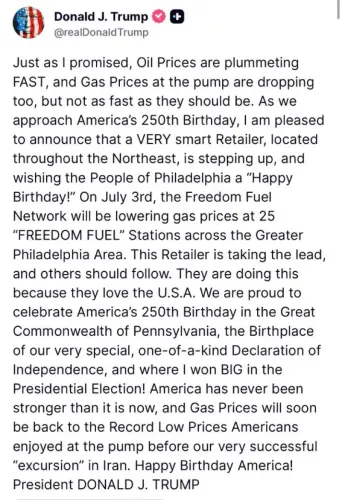
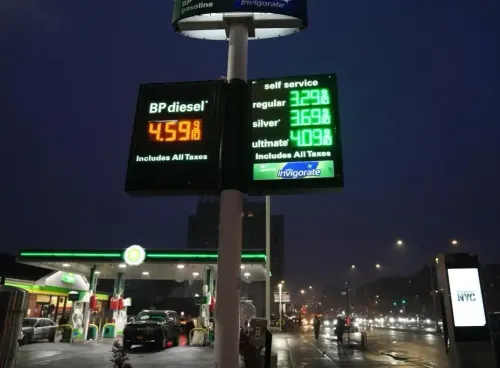
The White House has announced the launch of the first Freedom Fuel Network station in Philadelphia, pricing gasoline at $3.47 per gallon — a symbolic figure tied to President Trump's status as the 47th President. The move is part of the administration's broader push to lower consumer energy costs this summer.
Key Takeaways
The White House announced the first Freedom Fuel Network gas station has opened in Philadelphia, Pennsylvania .
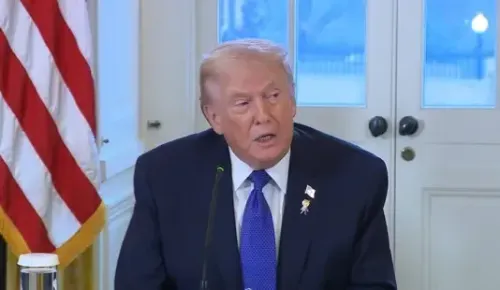
The station is offering gasoline at $3.47 per gallon , a price the administration linked symbolically to President Trump as the 47th President .
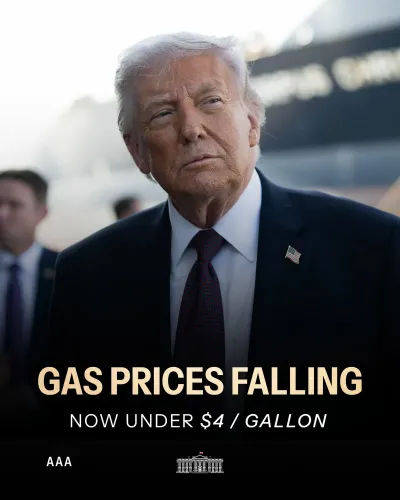
The initiative is framed as part of Trump's push to lower gas prices for American consumers during summer 2026 .
The announcement fits within a longstanding Republican policy approach of expanding domestic fossil fuel supply to reduce consumer energy costs.
Further station openings and related federal energy policy actions will determine the programme's national impact.
The White House announced on Tuesday, July 7, 2026, that the first station under the Freedom Fuel Network has opened in Philadelphia, Pennsylvania, offering gasoline at $3.47 per gallon — a price point the administration explicitly tied to President Donald Trump, the country's 47th President.
Context
The White House post declared, 'The FIRST Freedom Fuel Network gas station has LANDED in Philadelphia, lowering the price at the pump to $3.47 for our 47th President.' The announcement frames the opening as a direct result of the Trump administration's push to reduce energy costs for American consumers ahead of the summer driving season.
Philadelphia — a major city in the swing state of Pennsylvania — was chosen as the debut location for the initiative, giving the rollout immediate political and geographic visibility in a state that has been a consistent battleground in recent presidential cycles.
Policy Backdrop
The Freedom Fuel initiative fits squarely within the broader energy agenda that has defined both of Trump's administrations. During his first term (2017–2021), Trump issued executive orders to streamline permitting for oil and gas projects on federal lands, promoting what the administration called an 'energy dominance' strategy centred on expanded domestic fossil fuel production.
That approach — favouring deregulation, increased drilling leases, and withdrawal from multilateral climate agreements — is now being extended into a second term, with consumer-facing fuel pricing becoming a visible metric of its success. The $3.47 price point appears deliberately chosen as a symbolic nod to Trump's status as the 47th President.
Republican administrations have historically used targeted energy infrastructure announcements to signal commitment to lower pump prices, particularly during summer months when driving demand peaks and fuel costs draw heightened public attention.
Stakeholders and Impact
American drivers stand as the most immediate beneficiaries if the Freedom Fuel Network expands nationally, with lower pump prices directly reducing household transportation costs. US oil and gas producers also stand to gain from any associated policy measures — such as accelerated permitting or expanded federal leasing — that may accompany the network's rollout.
For consumers in Pennsylvania and beyond, the administration's framing positions the initiative as a tangible, pocketbook-level outcome of its energy policy. Whether the pricing holds and how many stations follow the Philadelphia debut will determine the programme's real-world reach.
What's Next
Analysts and policy watchers will be tracking further Freedom Fuel Network station openings across the country, as well as any related executive actions on federal oil and gas leasing or permitting that could underpin the pricing model. Summer 2026 national average gasoline price data, released periodically by US energy agencies, will serve as an independent benchmark against which the initiative's impact can be measured.
If the network scales rapidly and prices hold below national averages, the White House is likely to use it as a centrepiece economic argument heading into the broader political calendar. Any stalling in expansion or price reversals, however, could invite scrutiny of the programme's structural sustainability.
Point of View
Calibrated to Trump's '47th President' identity, signals that the administration wants voters to experience its energy agenda at the pump rather than in policy documents. Choosing Philadelphia, in the perennially contested state of Pennsylvania, is unlikely to be coincidental. The initiative continues a decades-long Republican pattern of linking domestic fossil fuel expansion to consumer relief, a message that tends to resonate strongly in inflationary environments. How quickly the network scales beyond a single station will determine whether this remains a symbolic headline or becomes a substantive policy instrument.
NationPress
7 Jul 2026
Frequently Asked Questions
What is the Freedom Fuel Network in the US?
The Freedom Fuel Network is a fuel pricing initiative launched under the Trump administration, with the first station opening in Philadelphia, Pennsylvania in July 2026, offering gasoline at $3.47 per gallon.
Why is the gas price set at $3.47 at the Freedom Fuel station?
The $3.47 price point is a symbolic reference to President Donald Trump's status as the 47th President of the United States, as stated in the White House's announcement.
Where is the first Freedom Fuel gas station located?
The first Freedom Fuel Network gas station is located in Philadelphia, Pennsylvania , announced by the White House on July 7, 2026.
How is Trump trying to lower gas prices in the US?
The Trump administration is pursuing lower gas prices through domestic energy production expansion, deregulation, and consumer-facing initiatives like the Freedom Fuel Network, which aims to offer below-market fuel prices at participating stations.
What is Trump's energy policy in 2026?
In 2026, the Trump administration's energy policy centres on expanding domestic oil and gas production, streamlining federal permitting, and reducing consumer fuel costs — a continuation of the 'energy dominance' agenda first outlined during Trump's first term from 2017 to 2021.