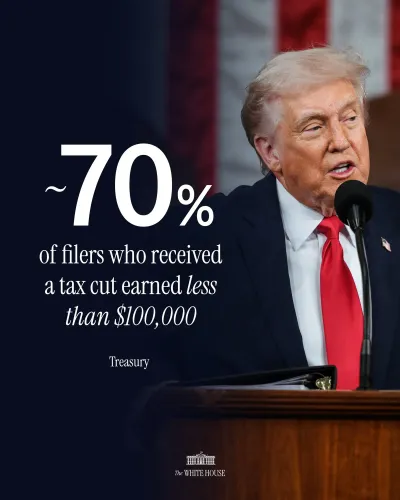
White House Reminds: No Democrat Voted for Trump's 2017 Tax Cuts
Synopsis
The White House posted a sharp reminder that no Democrat supported the 2017 Tax Cuts and Jobs Act — a party-line vote that slashed corporate rates from 35% to 21%. The post resurfaces as key individual tax provisions from the law approach their post-2025 sunset deadline, raising the stakes for a new congressional battle.
Key Takeaways
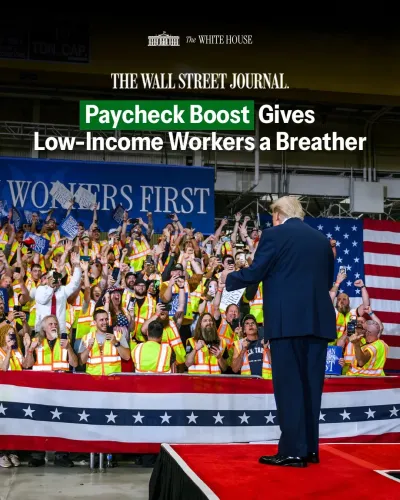
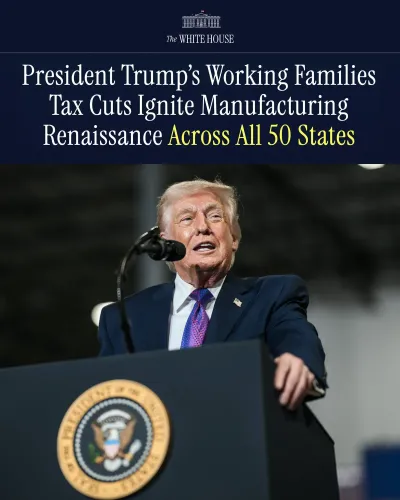
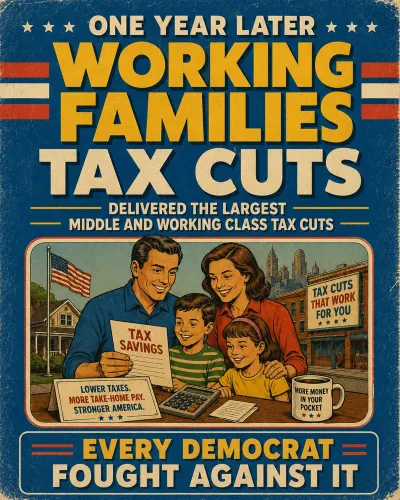
The White House posted that every Democrat voted against President Trump's tax cuts, referring to the Tax Cuts and Jobs Act of 2017 .
The Act was signed on December 22, 2017 , cutting the corporate tax rate from 35% to 21% and restructuring individual brackets.
The vote passed entirely along party lines — zero Democratic votes in either the House or Senate.
Several individual tax provisions are set to sunset after 2025 , making the legislative history politically relevant again.
The post reflects a broader, longstanding partisan divide over U.S. tax policy between the two major parties.
The White House is keeping a nine-year-old congressional vote squarely in the political spotlight — and the message is pointed. The official White House account on X posted a sharp reminder that 'every single Democrat voted against President Trump's historic tax cuts,' reigniting debate over the Tax Cuts and Jobs Act as its key provisions face a sunset deadline.
What the 2017 Tax Cuts Actually Did
The Tax Cuts and Jobs Act, signed into law by President Donald Trump on December 22, 2017, was the most sweeping overhaul of the U.S. federal tax code in decades. It slashed the corporate tax rate from 35% to 21% and restructured individual income tax brackets. The vote was entirely along party lines — not a single Democrat in the House or the Senate crossed the aisle to support it. Republicans framed the legislation as a growth engine for businesses and workers. Democrats countered that the cuts disproportionately benefited corporations and the wealthy, adding trillions to the national deficit. That argument has never fully left Washington.Why the White House Is Posting This Now
The timing is not accidental. Several individual tax provisions from the 2017 law were written with an expiry date — they are scheduled to sunset after 2025, meaning millions of American taxpayers could face higher rates if Congress does not act to extend them. The White House post lands squarely in that legislative battle, framing Democratic opposition to the original bill as a preview of the fight ahead over extensions. The broader partisan pattern is consistent: Republican administrations have pursued rate reductions, while Democrats have opposed them on distributional grounds. The 2017 vote has become a recurring reference point in that argument. Whether Congress extends, modifies, or allows those provisions to lapse will shape tax bills for ordinary Americans — and define a central economic argument heading into the next electoral cycle. The White House, it seems, wants voters to remember exactly who voted which way.Point of View
The administration is pre-emptively assigning blame should those provisions lapse and rates rise. It fits a pattern where landmark legislation is kept alive in public memory not just as policy record but as electoral ammunition. For Indian observers tracking U.S. economic policy, the outcome of this tax battle will influence global capital flows, corporate investment decisions, and the broader trajectory of the U.S. economy.
NationPress
6 Aug 2026
Frequently Asked Questions
What are Trump's historic tax cuts the White House is referring to?
The reference is to the Tax Cuts and Jobs Act of 2017 , signed by President Trump on December 22, 2017 . It was the largest U.S. tax overhaul in decades, lowering the corporate rate from 35% to 21% and modifying individual income tax brackets.
Did any Democrat vote for the 2017 Trump tax cuts?
No. The Tax Cuts and Jobs Act passed entirely along party lines. Not a single Democrat in the House or Senate voted in favour of the legislation.
Why are Trump's 2017 tax cuts back in the news?
Several individual tax provisions from the 2017 law are scheduled to sunset after 2025 . If Congress does not act to extend them, millions of Americans could face higher tax rates, making the original vote politically relevant again.
What was the main criticism Democrats had of the 2017 tax cuts?
Democrats argued that the cuts disproportionately benefited corporations and wealthy individuals while adding significantly to the national deficit, rather than delivering broad-based relief to working Americans.
How does the 2017 tax vote affect India or global markets?
The U.S. corporate tax rate directly influences where multinational companies invest. Any change — extension, modification, or lapse of the 2017 provisions — could shift global capital flows and affect economies, including India , that are closely linked to U.S. business activity.