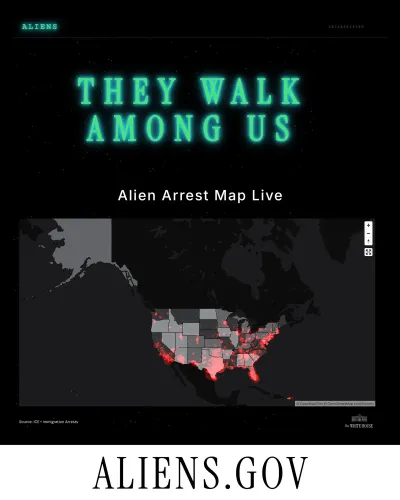
White House Signals Crackdown, Vows to Remove 'Worst of the Worst'

Synopsis
The White House declared on X that it is 'removing the worst of the worst,' in a terse but pointed post on July 17, 2026. The statement signals a hardened enforcement posture — likely on immigration or criminal justice — ahead of an expected formal announcement.
Key Takeaways
The White House posted on X on July 17, 2026 , stating it is 'removing the worst of the worst.' The post carries no named programme, statute, or target group, but the phrasing is consistent with prior administration rhetoric on immigration enforcement or criminal justice .
The White House has a documented pattern of using short social media posts to signal policy direction ahead of formal executive actions.
Indian nationals are among the largest undocumented immigrant communities in the United States , making any US enforcement escalation directly relevant to India .
Formal clarification is expected from the Department of Homeland Security or Department of Justice in subsequent briefings.
The White House, the official communications account of the Executive Office of the President of the United States, posted a pointed message on X on Thursday, July 17, 2026, declaring the administration's intent to remove what it called 'the worst of the worst' — language that signals a hardened enforcement posture on a priority issue.
Context
The post, brief and unambiguous in tone, read: 'Removing the worst of the worst.' While the statement does not name a specific programme, policy, or population, the phrasing is consistent with language the current administration has used in the past to describe enforcement actions — most commonly in the domains of immigration enforcement, criminal justice, or regulatory rollback.
The White House's social media strategy under the current administration has frequently employed short, declarative posts to signal policy direction ahead of formal announcements. Such messaging often precedes executive orders, agency directives, or public briefings.
Policy Backdrop
The phrase 'worst of the worst' has a documented history in United States policy discourse. It has been invoked by administrations across party lines to justify prioritising the removal or prosecution of individuals deemed the most serious offenders — whether in immigration courts, federal criminal proceedings, or national security contexts.
In the immigration context specifically, the term has been used to describe individuals with violent criminal histories or repeat offence records who are prioritised for deportation. In a regulatory context, it has been applied to industries or actors deemed most egregiously non-compliant. Without an accompanying press release or briefing, the precise target of this post remains unclear.
Stakeholders and Impact
Depending on the policy domain this post ultimately references, the affected stakeholders could range from undocumented individuals with criminal records, to federal contractors under review, to individuals on watch lists. Advocacy groups on both sides of the immigration debate routinely monitor White House social media for early signals of enforcement shifts.
For India, any escalation in US immigration enforcement carries direct relevance: Indian nationals constitute one of the largest groups of undocumented immigrants in the United States, and any tightening of removal priorities has historically drawn attention from the Ministry of External Affairs in New Delhi.
What's Next
Official clarification is expected through subsequent White House press briefings, agency announcements from the Department of Homeland Security or the Department of Justice, or a follow-up executive communication. Observers will watch for whether this post accompanies a formal executive action or represents a standalone messaging moment ahead of a broader rollout.
The administration's pattern of using social media to front-run policy announcements means that formal details could emerge within hours or days. Until then, the post stands as a statement of intent — forceful in tone, if deliberately unspecific in scope.
Point of View
Without accompanying detail, functions as a pressure signal as much as a policy statement. The administration has consistently used X to test public messaging before formal rollout, and this post fits that pattern precisely. For observers in India, the ambiguity is itself noteworthy: it leaves open whether the target is immigration, crime, or regulation — each of which carries distinct bilateral implications. Until a formal announcement follows, this is enforcement posturing with strategic intent.
NationPress
15 Oct 2026
Frequently Asked Questions
What did the White House mean by 'removing the worst of the worst'?
The White House has not yet specified the target in this post. The phrase has historically been used in US policy to describe the prioritised removal or prosecution of individuals deemed the most serious offenders, most commonly in immigration enforcement or criminal justice contexts.
Is the White House post about immigration deportations?
The post does not explicitly mention immigration, but 'worst of the worst' is a phrase closely associated with US immigration removal priorities, particularly for individuals with violent criminal records. No formal confirmation has been issued as of the time of publication.
Does this White House announcement affect Indians in the US?
Potentially yes. Indian nationals are among the largest undocumented immigrant communities in the United States. Any escalation in US enforcement priorities has historically drawn attention from Indian authorities and affected Indian diaspora communities.
Will there be a formal White House announcement following this post?
Based on the administration's established pattern, a formal announcement from the White House, Department of Homeland Security, or Department of Justice is expected to follow. No official press release had been issued at the time of publication.
When did the White House make this post?
The White House posted the message on X on Thursday, July 17, 2026 , at approximately 10:28 PM IST.