White House Says US Gas Prices Are Dropping Fast
Synopsis
The White House declared on November 20, 2026, that US gasoline prices are seeing 'drastic drops,' posting the claim with an American flag emoji. No specific figures or policy context were provided. The announcement signals the administration's intent to highlight fuel-cost relief for American households.
Key Takeaways
The White House posted on November 20, 2026 , claiming US gasoline prices are seeing 'drastic drops.' No specific price figures, percentage changes, or causal explanations were included in the post.
US gasoline prices are influenced by OPEC decisions, domestic production, crude supply, and seasonal demand.
The US Energy Information Administration publishes weekly data that will confirm or contextualise the claim.
Sustained falls in US pump prices can signal softer global crude benchmarks, with direct implications for India's oil import bill and domestic fuel prices.
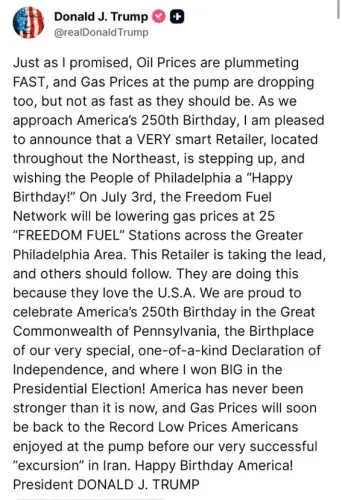
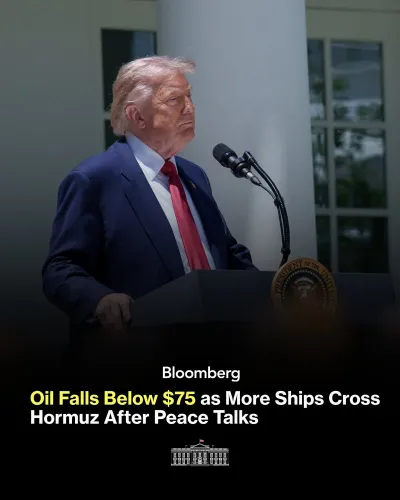
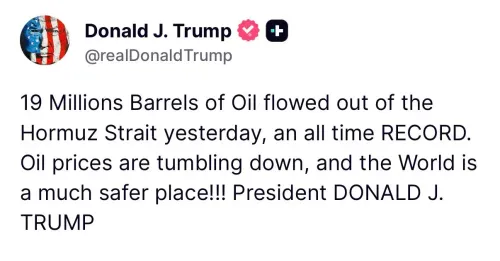
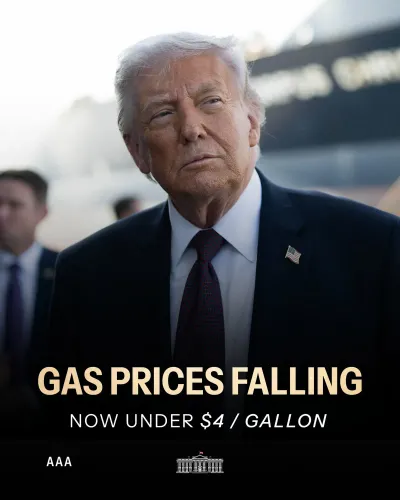
American drivers may be getting relief at the pump. The White House posted on Friday, November 20, 2026, that gasoline prices across the United States are seeing 'drastic drops' — a signal the administration wants front and centre in the national conversation about household costs.
A politically charged number at the pump
Gasoline prices are one of the most visceral economic indicators in American life — visible on every street corner, felt in every weekly budget. When prices fall sharply, White Houses of both parties move quickly to claim credit, because few economic data points land with voters as immediately as the price per gallon they see on the drive to work.
The post offered no specific figures, no causal explanation, and no policy citation. What it did offer was a flag-draped framing — the American flag emoji squarely alongside the claim — presenting the drop as a national win.
What drives gas prices and why the White House is watching
US retail gasoline prices are shaped by a web of forces: global crude oil supply, OPEC production decisions, domestic drilling output, refinery capacity, and seasonal demand shifts. A drop that feels 'drastic' to consumers can stem from any combination of these — a crude glut, a warm autumn reducing heating-fuel competition, or a slowdown in demand. Without administration data or a Department of Energy statement, the precise driver here is not established.
The US Energy Information Administration publishes weekly and monthly retail price reports that will, in coming days, either confirm or contextualise the White House's characterisation. Those figures will be the definitive scoreboard.
Why this matters for Indian readers
US gasoline price trends carry ripple effects well beyond American borders. A sustained fall in US pump prices often tracks — or anticipates — softer global crude benchmarks, which feed directly into India's import bill. India is the world's third-largest oil importer, and even modest movements in Brent crude translate into pressure on the rupee, the current account deficit, and domestic fuel retail prices set by state-run oil companies.
Cheaper crude is a tailwind for Indian policymakers who have faced persistent inflationary pressure partly linked to energy costs. If the White House's signal reflects a genuine and sustained trend in oil markets, New Delhi will be watching closely.
The pump price today is a barometer of far bigger forces — and the world's largest economy just announced the needle is moving down.
Point of View
Emoji-accented post on falling gas prices is a classic example of an administration using a consumer-facing economic signal to shape public sentiment — long before the data is fully in. Gasoline prices sit at the intersection of geopolitics, monetary policy, and kitchen-table economics, making them irresistible political currency. For India, the subtext matters as much as the headline: if the drop reflects a genuine softening in global crude markets, it could ease pressure on the rupee and India's energy import bill at a moment when policymakers welcome any inflationary relief. The absence of hard numbers in the post, however, leaves the claim open to scrutiny until official energy-agency data arrives.
NationPress
20 Nov 2026
Frequently Asked Questions
Why are US gas prices dropping in 2026?
The White House announced a 'drastic drop' in US gasoline prices on November 20, 2026, but provided no specific cause. Gas prices typically fall due to lower global crude oil supply pressure, OPEC production increases, reduced seasonal demand, or higher domestic output. Official data from the US Energy Information Administration will clarify the driving factors.
How do falling US gas prices affect India?
The United States and India both import large volumes of crude oil, so sustained US pump-price drops often track softer global crude benchmarks. For India, cheaper crude means a lower oil import bill, reduced pressure on the rupee, and potential relief on domestic petrol and diesel retail prices set by state-run oil companies.
What did the White House say about gas prices?
On November 20, 2026, the White House posted on X that gas prices in the United States are 'seeing drastic drops,' accompanied by an American flag emoji. No specific figures, percentage changes, or policy measures were cited in the post.
Who sets gasoline prices in the United States?
US retail gasoline prices are determined by global crude oil costs, refinery margins, federal and state taxes, and retail distribution. The federal government does not directly set pump prices; however, administration policies on domestic drilling, strategic petroleum reserve releases, and diplomatic engagement with OPEC can influence them.
Where can I track official US gasoline price data?
The US Energy Information Administration publishes weekly retail gasoline price data for different US regions. The Department of Energy also issues periodic energy price outlooks that provide context for short-term price movements.