White House Signals US-Philippines Alliance with Joint Flag Post
Synopsis
The White House posted paired US and Philippine flags with a handshake emoji on November 18, 2026, publicly reaffirming the two nations' longstanding alliance rooted in the 1951 Mutual Defense Treaty and reinforced by expanded EDCA basing agreements since 2023.
Key Takeaways
The White House posted US and Philippine flags with a handshake symbol on November 18, 2026 , signalling bilateral solidarity.
The US-Philippines Mutual Defense Treaty , signed in 1951 , underpins the formal security alliance between the two countries.
The Enhanced Defense Cooperation Agreement (EDCA) , expanded in 2023 , grants the US greater access to Philippine military bases.
The Philippines is a designated major non-NATO ally of the United States, the only one in mainland Southeast Asia.
Washington has deepened Indo-Pacific alliances through joint maritime patrols, expanded military assistance, and new basing arrangements in recent years.
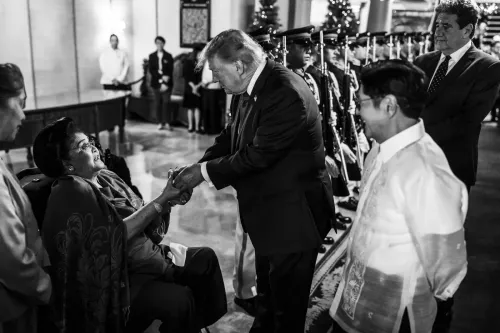
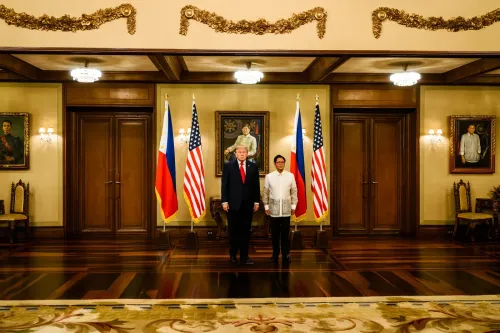
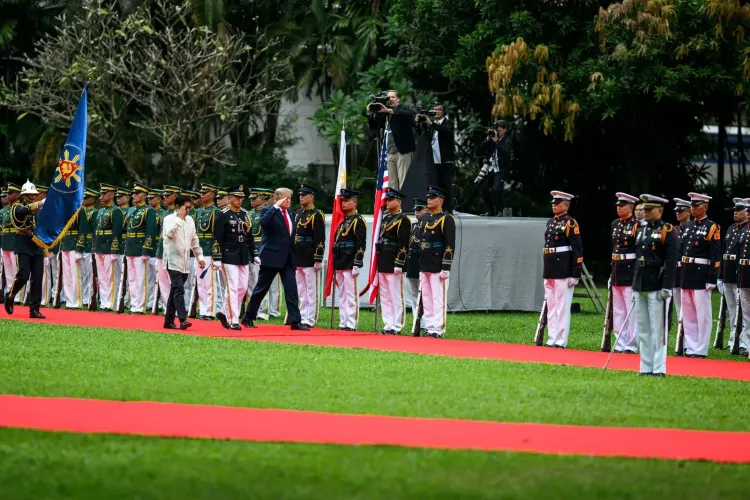
The White House posted a pointed diplomatic signal on Wednesday, November 18, 2026 — two flags, a handshake emoji, no words needed. The official communications account of the Executive Office of the President paired the American and Philippine flags with a handshake, a gesture that speaks the language of alliance politics with unmistakable clarity.
The post, brief as it is, lands against a backdrop of intensifying US engagement in the Indo-Pacific. The United States and the Philippines share one of the region's oldest formal security commitments — the Mutual Defense Treaty of 1951 — which binds both nations to mutual support in the event of an armed attack on either party.
EDCA Expansion and the New Architecture of the Alliance
The alliance has not stood still since 1951. The Enhanced Defense Cooperation Agreement (EDCA), first signed in 2014 and significantly expanded in 2023, opened up greater US military access to Philippine bases for joint training and operational activities. The 2023 expansion added new EDCA sites, deepening the physical footprint of the partnership on Philippine soil and extending Washington's strategic reach closer to key flashpoints in the South China Sea. A 2+2 Ministerial Dialogue between the two governments in 2023 reaffirmed those alliance commitments and set the tone for the kind of coordinated signaling — diplomatic, military, symbolic — that the White House post reflects.Philippines as a Cornerstone of US Indo-Pacific Strategy
The Philippines holds the status of a major non-NATO ally of the United States — a designation that unlocks priority arms transfers, joint exercises, and defence financing. As Washington has worked to reinforce its network of alliances across Southeast Asia, Manila has emerged as a cornerstone partner, its geography making it strategically indispensable in any calculation involving the South China Sea, Taiwan Strait, or broader ASEAN-linked security architecture. Joint maritime patrols, increased military assistance, and expanded basing access have all become regular features of the relationship in recent years — each one a building block in a larger Indo-Pacific posture. A flag and a handshake from the White House may look like a small gesture. In the grammar of alliance diplomacy, it is a deliberate, public reaffirmation — and in the current regional climate, those reaffirmations are precisely the kind of signal both allies and rivals are watching.Point of View
Particularly as tensions in the South China Sea keep Manila's strategic value at a premium. For the Philippines, Washington's visible endorsement also carries domestic political weight, signalling to President Marcos's government that the alliance remains a priority in Washington. Expect this kind of signalling to intensify ahead of any major multilateral summit or bilateral security review.
NationPress
18 Nov 2026
Frequently Asked Questions
What is the US-Philippines Mutual Defense Treaty?
The Mutual Defense Treaty is a security pact signed in 1951 between the United States and the Philippines that commits both nations to assist each other if either faces an external armed attack.
What is EDCA and why does it matter?
The Enhanced Defense Cooperation Agreement (EDCA) , signed in 2014 and expanded in 2023 , allows the US military greater rotational access to Philippine bases, strengthening Washington's operational presence in the Indo-Pacific .
Is the Philippines a US ally?
Yes, the Philippines is designated a major non-NATO ally of the United States , a status that enables priority access to US defence equipment, joint exercises, and security financing.
Why is the Philippines important to US Indo-Pacific strategy?
The Philippines ' geography — flanking the South China Sea and lying close to the Taiwan Strait — makes it a critical node in any US strategy to maintain a credible military presence and deterrence posture in Southeast Asia .
What did the White House post about the Philippines?
On November 18, 2026 , the White House posted US and Philippine flag emojis alongside a handshake symbol on X, publicly signalling the strength of the bilateral alliance between Washington and Manila .