CM Samrat Choudhary: MBBS seats up 172% since 2014
Synopsis
Bihar CM Samrat Choudhary spotlights a 172% jump in MBBS seats — from 51,348 in 2014 to 1,39,864 in 2026 — and 15 new AIIMS approvals, framing the decade-long expansion as PM Modi's blueprint for a self-reliant health system and the foundation of Viksit Bharat.
Key Takeaways
MBBS seats in India rose from 51,348 in 2014 to 1,39,864 in 2026 — a 172% increase in twelve years.
15 new AIIMS have been approved over the last 12 years under the central government.
The National Medical Commission Act 2019 replaced the old Medical Council of India and helped unlock seat expansion in existing and new colleges.
The Pradhan Mantri Swasthya Suraksha Yojana provided the policy and funding backbone for new AIIMS campuses in underserved states.
Bihar CM Samrat Choudhary linked the data to PM Modi's Viksit Bharat vision, framing health infrastructure as central to India's development roadmap.
Actual operationalisation of new AIIMS and equitable distribution of new seats across states remain the key benchmarks to watch.
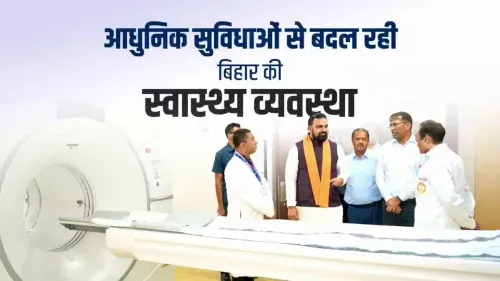
India's medical education landscape has been redrawn over the past decade — and the numbers make the case starkly. Bihar Chief Minister Samrat Choudhary on Wednesday, 18 November 2026 highlighted a defining shift: MBBS seats in India have surged from 51,348 in 2014 to 1,39,864 in 2026, a rise of nearly 172 per cent, alongside approvals for 15 new AIIMS over the last 12 years.
From 51,000 seats to nearly 1.4 lakh — what the expansion means
For decades, the brutal arithmetic of Indian medical admissions told a grim story: too few seats, too many aspirants, and an entire generation of young doctors either turned away or forced abroad. The figures CM Choudhary cited suggest that arithmetic is being fundamentally reworked. A jump of 88,516 seats in twelve years is not incremental reform — it is a structural overhaul.
Posting in Hindi, Choudhary framed the expansion as a cornerstone of 'Swasth Bharat se Sashakt Bharat' — 'from a healthy India to an empowered India' — and tied it directly to Prime Minister Narendra Modi's Viksit Bharat (Developed India) vision. 'A strong health system,' he wrote, 'is the firm foundation of a bright future.'
The AIIMS network and the policy engine behind the numbers
The All India Institutes of Medical Sciences brand — once synonymous with a single landmark institution in New Delhi — now spans a nationwide network. The Pradhan Mantri Swasthya Suraksha Yojana, expanded aggressively after 2014, drove approvals for new AIIMS campuses in states that previously had no equivalent tertiary-care anchor. 15 new AIIMS approvals in 12 years represents a deliberate push to correct regional imbalances in specialist care.
Regulatory change reinforced the institution-building. The National Medical Commission Act of 2019 replaced a decades-old regulatory body and streamlined the process for colleges to add or create seats — clearing bureaucratic bottlenecks that had long suppressed supply. The twin levers of new campuses and reformed norms together explain the dramatic seat count.
Bihar's stake in a national health build-out
Bihar is among the states that have historically faced acute shortfalls in doctor density and medical infrastructure. As a BJP chief minister amplifying central government data, Choudhary's post serves a dual purpose: crediting PM Modi's decade-long record and signalling to Bihar's medical aspirants and patients that the state is embedded in a larger national uplift. The #ViksitBharat hashtag anchors the health data inside the ruling coalition's overarching development narrative ahead of a period of intense governance benchmarking.
The real test, however, lies in operationalisation. Seat approvals and functional hospitals with full faculty are different milestones. Parliamentary scrutiny of how many of the 15 new AIIMS are fully operational — and how equitably the new 1,39,864 MBBS seats are distributed across states — will be the next chapter in this story.
India is training more doctors than at any point in its history. Whether the classrooms, the faculty, and the rural postings can keep pace with the seats is the question that will define whether these numbers translate into healthier lives.
Point of View
If matched by faculty recruitment and rural deployment incentives, could meaningfully narrow India's doctor-to-population ratio over the next decade. The AIIMS expansion further signals a deliberate shift away from the colonial-era model of a single elite institution toward distributed tertiary care. The critical unresolved question is whether regulatory momentum has outpaced physical and human-resource capacity — a gap that policymakers and parliamentary committees will need to close for the numbers to translate into outcomes on the ground.
NationPress
18 Nov 2026
Frequently Asked Questions
How many MBBS seats are there in India in 2026?
According to data cited by Bihar CM Samrat Choudhary, India had 1,39,864 MBBS seats in 2026, up from 51,348 in 2014 — a rise of nearly 172 per cent .
How many new AIIMS have been approved since 2014?
15 new AIIMS have been approved over the last 12 years under the central government as part of the Pradhan Mantri Swasthya Suraksha Yojana .
What is the Pradhan Mantri Swasthya Suraksha Yojana?
The Pradhan Mantri Swasthya Suraksha Yojana is a central government scheme aimed at correcting regional imbalances in tertiary healthcare by funding new AIIMS and upgrading government medical colleges across India.
What replaced the Medical Council of India?
The National Medical Commission , established under the National Medical Commission Act 2019 , replaced the Medical Council of India and introduced new norms that helped accelerate the expansion of MBBS seats.
Why is Bihar CM Samrat Choudhary talking about national health data?
Samrat Choudhary , Bihar Chief Minister and senior BJP leader, is highlighting central government health achievements to credit PM Modi's governance record and connect Bihar's development aspirations to the national Viksit Bharat framework.