White House Teases New UFO Data Release

Synopsis
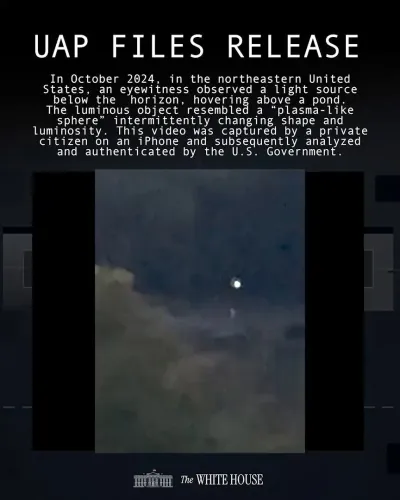
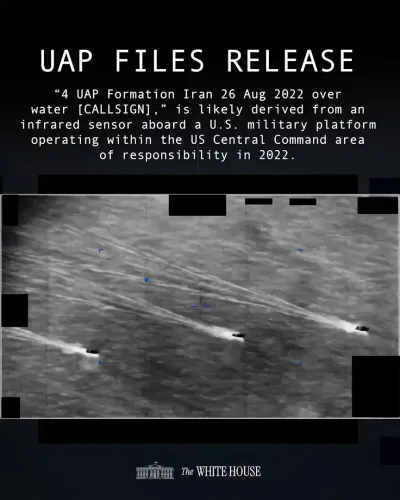
The White House posted a cryptic 'NEW UFO DROP' announcement on October 23, 2026, linking to WAR.GOV/UFO alongside a video, in what appears to be the latest instalment in Washington's incremental UAP declassification programme that began in earnest in 2020.
Key Takeaways
The White House officially announced a new UFO/UAP data release on October 23, 2026 via its X account.
The release links to WAR.GOV/UFO and includes at least one video .
The Pentagon first officially released US Navy UAP videos in April 2020 , breaking a long institutional taboo on public disclosure.
The ODNI's 2021 UAP assessment logged 144 incidents , with only one conventionally explained — setting the modern disclosure baseline.
Routing the release through the White House rather than the Pentagon signals executive-level ownership of the announcement.
Congressional oversight committees — particularly Senate Armed Services and Intelligence panels — are expected to seek formal briefings on the new material.
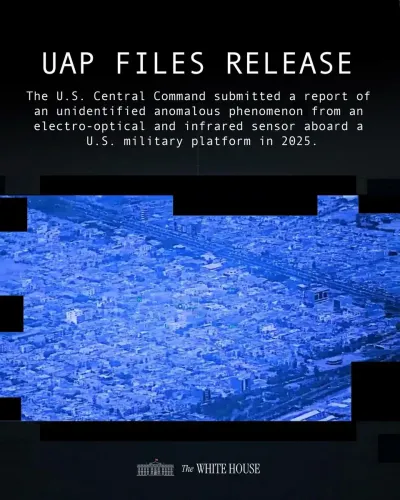
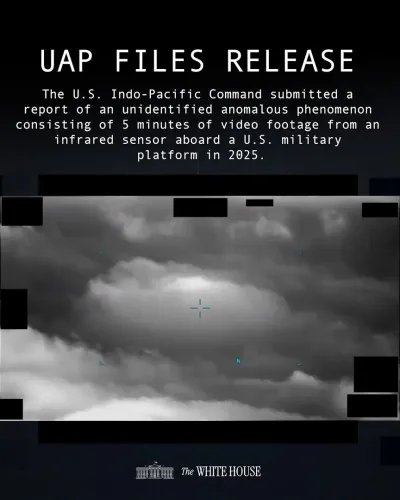
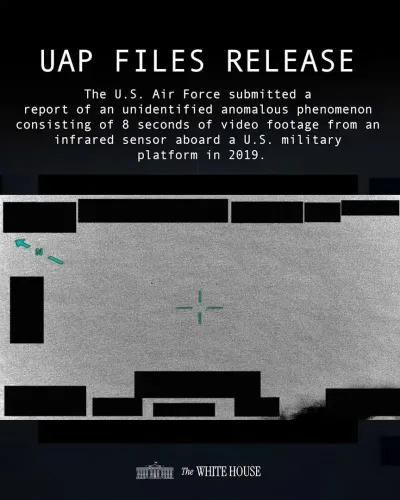
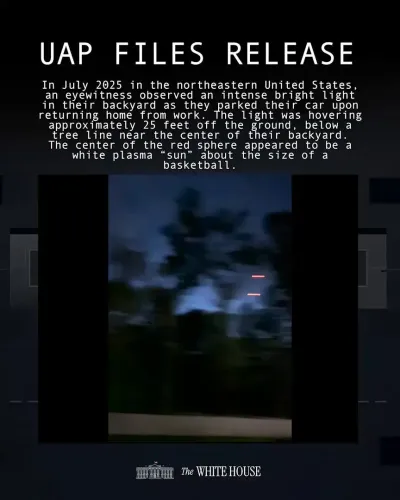
The skies just got a little more crowded with questions. The White House on Friday, October 23, 2026 posted a cryptic two-line announcement on X — 'NEW UFO DROP 🛸👀' alongside a link to WAR.GOV/UFO — signalling what appears to be a fresh government disclosure on unidentified aerial phenomena, backed by at least one video.
A drip-feed of disclosures — and why this one matters
The US government's relationship with UAP transparency has been a slow, grudging thaw. It was April 2020 when the Pentagon officially released three US Navy videos — long circulating in unofficial channels — showing unidentified objects performing manoeuvres that left military aviators visibly shaken. That single act of declassification broke a decades-long institutional taboo.
A year later, the Office of the Director of National Intelligence (ODNI) produced its landmark 2021 preliminary UAP assessment, acknowledging 144 incidents reported by US government personnel, with only one explicable by conventional means. Annual follow-on reports have continued since, driven by explicit congressional mandates requiring standardised collection and reporting of UAP data across military and intelligence agencies.
What the WAR.GOV link signals
The routing of this release through a WAR.GOV subdomain — rather than the Pentagon's own channels — is notable. It places the disclosure squarely within the Executive Office's communications architecture, suggesting White House-level ownership of the announcement rather than a routine departmental data drop. The accompanying video, flagged in the post's media, is likely to attract immediate scrutiny from national security analysts and congressional oversight committees alike.
The primary stakeholders in every such release are consistent: military aviators whose credibility was long dismissed, intelligence agencies navigating classification boundaries, and a bipartisan bloc in Congress that has quietly pushed the hardest for disclosure over the past several years. Each new release resets that political and evidentiary baseline.
The pattern behind the post
Strip away the emojis and what remains is a recognisable policy gesture — incremental, carefully staged, almost theatrical in its pacing. The US government has never done one grand UAP reveal; it has done a series of controlled releases, each building public and legislative appetite for the next. Whether today's drop constitutes a meaningful evidentiary advance or another carefully bounded disclosure will only become clear once the linked content is fully analysed.
For India, a nation deepening its defence and intelligence partnership with Washington under frameworks like GSOMIA and the iCET initiative, US transparency on airspace anomalies carries strategic texture — if American military sensors are tracking objects of unknown origin, allied militaries want to know the calibration of that threat picture.
The next move belongs to Capitol Hill and the Pentagon. Watch for a formal ODNI statement and any classified briefings to the Senate Armed Services or Intelligence committees within the coming days.
Point of View
Rather than deferring to the Pentagon or ODNI, marks a subtle but meaningful escalation in the political ownership of UFO transparency. Every prior release — the 2020 Navy videos, the 2021 ODNI assessment — was buffered through departmental or intelligence-community channels; this one carries the Executive Office's direct imprimatur. For India, which is building deep sensor-sharing and defence-tech ties with Washington, any recalibration of how the US classifies and communicates airspace anomalies is strategically relevant. The tone — emoji-forward, almost casual — may itself be a deliberate normalisation strategy, designed to lower the cultural temperature around a subject that still carries significant public anxiety.
NationPress
24 Oct 2026
Frequently Asked Questions
What is the new UFO release announced by the White House in 2026?
On October 23, 2026, the White House posted on X announcing a 'NEW UFO DROP' and linking to WAR.GOV/UFO, alongside at least one video. The specific content of the release is yet to be fully assessed by independent analysts.
What is UAP and how is it different from UFO?
UAP stands for Unidentified Aerial Phenomena — the term adopted by the US government and military to replace the culturally loaded 'UFO' (Unidentified Flying Object). The terminology shift was designed to encourage serious reporting by military and intelligence personnel without stigma.
When did the US government first officially release UFO videos?
The Pentagon officially released three US Navy UAP videos in April 2020, having previously allowed them to circulate unofficially. This was a landmark moment in US government transparency on the subject.
What did the ODNI's 2021 UAP report find?
The Office of the Director of National Intelligence's 2021 preliminary assessment documented 144 UAP incidents reported by US government personnel, with only one explicable through conventional means. It acknowledged the phenomena as a genuine national security concern.
Why does the US government UFO disclosure matter for India?
India and the United States are deepening defence and intelligence-sharing partnerships. Any US recalibration of how airspace anomalies are tracked, classified, and disclosed has implications for allied militaries seeking to align their threat assessment frameworks with Washington's.