White House Releases Fifth UAP Report, Flags Unresolved Middle East Case
Synopsis
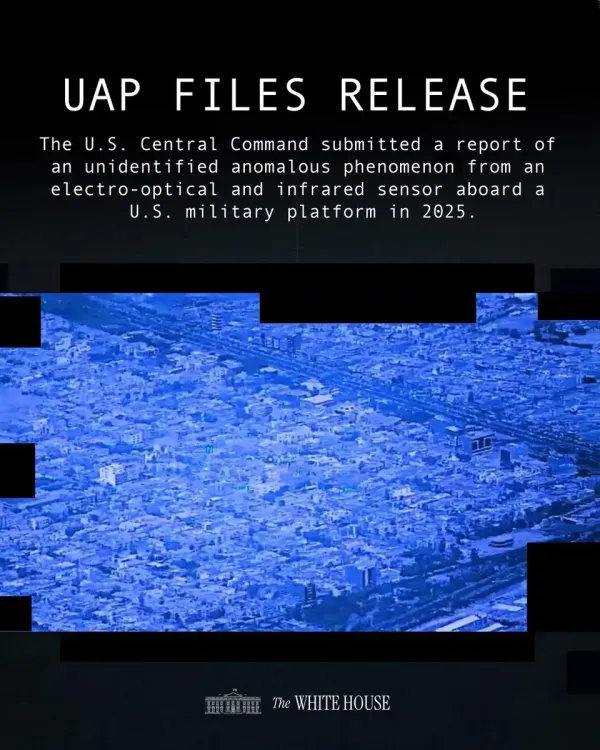
The White House released its fifth batch of declassified UAP materials on August 7, 2026, highlighting an unresolved 2025 Middle East case (DOW-UAP-PR134). The disclosure continues a congressionally mandated transparency drive rooted in the 2021 ODNI assessment and overseen by the All-domain Anomaly Resolution Office.
Key Takeaways
The White House posted its fifth official UAP disclosure batch on 7 August 2026 .
The release is catalogued as DOW-UAP-PR134 and covers an unresolved UAP incident from the Middle East, 2025 . 'Unresolved' means the case survived official review without a conventional explanation.
The disclosures are mandated by Congress and administered through the All-domain Anomaly Resolution Office (AARO) , established after the 2021 ODNI Preliminary Assessment .
The Middle East is among the most heavily surveilled airspaces globally, making an unresolved case from that region particularly notable.
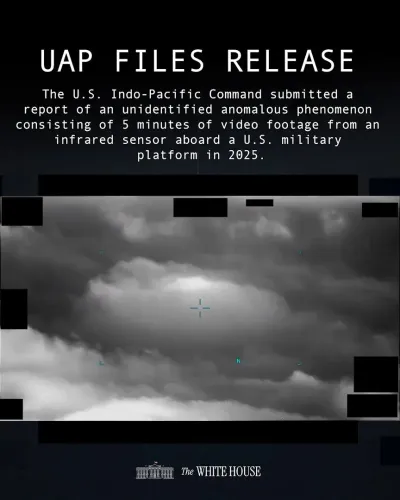
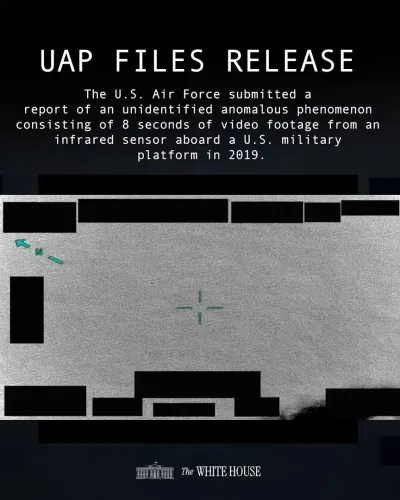
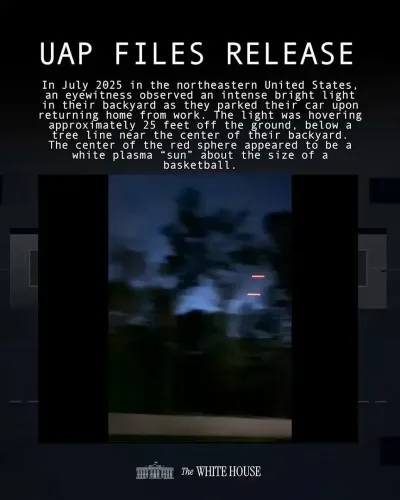
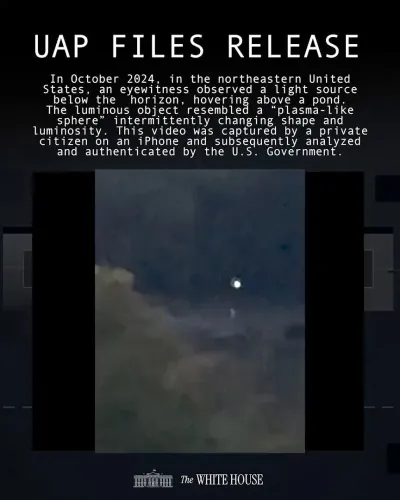
The White House has dropped its fifth batch of declassified Unidentified Aerial Phenomena (UAP) materials, flagging a specific unresolved case logged from the Middle East in 2025 — a disclosure that lands as official US transparency efforts on unexplained aerial incidents continue to accelerate.
What the 'Fifth Drop' Contains
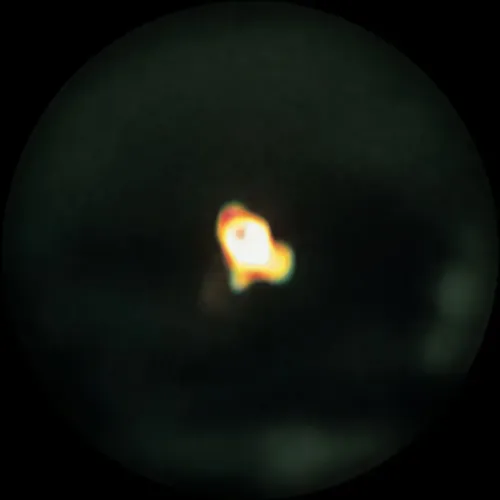
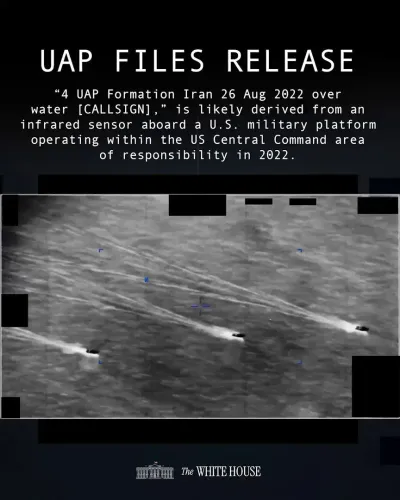
The release, catalogued as DOW-UAP-PR134, is described as an 'Unresolved UAP Report' from the Middle East, 2025. The designation 'unresolved' signals that the case survived review without a conventional explanation — placing it among the most consequential categories in official UAP classification frameworks. A companion video was included in the post.
The Congressional Mandate Behind the Releases
The releases trace their legal backbone to the 2021 Office of the Director of National Intelligence (ODNI) Preliminary Assessment on Unidentified Aerial Phenomena, which Congress mandated as the first in a series of structured public disclosures. That framework also established the All-domain Anomaly Resolution Office (AARO) as the central body tasked with collecting, analysing, and reporting UAP incidents across military and intelligence channels. The 'fifth drop' language suggests a deliberate, serialised release strategy — each batch building a public record of cases the government cannot explain away.
Why an Unresolved Middle East Case Matters
The Middle East is one of the most densely monitored airspaces on the planet, with overlapping US military, allied, and adversarial sensor networks operating continuously. An unresolved UAP case from that theatre — one that has cleared internal review and still carries no attribution — is significant precisely because the surveillance infrastructure there is so robust. If it cannot be explained there, the evidentiary bar for 'unexplained' is high. Congressional oversight committees tracking AARO's work are expected to scrutinise cases of this type most closely.
Point of View
Cadenced transparency strategy, likely shaped by sustained congressional pressure and AARO's institutional mandate. Flagging an 'unresolved' Middle East case is a calculated signal: it acknowledges that the most sophisticated US sensor networks cannot always produce attribution, which keeps pressure on both the intelligence community and defence planners. For India, which is deepening defence and intelligence ties with Washington, the public normalisation of UAP reporting as a legitimate security category is worth watching as a potential template for allied transparency frameworks.
NationPress
22 Sept 2026
Frequently Asked Questions
What is the White House's fifth UAP drop?
It is the fifth batch of declassified Unidentified Aerial Phenomena materials released by the White House, catalogued as DOW-UAP-PR134, covering an unresolved 2025 Middle East UAP case.
What does 'unresolved UAP' mean in US government terms?
'Unresolved' means the incident was reviewed by official bodies, including the All-domain Anomaly Resolution Office, and could not be attributed to any known conventional aircraft, natural phenomenon, or adversary technology.
Why is the US government releasing UAP reports publicly?
Congress mandated periodic public UAP disclosures beginning with the 2021 ODNI Preliminary Assessment, requiring intelligence and defence agencies to report unexplained aerial incidents to lawmakers and the public.
What is AARO and what does it do?
AARO stands for the All-domain Anomaly Resolution Office. It is the US government body responsible for detecting, identifying, and attributing UAP incidents across military and intelligence domains, and for reporting findings to Congress.
Why does a UAP case from the Middle East matter?
The Middle East hosts some of the densest military and intelligence sensor coverage in the world. An incident that remains unresolved despite that surveillance infrastructure represents a genuinely high evidentiary bar for 'unexplained.'