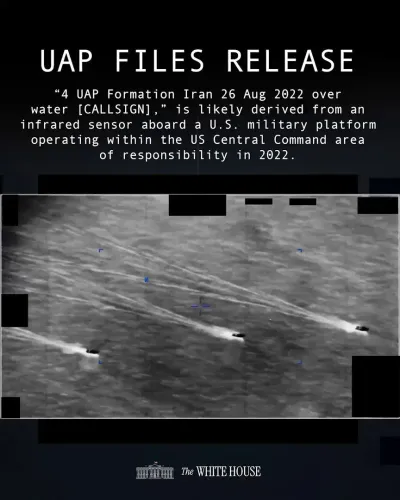
White House Flags Unresolved UAP Report in East China Sea
Synopsis
The White House publicly flagged an 'unresolved UAP report' from the East China Sea dated 2025, releasing two videos with no further context. The disclosure intensifies scrutiny of unexplained aerial phenomena in one of the world's most contested maritime zones, with AARO and Congress expected to respond.
Key Takeaways
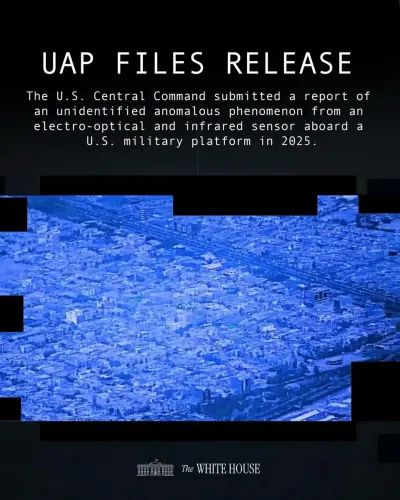
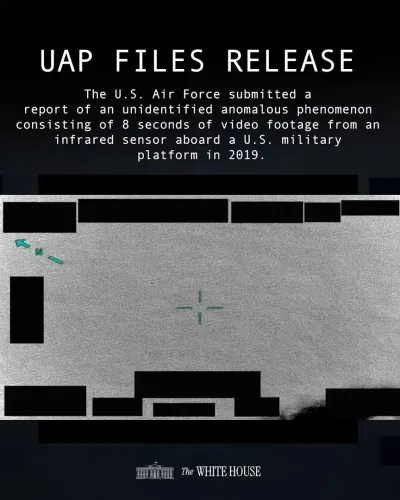
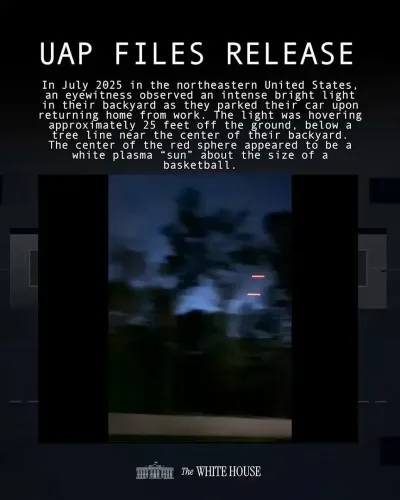
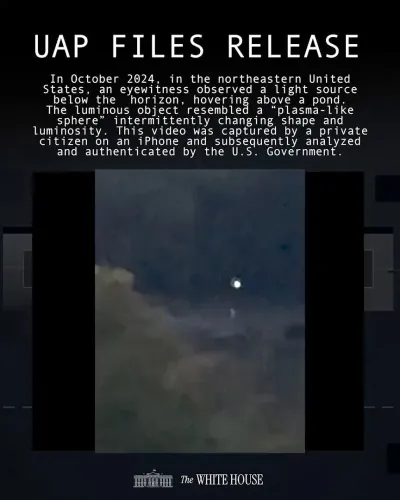
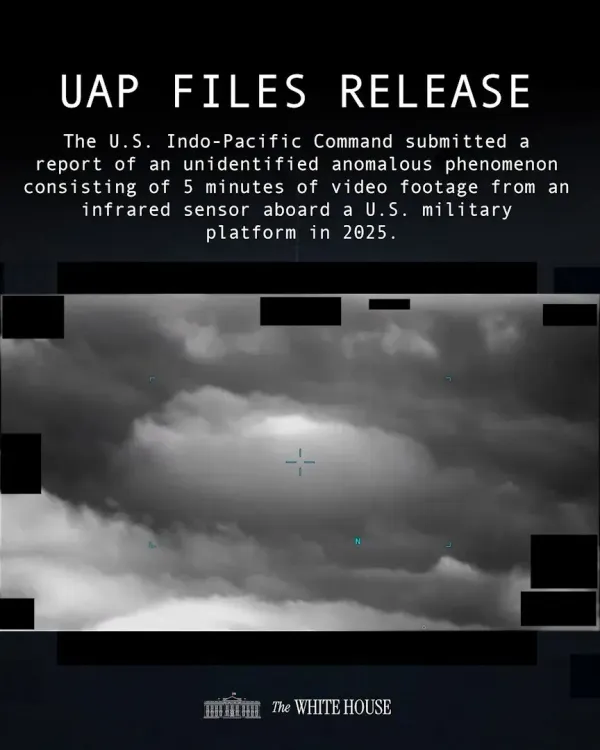
The White House posted on X on 10 July 2026 flagging an 'UNRESOLVED UAP REPORT, EAST CHINA SEA, 2025,' with two accompanying videos.
The East China Sea borders China, Japan, and Taiwan and is a zone of heightened military activity and territorial disputes.
The All-domain Anomaly Resolution Office (AARO) , established within the Department of Defense , is the formal US body tasked with investigating such incidents.
A 2021 ODNI preliminary assessment examined 144 UAP incidents , most of which remained unexplained, and triggered annual congressional reporting requirements.
The public release of the post without official context is expected to prompt calls for formal congressional hearings or an AARO statement.
The disclosure carries strategic relevance for Indo-Pacific partners including India , Japan , and Taiwan .
The White House, the official communications account of the Executive Office of the President of the United States, posted on X on 10 July 2026 flagging an 'UNRESOLVED UAP REPORT, EAST CHINA SEA, 2025,' accompanied by two videos, drawing immediate attention to unexplained aerial activity in one of the world's most strategically sensitive maritime zones.
Context
The post's reference to Unidentified Aerial Phenomena (UAP) in the East China Sea places the disclosure squarely at the intersection of US national security and ongoing strategic competition in the Indo-Pacific. The East China Sea borders China, Japan, and Taiwan and has seen a sustained rise in military activity, including advanced sensor deployments and frequent aerial sorties by multiple nations. The White House's decision to surface this report publicly — without elaboration — is notable given that UAP disclosures have historically emerged through classified congressional briefings or mandated annual reports.
Policy Backdrop
US government scrutiny of UAP incidents has grown steadily since 2017, when declassified footage of unexplained aerial objects sparked congressional interest. The Office of the Director of National Intelligence (ODNI) released a preliminary assessment in 2021 examining 144 incidents, the vast majority of which remained unexplained. That report triggered annual reporting requirements and led to the establishment of the All-domain Anomaly Resolution Office (AARO) within the Department of Defense, which is formally tasked with investigating UAP sightings across air, sea, and space domains.
AARO's mandate includes assessing whether observed phenomena represent foreign adversary technology, a concern that carries particular weight in the East China Sea given the advanced aerial and maritime capabilities operated by regional powers. Repeated US government assessments have noted objects exhibiting flight characteristics that defy conventional explanation.
Stakeholders and Impact
The primary stakeholders in any UAP disclosure of this nature are US defence forces and the broader intelligence community, which must assess whether unresolved sightings represent a flight safety risk, a surveillance threat, or an unknown phenomenon. For Japan and Taiwan, US allies with direct exposure to the East China Sea, an unresolved aerial incident in the region carries immediate strategic significance. The post's release of accompanying video material — without official context — is likely to intensify calls from members of Congress for a formal public briefing.
Indian strategic analysts will also be watching closely: the Indo-Pacific security architecture, in which India plays a growing role through frameworks such as the Quad, means that unexplained aerial activity near contested waters has implications well beyond the immediate geography.
What's Next
Attention will now turn to AARO and whether it releases a formal statement or supplementary report addressing the 2025 East China Sea incident referenced by the White House. Annual UAP reports to Congress — now a legal requirement — and any related committee hearings will be the formal channel through which additional detail is expected to emerge. The White House's unusually direct public flag of an 'unresolved' case may signal that a broader declassification or disclosure process is already under way.
Point of View
Bureaucratic cadence that has defined US UAP disclosure since 2021. By attaching two videos and offering no explanatory text, the post maximises public attention while minimising official commitment, a posture that could be read as either a deliberate pressure campaign on the intelligence community or a strategic signal to regional adversaries. For India and other Quad partners, the East China Sea location is not incidental: it sits at the heart of the Indo-Pacific competition that shapes collective security planning. How AARO and congressional oversight committees respond in the coming days will determine whether this becomes a landmark transparency moment or another unresolved data point in an already crowded UAP dossier.
NationPress
9 Oct 2026
Frequently Asked Questions
What is the UAP report the White House posted about?
The White House flagged an 'unresolved UAP report' from the East China Sea dated 2025, sharing two videos on X on 10 July 2026 without providing further official context.
What is AARO and what does it do?
AARO, the All-domain Anomaly Resolution Office, is a unit within the US Department of Defense formally tasked with investigating Unidentified Aerial Phenomena across air, sea, and space domains.
Why is the East China Sea significant for UAP incidents?
The East China Sea borders China, Japan, and Taiwan and has seen a rise in advanced military activity. UAP sightings in the area raise concerns about potential foreign adversary technology or unknown aerial threats.
What did the 2021 US government UAP report find?
The 2021 ODNI preliminary assessment examined 144 UAP incidents and found that the majority remained unexplained, leading to annual reporting requirements to Congress.
How does this UAP disclosure affect India?
India, as a Quad partner invested in Indo-Pacific security, has a strategic interest in unexplained aerial incidents near contested waters like the East China Sea, which could signal advances in adversary technology.