White House Touts ICE Crackdown in Atlanta as Trump Delivers on Law-and-Order Mandate

Synopsis
The White House announced a major ICE sweep in Atlanta on August 7, 2026, targeting criminal noncitizens. The Trump Administration framed the operation as a direct fulfilment of its law-and-order electoral mandate, continuing a pattern of publicising interior enforcement actions established during its first term.
Key Takeaways
The White House announced a major ICE immigration enforcement operation in Atlanta, Georgia on August 7, 2026 .
The operation targeted noncitizens with criminal records, described by the administration as 'criminal illegal aliens.' The Trump Administration framed the bust as a direct fulfilment of the law-and-order mandate from the 2024 election.
The move mirrors enforcement patterns from the 2017–2021 Trump term, including the Secure Communities program and Operation Cross Check .
Atlanta has been a recurring site of federal immigration enforcement sweeps under prior operations.
Further ICE announcements in other major cities and potential congressional action on enforcement funding are expected to follow.
A major immigration enforcement sweep in Atlanta is the latest signal that the Trump Administration intends to make interior enforcement — not just border security — the centrepiece of its immigration agenda. The White House announced the operation on Friday, August 7, 2026, framing it as a direct fulfilment of the electoral mandate voters delivered to President Donald Trump.
Atlanta in the Crosshairs of Federal Enforcement
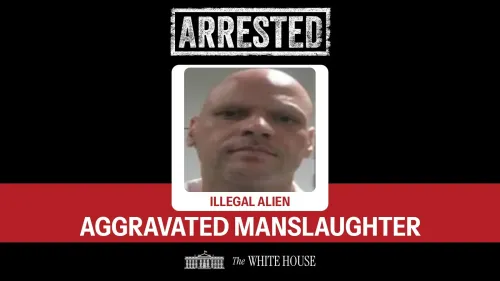
Atlanta, Georgia's largest city and a recurring site of federal immigration operations, was the target of what the White House described as 'another massive' bust by U.S. Immigration and Customs Enforcement (ICE). The operation focused on the removal of noncitizens with criminal records — individuals the administration consistently labels 'criminal illegal aliens.' No specific arrest figures were released in the post itself.
ICE is the federal agency responsible for identifying, detaining, and deporting removable noncitizens, particularly those with prior criminal convictions. Atlanta has featured in past federal sweeps, making it a familiar backdrop for this kind of enforcement messaging.
A Pattern Rooted in the First Trump Term
The playbook is familiar. During the 2017–2021 Trump term, the administration reinstated the Secure Communities program, which expanded data-sharing between local police departments and ICE to accelerate deportations. That was followed in 2018 by Operation Cross Check, which resulted in the arrest of thousands of noncitizens with prior criminal convictions across multiple cities.
The current announcement fits that same pattern: a targeted operation in a major American city, amplified through official White House channels to demonstrate that campaign promises on immigration control are being kept. The messaging is deliberate — tying the operation directly to the phrase 'law and order' that anchored Trump's electoral pitch.
What This Signals Beyond Atlanta
The White House's decision to publicise this specific operation — rather than let it pass as routine enforcement — is itself a political act. It tells supporters that interior enforcement, often overshadowed by the drama at the southern border, is active and aggressive. It also puts cities with sanctuary-style policies on notice that federal operations will proceed regardless of local cooperation levels.
Analysts watching immigration policy will be tracking whether similar announcements follow in other major cities, and whether Congress moves to expand or restrict ICE funding in response to the administration's stepped-up enforcement posture.
For now, the message from 1600 Pennsylvania Avenue is unambiguous: the mandate the American people delivered at the ballot box is being executed, one enforcement operation at a time.
Point of View
Not just operationally active. By anchoring the announcement to the phrase 'law and order' and the election mandate, the administration is signalling to its base that immigration enforcement is a kept promise, not a talking point. For India and other countries with large diaspora communities in the United States, the intensification of interior enforcement operations carries real human stakes beyond the political theatre. The pattern also sets up a likely confrontation with jurisdictions that limit local cooperation with federal immigration authorities — a battle the administration appears eager to wage publicly.
NationPress
8 Aug 2026
Frequently Asked Questions
What happened in the ICE operation in Atlanta in 2026?
The White House announced a major ICE enforcement sweep in Atlanta, Georgia on August 7, 2026, targeting noncitizens with criminal records. Specific arrest numbers were not disclosed in the official announcement.
What is ICE and what does it do?
ICE stands for U.S. Immigration and Customs Enforcement. It is the federal agency responsible for identifying, detaining, and deporting removable noncitizens, particularly those with prior criminal convictions.
How does the 2026 Atlanta ICE operation compare to Trump's first term?
It follows the same playbook as the 2017–2021 term, when the Trump administration reinstated the Secure Communities program and conducted Operation Cross Check in 2018, arresting thousands of noncitizens with criminal convictions across multiple cities.
Why is the Trump Administration publicising ICE operations?
The administration is using these announcements to demonstrate it is fulfilling its law-and-order election mandate. Publicising interior enforcement operations signals to supporters that immigration crackdowns extend beyond the border.
What could follow the Atlanta ICE bust?
Policy watchers expect similar ICE operation announcements in other major American cities, and potential congressional debate over immigration enforcement funding and sanctuary jurisdiction policies.