Khamenei tribute in Tehran draws world leaders, India sends delegation
Synopsis
The death of Ayatollah Ali Khamenei — killed in a US-Israeli strike — has drawn a who's-who of world leaders to Tehran. India's quiet but deliberate choice to send a minister of state and a former general signals New Delhi's intent to protect strategic ties with Iran without attracting Western scrutiny.
Key Takeaways
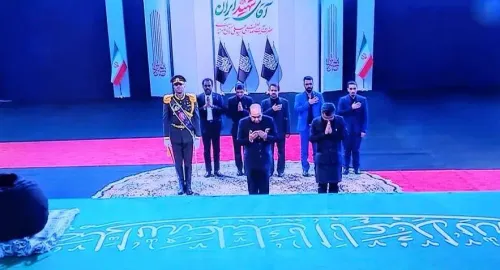
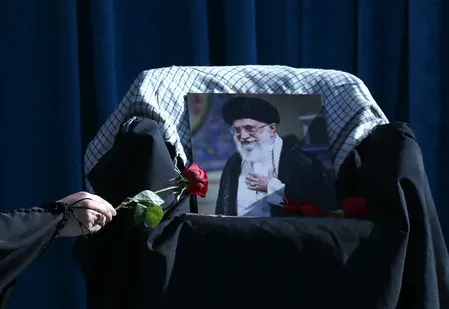
Tribute ceremony for Ayatollah Ali Khamenei held at Imam Khomeini's Mosalla , Tehran, on 4 July .
Khamenei was killed in a US and Israeli strike in Tehran on 28 February ; his son Mojtaba Khamenei was named new supreme leader in March .
Foreign attendees included Pakistan PM Shehbaz Sharif , Tajik President Emomali Rahmon , Iraqi President Nizar Amedi , and senior officials from China and Russia .
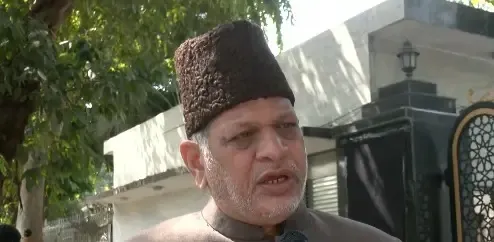
India was represented by MoS for External Affairs Pabitra Margherita and Bihar Governor Lt Gen Syed Ata Hasnain (retd) .
Funeral events continue through 9 July , with processions in Tehran , Qom , Mashhad , and Iraq ; airspace restrictions imposed in Tehran and Mashhad.
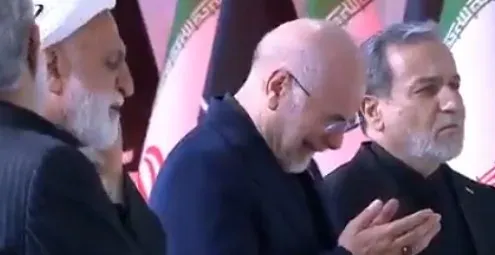
Senior Iranian and foreign dignitaries gathered at Imam Khomeini's Mosalla prayer hall in central Tehran on 4 July to pay tribute to Iran's late Supreme Leader Ayatollah Ali Khamenei, who was killed in a US and Israeli strike in Tehran on 28 February. The ceremony, which began Friday morning and continued throughout the day, drew heads of state, parliament speakers, ministers, religious scholars, and tribal leaders from across the region and beyond.
Key Officials in Attendance
Iran's top constitutional figures were present in full, including President Masoud Pezeshkian, Parliament Speaker Mohammad Baqer Qalibaf, Judiciary Chief Gholamhossein Mohseni-Ejei, and Chairman of the Expediency Discernment Council Sadeq Amoli Larijani. The breadth of domestic representation signalled a deliberate display of institutional continuity following Khamenei's death.
Foreign Leaders Who Attended
Among the international guests were Pakistan's Prime Minister Shehbaz Sharif and Chief of Army Staff Field Marshal Syed Asim Munir, Armenian Prime Minister Nikol Pashinyan, Georgian President Mikheil Kavelashvili, Iraqi President Nizar Amedi, Tajik President Emomali Rahmon, and President of Iraq's Kurdistan Region Nechirvan Barzani. Senior officials from China and Russia also attended, underscoring Tehran's alignment with a bloc of nations that have maintained close ties despite Western pressure on Iran.
India's Representation
India was represented at the ceremony by Minister of State for External Affairs Pabitra Margherita and Bihar Governor Lieutenant General Syed Ata Hasnain (retired). In a post on social media platform X, Margherita confirmed the delegation's attendance, writing: 'Governor of Bihar Lieutenant General Syed Ata Hasnain and I represented India at the funeral ceremony for Ayatollah Seyyed Ali Khamenei, former Supreme Leader of Iran, in Tehran. Conveyed our respects on behalf of the government and the people of India.'
The Ministry of External Affairs (MEA) issued a statement noting that 'the high-level representation in the ceremony underscores the importance of civilisational ties, including people-to-people connection, between the two countries, providing a robust foundation to political and economic engagements.'
Funeral Schedule and Restrictions
Farewell ceremonies are being held at Imam Khomeini's Mosalla in Tehran on 4–5 July, followed by a funeral procession in Tehran on 6 July and another in Qom on 7 July. Funeral rites will also be held in Mashhad and in Iraq, with the full schedule running through 9 July. Iranian authorities have announced public closures and airspace restrictions in Tehran and Mashhad on key dates, and Thursday was declared a day of national mourning.
Notably, Khamenei's son Mojtaba Khamenei was selected as Iran's new supreme leader in March, making the ongoing ceremonies as much about the transition of power as about mourning. The scale of international attendance reflects the geopolitical weight Iran continues to carry in the region, even amid the circumstances of Khamenei's death.
Point of View
Low-profile enough to avoid friction with Western partners. With Mojtaba Khamenei now in place, the real diplomatic question is whether Iran's foreign policy posture shifts, and whether New Delhi's longstanding 'civilisational ties' framing can survive a more volatile Tehran. The attendance of Pakistan's army chief alongside its prime minister is also notable — Rawalpindi's direct presence at a state funeral is a pointed message about where Pakistan sees its strategic neighbourhood. The ceremony is less a farewell and more a geopolitical inventory check.
NationPress
2 Oct 2026
Frequently Asked Questions
Who was Ayatollah Ali Khamenei and how did he die?
Ayatollah Ali Khamenei served as Iran's Supreme Leader for decades and was killed in a US and Israeli strike in Tehran on 28 February. His son, Mojtaba Khamenei, was subsequently selected as Iran's new supreme leader in March.
Which foreign leaders attended the Khamenei tribute ceremony in Tehran?
The ceremony drew Pakistan's Prime Minister Shehbaz Sharif and Army Chief Field Marshal Syed Asim Munir, Armenian PM Nikol Pashinyan, Georgian President Mikheil Kavelashvili, Iraqi President Nizar Amedi, Tajik President Emomali Rahmon, Kurdistan Region President Nechirvan Barzani, and senior officials from China and Russia.
How did India represent itself at the Khamenei funeral?
India sent Minister of State for External Affairs Pabitra Margherita and Bihar Governor Lieutenant General Syed Ata Hasnain (retired) to Tehran. The Ministry of External Affairs said the delegation's presence underscores the civilisational and people-to-people ties between India and Iran.
What is the full schedule for Khamenei's funeral ceremonies?
Farewell ceremonies are being held at Imam Khomeini's Mosalla in Tehran on 4–5 July, a funeral procession in Tehran on 6 July, and another procession in Qom on 7 July. Events continue through 9 July, with rites also planned in Mashhad and Iraq.
What restrictions has Iran imposed during the funeral period?
Iranian authorities have announced public closures and airspace restrictions in Tehran and Mashhad on key dates during the funeral period. Thursday was declared a national day of mourning ahead of the ceremonies.