BRICS Environment Ministers adopt Joint Statement on climate resilience, sustainable lifestyles
Synopsis
At the 12th BRICS Environment Ministers' Meeting in New Delhi, member nations unanimously adopted a four-part Joint Ministerial Statement — covering sustainable lifestyles, landscape management, forest fire response, and community-based climate adaptation. Under India's Chairship, the meeting also saw the launch of compendiums documenting traditional knowledge and innovative practices from across the bloc, signalling a shift toward people-centric climate governance at a multilateral level.
Key Takeaways
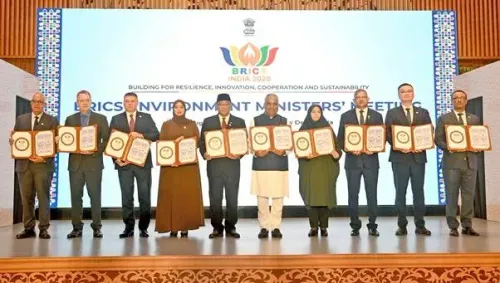
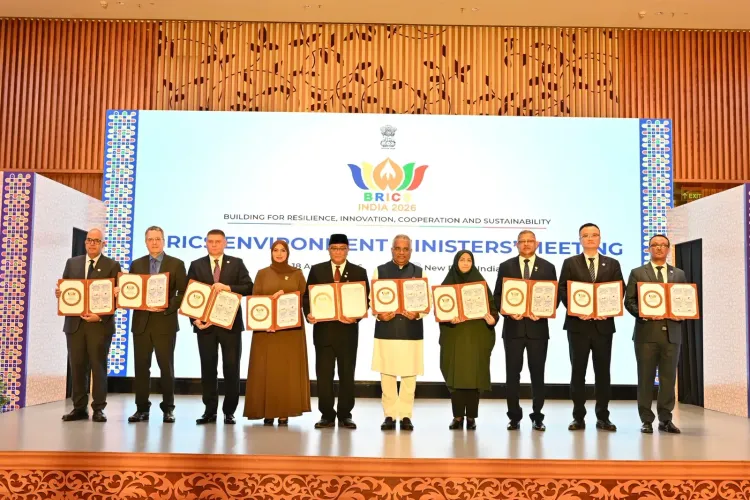
The 12th BRICS Environment Ministers' Meeting concluded in New Delhi on 18 August with unanimous adoption of a Joint Ministerial Statement .
The statement comprises four outcome documents covering sustainable lifestyles, integrated landscape management, forest fire preparedness, and community-based climate adaptation.
Environment Minister Bhupender Yadav launched the Compendiums of the Environment Working Group , compiling traditional knowledge and innovative practices from BRICS member countries.
India's Chairship framed BRICS as 'Building Resilience and Innovation for Cooperation and Sustainability', with a Global South-first approach.
India's new Nationally Determined Contribution for 2031-2035 was cited as a benchmark for balancing climate ambition with inclusive development.
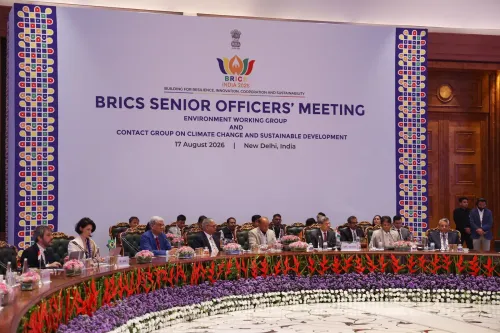
The 12th BRICS Environment Ministers' Meeting concluded in New Delhi on Tuesday, 18 August with the unanimous adoption of a Joint Ministerial Statement comprising four outcome documents, covering sustainable lifestyles, integrated landscape management, forest fire preparedness, and community-based climate adaptation. The meeting was held under India's BRICS Chairship.
Four Outcome Documents at a Glance
The Joint Ministerial Statement encompasses a wide range of environmental priorities. The first document advances knowledge sharing, research, and innovation in sustainable lifestyles through the network of BRICS institutions. The second lays out BRICS principles for integrated landscape management aimed at combating desertification and promoting ecosystem resilience.
The third establishes a common understanding for forest fire preparedness and response across member nations. The fourth charts principles for advancing climate resilience through people-centric, community-based adaptation built on traditional knowledge — a framework that reflects the priorities of developing economies within the bloc.
What India's Environment Minister Said
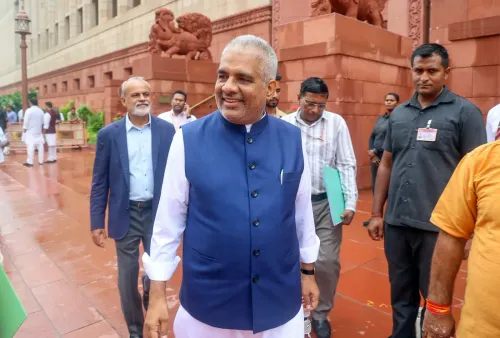
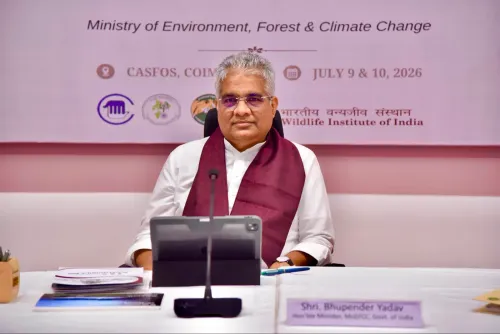
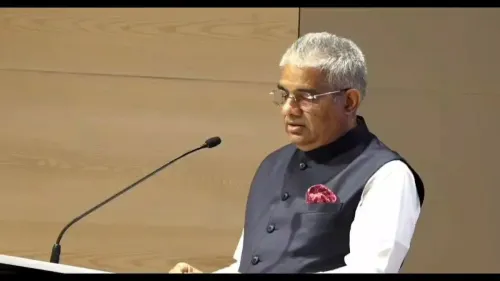
Bhupender Yadav, India's Minister for Environment, Forest and Climate Change, delivered the keynote address and launched the Compendiums of the Environment Working Group — a compilation of experiences, innovative approaches, and traditional knowledge from BRICS member countries. 'Reflecting the spirit of collaboration and mutual learning, under the India BRICS Chairship, the Compendiums of the Environment Working Group during the 12th BRICS Environment Ministers' Meeting have been launched,' Yadav said.
He stated that India's Chairship is guided by Prime Minister Narendra Modi's vision of placing the concerns of the Global South at the forefront, and redefining BRICS as 'Building Resilience and Innovation for Cooperation and Sustainability' — with a people-centric approach and the spirit of 'Humanity First'.
Key Priorities Flagged by India
Yadav underscored the growing burden of climate change, biodiversity loss, pollution, and disaster risks on developing countries, where environmental vulnerability is closely tied to broader development pressures. He called for stronger BRICS cooperation on forest fire prevention, early warning systems, and post-fire recovery, and emphasised the need for adequate climate finance and empowerment of local communities.
The minister cited India's Mission LiFE and Ek Ped Maa Ke Naam initiatives as examples of combining ecological restoration with public participation and community ownership. He also highlighted India's new Nationally Determined Contribution for 2031-2035 as evidence of the country's commitment to climate action alongside inclusive development and energy security.
Panels, Dialogues and What Comes Next
The meeting featured panel discussions and side events, including a BRICS High-level Dialogue on Climate Change focused on people-centric and community-based adaptation. A separate session on integrated landscape-based greening saw member nations share experiences on building resilient landscapes.
Yadav stressed that BRICS nations can 'convert cooperation into collective and co-operative capability' through knowledge networks, technical exchanges, training, and stronger institutional partnerships. With the Joint Statement now adopted, the focus shifts to implementation — and whether the four outcome frameworks translate into measurable on-ground action across the bloc's diverse economies.
Point of View
But scope and implementation are different things. The inclusion of traditional knowledge in climate adaptation frameworks is notable — it signals a deliberate push back against a purely technocratic approach to resilience, one that has historically sidelined community-level expertise. However, BRICS is a bloc of vastly different economies with divergent fossil-fuel dependencies, and a joint statement carries no binding enforcement mechanism. The real question is whether the compendiums and knowledge networks Yadav launched will be institutionalised between Chairships, or whether they remain a paper legacy of India's presidency.
NationPress
18 Aug 2026
Frequently Asked Questions
What was agreed at the 12th BRICS Environment Ministers' Meeting?
The meeting, held in New Delhi on 18 August, concluded with the unanimous adoption of a Joint Ministerial Statement comprising four outcome documents. These cover sustainable lifestyles, integrated landscape management, forest fire preparedness, and community-based climate adaptation built on traditional knowledge.
What are the four outcome documents in the BRICS Joint Ministerial Statement?
The four documents address: advancement of knowledge sharing and innovation in sustainable lifestyles; BRICS principles for integrated landscape management to combat desertification; a common framework for forest fire preparedness and response; and principles for climate resilience through people-centric, community-based adaptation using traditional knowledge.
What is India's role in the 12th BRICS Environment Ministers' Meeting?
India holds the BRICS Chairship and hosted the meeting in New Delhi. Environment Minister Bhupender Yadav delivered the keynote address and launched the Compendiums of the Environment Working Group, framing India's presidency around a Global South-first, people-centric approach to sustainability.
What is Mission LiFE and why was it mentioned at the BRICS meeting?
Mission LiFE is India's government-led initiative promoting environmentally conscious individual behaviour and lifestyle choices. Yadav cited it alongside 'Ek Ped Maa Ke Naam' as examples of combining ecological restoration with public participation — models India is positioning as replicable across BRICS nations.
What is India's new Nationally Determined Contribution for 2031-2035?
India's updated Nationally Determined Contribution (NDC) for 2031-2035 outlines the country's climate commitments under the Paris Agreement for that period. Yadav cited it at the BRICS meeting as evidence of India's ambition to advance climate action while also supporting inclusive development and energy security.