Yemen govt forces claim 1,150 Houthi fighters neutralised in 1,900 strikes
Synopsis
Yemen's government forces claim over 1,150 Houthi fighters were neutralised in a single 24-hour blitz of 1,900-plus strikes — the largest single-day escalation in recent months. With battles raging around the Bab al-Mandeb Strait and Saudi air operations intensifying, the offensive signals a major new phase in a conflict that has ground on since 2014 with no end in sight.
Key Takeaways
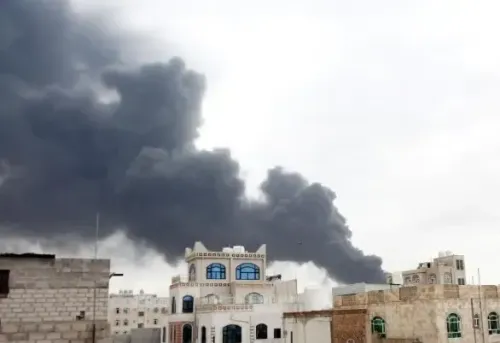
Yemen's government forces claimed more than 1,150 Houthi fighters were 'neutralised' in over 1,900 strikes in 24 hours as of 11 October .
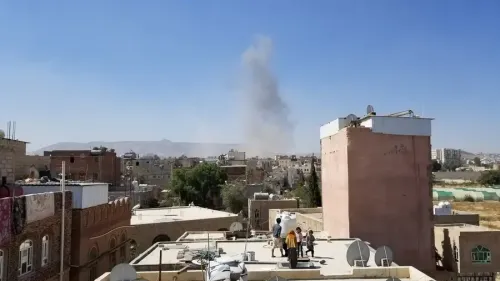
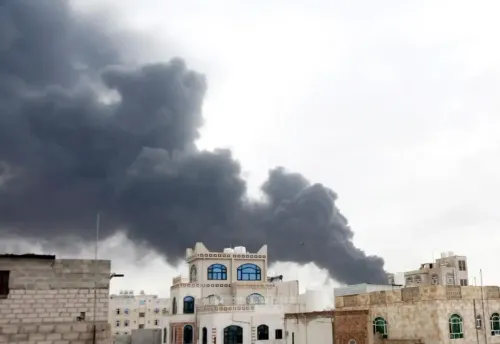
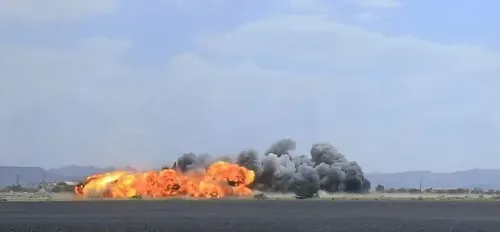
Spokesperson Majed al-Nuzaili said strikes hit weapons depots, military camps, artillery positions, and supply lines across three fronts .
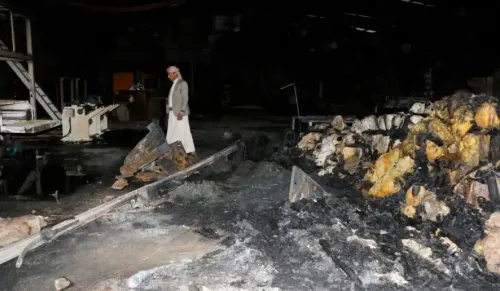
More than 180 military and logistical vehicles were reportedly destroyed or damaged.
The large-scale offensive was launched on Monday , with the fiercest fighting near the Bab al-Mandeb Strait .
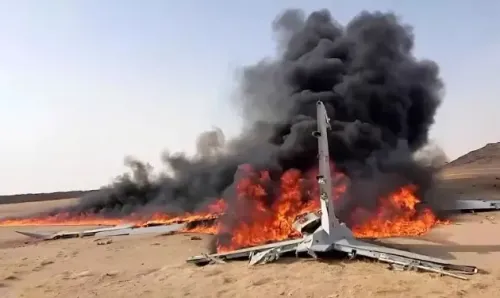
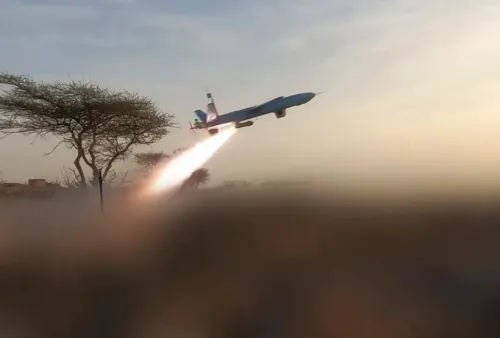
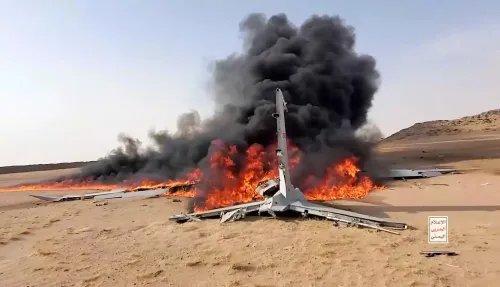
Saudi air operations have intensified; Houthis have stepped up missile and drone strikes on Saudi Arabia , including King Khalid International Airport, Riyadh .
All figures remain unverified independently ; the Houthis had not commented at the time of reporting.
Yemen's government forces have claimed that more than 1,150 Houthi fighters were 'neutralised' across over 1,900 strikes on multiple fronts within a single 24-hour period, as hostilities between the two sides sharply intensified. The figures, announced on 11 October, could not be independently verified.
What the Government Forces Claimed
Majed al-Nuzaili, spokesperson for Yemen's government forces, stated on social media platform X that the strikes targeted a broad range of Houthi assets — including weapons depots, military camps, fortifications, artillery positions, troop concentrations, and supply lines — across the eastern, western, and southwestern fronts. He added that operations also hit 'high-value military targets' deeper inside Houthi-controlled territory.
Al-Nuzaili further stated that more than 180 military and logistical vehicles were destroyed or damaged. The strikes, he said, were designed to degrade the Houthis' capacity to reinforce and sustain frontline operations. Government forces, he claimed, continued to advance on the ground, recapturing positions and consolidating territorial gains. The Houthis had not issued a response at the time of reporting.
The Offensive and Its Strategic Context
Yemen's government launched a large-scale offensive on Monday, aiming to retake Houthi-held territory. Some of the fiercest fighting has been concentrated around the strategically vital Bab al-Mandeb Strait in southwestern Yemen — a chokepoint through which a significant share of global maritime trade passes. Control of the strait has long been a central objective for both sides.
This comes amid a parallel escalation in the air and missile domains. Saudi air operations in support of the internationally recognised Yemeni government have intensified, while the Houthis have reportedly stepped up missile and drone attacks against targets inside Saudi Arabia, including King Khalid International Airport in the capital Riyadh.
A Decade of Conflict: Background
Yemen has been engulfed in civil war since late 2014, when the Houthi movement seized the capital Sanaa and extended control over much of the country's north. A Saudi-led coalition intervened in 2015 in support of the internationally recognised government, which has since been based in the southern port city of Aden. Repeated ceasefires and UN-mediated talks have failed to produce a durable settlement, leaving the conflict one of the world's most protracted and devastating.
What Happens Next
The current offensive marks one of the most significant escalations in recent months. Analysts note that a sustained push toward Houthi-controlled areas, combined with Saudi aerial support, could alter frontline dynamics — but the Houthis have shown resilience in absorbing previous military pressure. The absence of a Houthi statement leaves casualty figures and territorial claims one-sided for now. International observers and humanitarian agencies are expected to respond as the situation develops.
Point of View
900-plus in a single day — is extraordinary, but the absence of independent verification means the numbers must be treated with caution. Yemen's government has a clear incentive to project momentum, particularly as it seeks continued Saudi and international backing. What is verifiable is the structural reality: the Bab al-Mandeb Strait remains the conflict's most consequential prize, and any sustained push there carries global trade implications beyond the immediate theatre. After a decade of stalemate and failed peace processes, the real question is whether this offensive has the logistical depth to hold gains — or whether, like previous surges, it will cede ground once the initial pressure eases.
NationPress
11 Oct 2026
Frequently Asked Questions
What did Yemen's government forces claim on 11 October?
Yemen's government forces claimed that more than 1,150 Houthi fighters were 'neutralised' and over 180 military vehicles destroyed or damaged across more than 1,900 strikes in a 24-hour period. Spokesperson Majed al-Nuzaili said the strikes targeted weapons depots, camps, and supply lines on the eastern, western, and southwestern fronts. The figures could not be independently verified.
Where is the fiercest fighting in Yemen's current offensive?
The most intense fighting is reportedly concentrated around the Bab al-Mandeb Strait in southwestern Yemen, a strategically vital waterway through which a significant share of global maritime trade passes. Control of the strait has long been a key objective in the Yemen conflict.
Why is Saudi Arabia involved in the Yemen conflict?
Saudi Arabia has led a military coalition in support of Yemen's internationally recognised government since 2015, when it intervened after Houthi forces seized the capital Sanaa in late 2014. Saudi air operations have intensified alongside the latest government offensive, while the Houthis have responded with missile and drone attacks on Saudi targets, including Riyadh's King Khalid International Airport.
How long has the Yemen civil war been going on?
The conflict dates to late 2014, when the Houthis seized Sanaa and much of northern Yemen. A Saudi-led coalition entered in 2015 in support of the government, which relocated to Aden. More than a decade of fighting, repeated ceasefires, and UN-mediated negotiations have failed to produce a lasting resolution.
Have the Houthis responded to the latest government claims?
No. At the time of reporting, the Houthis had not issued any statement responding to the government's casualty or strike figures from the 24-hour offensive period ending 11 October.