Houthis report 106 Saudi strikes in 24 hours as Yemen govt launches liberation campaign
Synopsis
Yemen's Houthis claim 106 Saudi strikes in a single day — pushing the cumulative total to 1,516 — even as the internationally recognised government declares a formal 'battle of liberation.' On the ground, Houthi fighters walked into At Turbah in Taiz without a fight after government forces withdrew, underlining the gap between the government's offensive rhetoric and battlefield reality.
Key Takeaways
Yemen's Houthi group claimed Saudi Arabia launched 106 air and missile strikes in a single 24-hour period on 5 October 2025 .
Houthi spokesperson Yahya Sarea said cumulative strikes since the current escalation began have reached 1,516 ; Saudi Arabia has not confirmed the figures.
Yemen's internationally recognised government announced the 'battle of liberation' , a new large-scale military campaign to retake Houthi-held areas.
Houthi fighters entered At Turbah , a strategic centre in Taiz province, without resistance after government forces withdrew.
Government troops retreated to mountainous positions and into neighbouring Lahj province following reported 'battlefield setbacks and losses.' Yemen's conflict dates to late 2014 ; the Saudi-led coalition intervened in March 2015 in support of the recognised government.
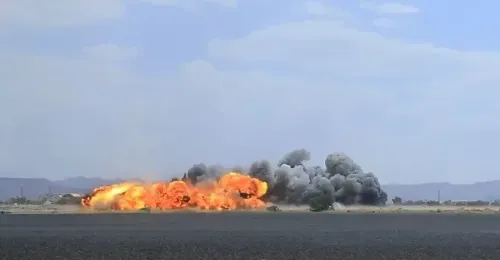
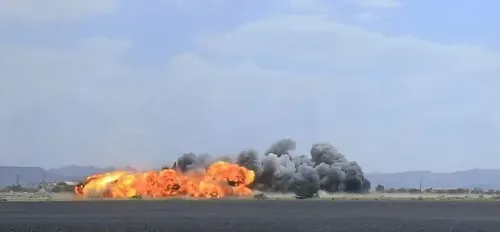
Yemen's Houthi group on Sunday, 5 October 2025 claimed that Saudi Arabia had launched 106 air and missile strikes across Houthi-held areas within a single 24-hour period, as the internationally recognised Yemeni government simultaneously announced the start of a large-scale military campaign to retake territory from the group. The claims mark one of the sharpest escalations in Yemen's decade-long conflict in recent years.
Houthi Claims and Strike Figures
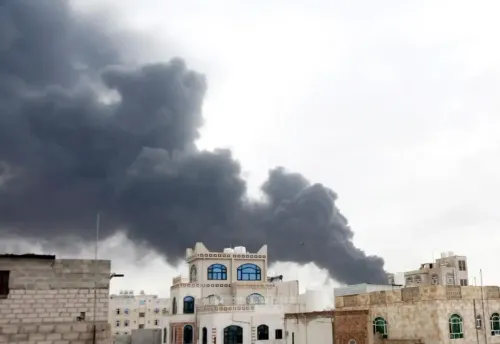
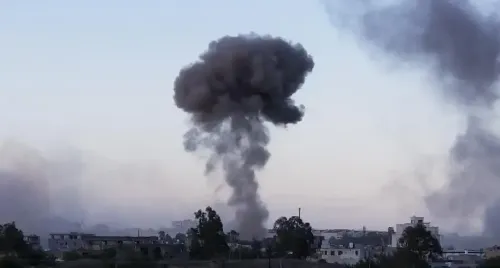
Houthi military spokesperson Yahya Sarea said in a post on social media platform X that the Saudi attacks targeted the capital Sanaa and multiple provinces including Al-Jawf and Taiz. Sarea added that the latest strikes brought the cumulative total of Saudi air and missile attacks since the current escalation began to 1,516. The figures could not be independently verified, and Saudi Arabia has not publicly confirmed carrying out the strikes described by the Houthis.
Yemen Government's 'Battle of Liberation'
Hours before the Houthi statement, Yemen's internationally recognised government formally announced what it called the 'battle of liberation' — a new phase in its campaign to reclaim Houthi-held territory across the country. The declaration signals a significant shift in posture by the government, which has framed the offensive as a comprehensive push to retake the remaining areas under Houthi control.
Houthi Advance Into At Turbah
On the ground, the situation in the southwestern province of Taiz appeared to move in the Houthis' favour. A local security official, speaking on condition of anonymity, confirmed that Houthi fighters had entered At Turbah — a strategically significant government-held centre in southern Taiz province — without fighting, after government forces withdrew earlier in the day.
The official said government troops and allied fighters had pulled back to mountainous positions outside At Turbah, with some retreating farther south into the neighbouring Lahj province following what were described as 'battlefield setbacks and losses.' Houthi fighters subsequently moved into the city, deploying at key locations and controlling its main entrances and exits.
Residents reported that Houthi fighters spread along major streets and around public facilities, while many merchants shut their shops ahead of the group's arrival. The Houthis also reportedly used mosque loudspeakers to urge residents not to resist.
Background: A Conflict Now in Its Eleventh Year
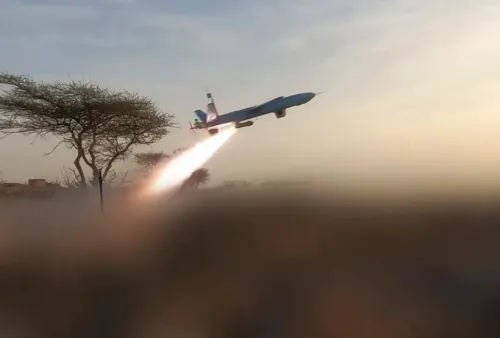
Yemen's war began in late 2014 when the Houthis seized Sanaa and much of northern Yemen. A Saudi-led coalition intervened in March 2015 in support of the internationally recognised government. Despite intermittent ceasefires and UN-brokered negotiations over the years, a durable resolution has remained elusive. The current escalation, marked by renewed missile, drone, and air exchanges, represents a significant deterioration in the fragile status quo that had held in recent months.
What Happens Next
With the government's 'battle of liberation' now formally declared and Houthi forces consolidating gains in Taiz, the trajectory of the conflict remains deeply uncertain. International observers and humanitarian agencies have repeatedly warned that renewed large-scale fighting risks catastrophic consequences for Yemen's civilian population, already among the most aid-dependent in the world. All eyes are now on whether the government's offensive can reverse Houthi territorial gains — or whether the escalation deepens further.
Point of View
516, unverified as it is, also points to an air campaign that has so far failed to arrest Houthi momentum on the ground. A decade into this conflict, the pattern of escalatory rhetoric followed by territorial concession has repeated itself often enough to invite scepticism about whether this 'new phase' changes the underlying dynamic at all.
NationPress
5 Oct 2026
Frequently Asked Questions
What did the Houthis claim about Saudi strikes on 5 October 2025?
Yemen's Houthi group claimed that Saudi Arabia carried out 106 air and missile strikes across Houthi-held areas within a 24-hour period ending 5 October 2025, targeting Sanaa, Al-Jawf, and Taiz. The group said this brought the total number of strikes since the current escalation began to 1,516, though these figures have not been independently verified and Saudi Arabia has not confirmed them.
What is Yemen's 'battle of liberation'?
The 'battle of liberation' is the name Yemen's internationally recognised government gave to its newly announced large-scale military campaign, declared on 5 October 2025, aimed at retaking territory currently held by the Houthi group. The government described it as a new phase in its broader effort to restore control over the country.
What happened in At Turbah, Taiz?
Houthi fighters entered At Turbah, a strategically important government-held centre in southern Taiz province, without encountering resistance on 5 October 2025. Government forces and allied fighters had withdrawn earlier in the day, reportedly retreating to mountainous positions or into neighbouring Lahj province after battlefield setbacks.
How did Yemen's conflict begin?
Yemen's war began in late 2014 when the Houthi group seized the capital Sanaa and much of northern Yemen. Saudi Arabia led a coalition that intervened militarily in March 2015 in support of the internationally recognised Yemeni government, and the conflict has continued in various forms since then.
Who is affected by the latest escalation in Yemen?
The immediate impact falls on civilians in Houthi-held areas targeted by strikes — particularly in Sanaa, Al-Jawf, and Taiz — and on residents of At Turbah, where Houthi fighters deployed along streets and around public facilities. Broader humanitarian consequences are expected, as Yemen already hosts one of the world's largest aid-dependent populations.