How Are 15,000 Kerala Students Building Weather Models?
Synopsis
Kerala witnesses a remarkable initiative as 15,000 students engage in hands-on weather science at Little KITEs Sub-District Camps, transforming classrooms into innovative climate labs. This program emphasizes practical skills in technology, preparing students for future challenges.
Key Takeaways
15,000 students engaged in innovative weather science.
Hands-on experience with robotic kits and weather instruments .
Focus on programming and digital content creation .
Encouraging creativity through animation training .
Future introduction of advanced technologies in schools.
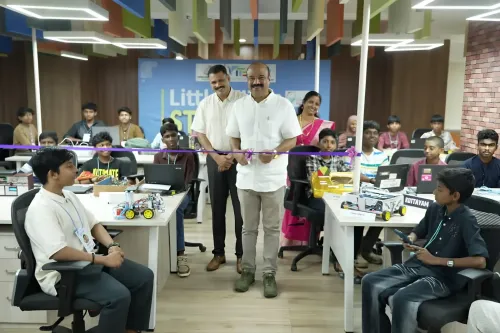
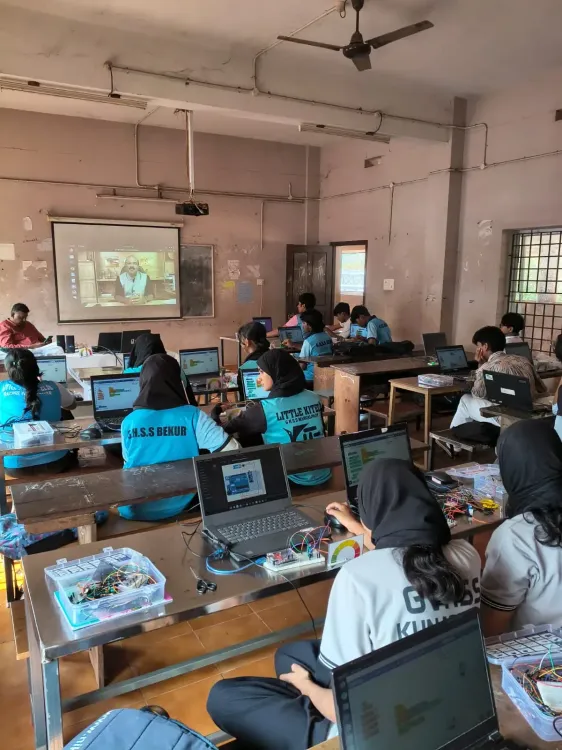
Thiruvananthapuram, Dec 27 (NationPress) - Approximately 15,000 students from across Kerala are immersing themselves in modern weather science and forecasting techniques as the Little KITEs Sub-District Camps commence statewide.
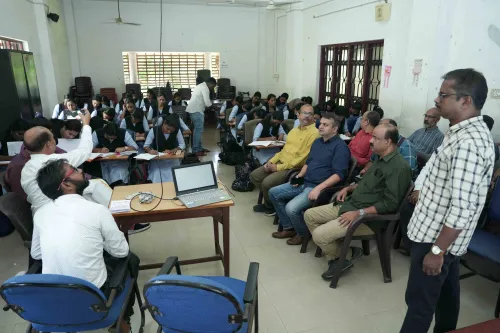
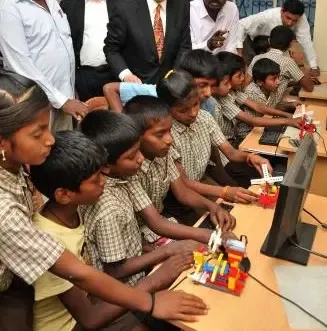
A total of 14,804 students, chosen from a pool of over 208,000 members across 2,248 Little KITEs units, are engaging in these two-day camps held at 225 locations.
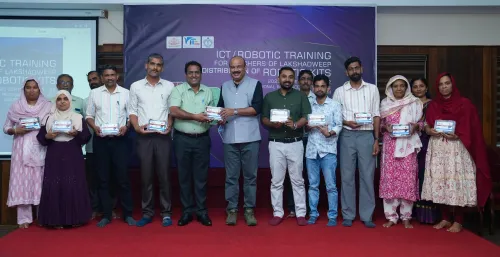
The participants were selected following initial school-level camps and are now undergoing thorough training in programming, electronics, and digital content creation.
The camps aim to empower students to build functional prototypes of weather monitoring devices and grasp the scientific principles governing professional weather forecasting operations.
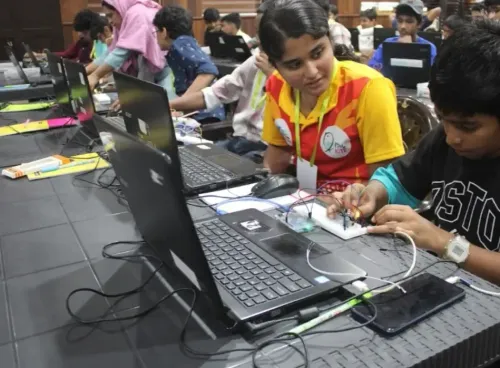
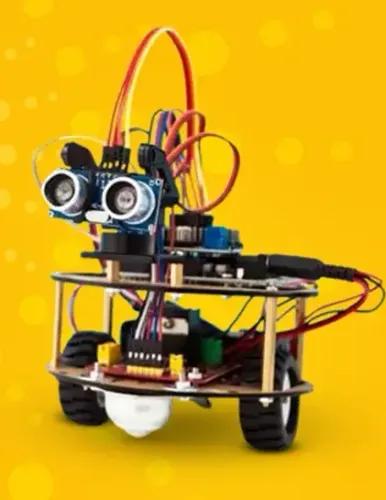
Using robotic kits previously provided to schools by the Kerala Infrastructure and Technology for Education (KITE), students are crafting systems that analyze data such as temperature, air pressure, wind speed, and humidity to forecast weather.
During programming sessions, students are developing working models of crucial weather station equipment, including temperature sensors using LDR modules, servo motors, and Arduino components.
They are also assembling digital anemometers to gauge wind speed and wind vanes to ascertain wind direction, effectively translating classroom theories into practical applications.
Little KITEs, an initiative by KITE, the technology division of the Kerala General Education Department, is recognized as India's largest Student ICT Network, boasting a membership exceeding 200,000.
This program seeks to foster innovation and technical proficiency among students in public schools, equipping them with skills in Artificial Intelligence, Robotics, Internet of Things (IoT), and Animation, encouraging them to be creators rather than just consumers of technology.
In the animation segment, students are generating digital content using OpenToonz, a free and open-source 2D animation software.
They are being instructed in advanced techniques like rotate animation, in-betweening, lip-syncing, tweening, and visual effects, while also crafting 3D models with Blender.
KITE's Chief Executive Officer, K. Anvar Sadath, mentioned that advanced robotic kits capable of constructing sophisticated systems—from mobile robots to intelligent weather stations—will be rolled out to all schools starting January 2026.
Point of View
Fostering a generation of tech-savvy individuals poised to lead in science and innovation. It underscores the importance of practical, hands-on experience in learning, aligning with national educational goals.
NationPress
18 Sept 2026
Frequently Asked Questions
What is the Little KITEs initiative?
Little KITEs is a program by the Kerala Infrastructure and Technology for Education (KITE) aimed at enhancing technology education among students in public schools.
How many students are participating in the camps?
Approximately 15,000 students are participating in the Little KITEs Sub-District Camps across Kerala.
What skills are being taught at the camps?
Students are learning programming, electronics, digital content creation, and practical applications in weather monitoring.
When will advanced robotic kits be introduced in schools?
Advanced robotic kits are scheduled to be introduced in all schools starting January 2026.
What technology is being used for animation training?
Students are utilizing OpenToonz, a free 2D animation software, along with Blender for creating 3D models.