163 Indian seafarers on 12 vessels in Persian Gulf, MEA confirms
Synopsis
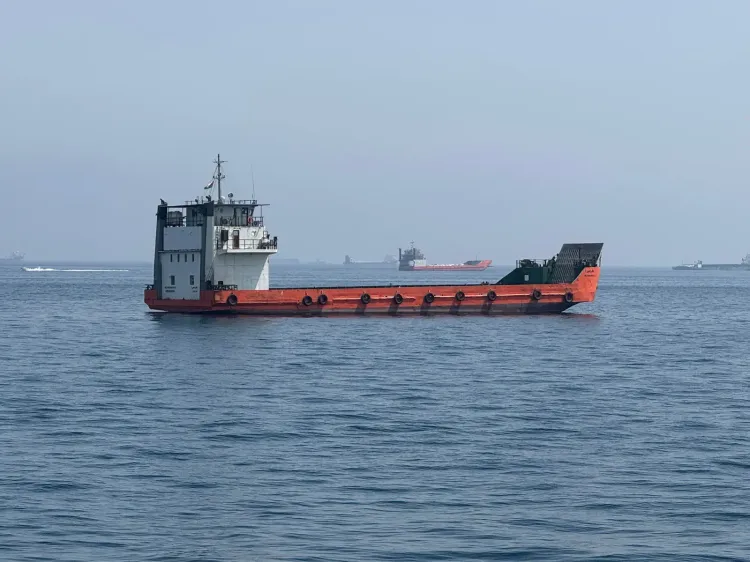
With 163 Indian seafarers aboard 12 vessels in the Persian Gulf and over 4,500 more across the wider region, the MEA’s confirmation lays bare India’s acute exposure to a maritime crisis that has already claimed Indian lives — from the Gulf of Oman to the Black Sea. India is pushing hard for a multilateral safety framework, but the window between diplomacy and the next attack keeps narrowing.
Key Takeaways
163 Indian seafarers are currently aboard 12 commercial vessels in the Persian Gulf , west of the Strait of Hormuz , as confirmed by the MEA on 29 September 2026 .
An additional 4,500+ Indian seafarers are operating aboard commercial vessels across the broader region.
An Indian sailor was killed in the MV CAPE DAO attack in the Gulf of Oman ; another went missing after the EL GAIA tanker was struck in the Strait of Hormuz.
Four Indian seafarers died when MV GOLDEN LEO was hit near Odessa ; another Indian national was killed aboard MV OMORFI in the Black Sea on 18 July .
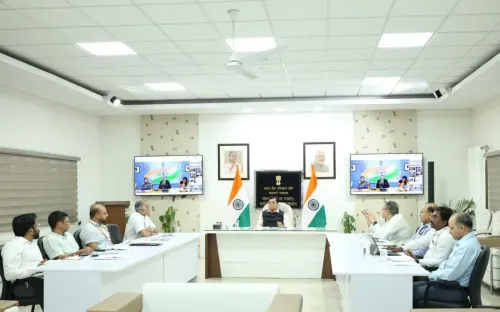
EAM Jaishankar addressed the inaugural GoF on S4 meeting in New York on 25 September 2026 , co-founded with Liberia .
PM Modi has proposed a Seafarers Emergency Support Network at the recent BRICS Summit to coordinate distress response across maritime nations.
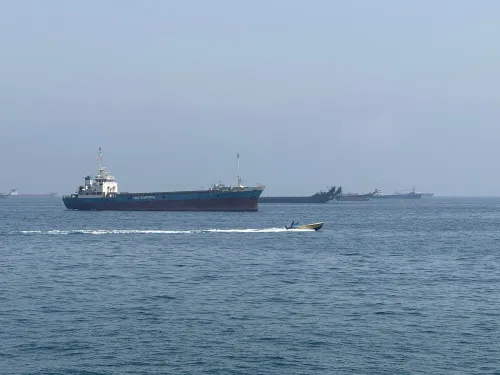
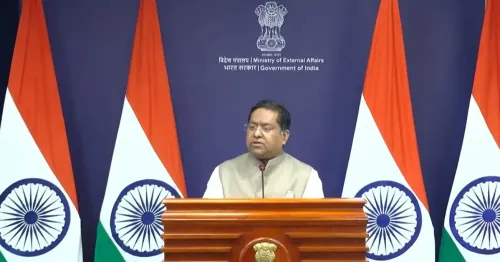
The Ministry of External Affairs (MEA) on Tuesday, 29 September 2026, confirmed that 163 Indian seafarers are currently aboard 12 commercial vessels transiting the Persian Gulf west of the Strait of Hormuz, as tensions in the broader West Asia maritime corridor continue to escalate. The disclosure was made by MEA spokesperson Randhir Jaiswal during a bi-weekly media briefing in New Delhi.
Breakdown of Vessels and Crew
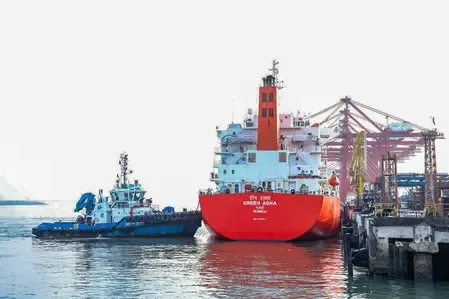
Jaiswal said that of the 12 ships in the area, six are India-flagged commercial vessels and six are foreign-flagged vessels carrying cargo bound for India. “On these ships, we have around 163 Indian seafarers who are on board,” he stated. Beyond that immediate figure, he noted that over 4,500 Indian seafarers are aboard various commercial vessels operating across the wider region.
The Ministry of Shipping is actively monitoring the movement of these ships, with embassies and other stakeholders directed to assist crew welfare as and when required, Jaiswal added. “On our side, we remain committed to the safety and well-being of our seafaring community abroad,” he said.
Recent Attacks That Killed and Injured Indian Crew
The MEA’s statement comes against a backdrop of a sharply deteriorating security situation in regional waters. External Affairs Minister (EAM) S. Jaishankar, speaking at the inaugural meeting of the ‘Group of Friends on Safety and Security of Shipping and Seafarers’ (GoF on S4) in New York on 25 September 2026, cited two recent incidents directly affecting Indian nationals.
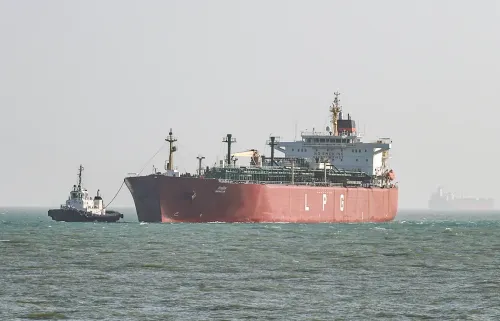
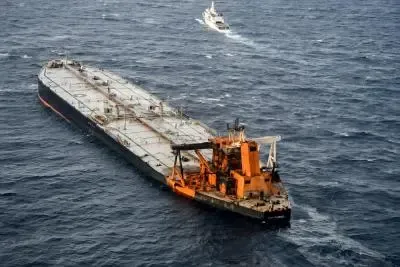
On or around 23 September, an Antigua and Barbuda-flagged bulk carrier, MV CAPE DAO, was attacked in the Gulf of Oman, killing one Indian sailor. Ten days prior, a Panama-flagged oil tanker, EL GAIA, was struck while transiting the Strait of Hormuz, and an Indian crew member went missing. “These regrettably are no longer exceptional occurrences,” Jaishankar said. Attacks in the Black Sea have also claimed Indian lives: four Indian seafarers died when MV GOLDEN LEO was struck after leaving Odessa, and the Chief Officer of MV OMORFI — an Indian national — was killed when the vessel was hit in Russian territorial waters on 18 July.
India’s Diplomatic Push for Maritime Safety
India has consistently condemned attacks targeting seafarers and disrupting free navigation through international waterways since the outbreak of the West Asia conflict. At the GoF on S4 meeting, Jaishankar underscored the global economic stakes: international trade worth more than USD 140 billion transits the world’s oceans daily, with oceans supporting more than 80 per cent of global trade activity. Nearly 2 million seafarers operate the world’s merchant fleets, he noted.
India and Liberia — identified as a major source country for seafarers and the largest shipping registry respectively — jointly proposed the establishment of the Group of Friends initiative. In November of the previous year, India co-organised an Arria Formula meeting at the UN Security Council alongside Greece and the Philippines on maritime safety, and participated in the High Level Open Debate on Waterway Safety held in April 2026.
Modi’s Seafarers Emergency Support Network Proposal
At the recent BRICS Summit in New Delhi, Prime Minister Narendra Modi proposed establishing a Seafarers Emergency Support Network to connect maritime authorities and embassies of concerned countries, enabling distress alerts, medical assistance, family communication, and evacuation support. The proposal reflects India’s broader effort to institutionalise crew welfare mechanisms beyond bilateral diplomacy.
With India being one of the world’s largest suppliers of maritime labour, the safety of Indian seafarers in conflict-adjacent waters has emerged as a pressing foreign policy concern — and the GoF on S4 framework represents the most coordinated multilateral response yet. How quickly member states translate the platform into operational protocols will determine whether it moves beyond diplomatic symbolism.
Point of View
But the sequencing is troubling — lives have already been lost in the Gulf, the Red Sea and the Black Sea before the multilateral framework even held its inaugural meeting. The GoF on S4 and Modi’s proposed Emergency Support Network are structurally sound ideas, but they remain proposals while Indian sailors navigate active threat zones today. India supplies roughly 12 per cent of the world’s merchant navy officers; the cost of not having operational protocols in place is not abstract. The real question is whether this diplomatic momentum translates into binding commitments before the next incident makes the MEA’s bi-weekly briefings even grimmer.
NationPress
29 Sept 2026
Frequently Asked Questions
How many Indian seafarers are currently in the Persian Gulf?
The MEA confirmed on 29 September 2026 that 163 Indian seafarers are aboard 12 commercial vessels in the Persian Gulf, west of the Strait of Hormuz. An additional 4,500-plus Indian seafarers are operating across the broader region on various commercial vessels.
What recent attacks have targeted Indian seafarers?
An Indian sailor was killed when the bulk carrier MV CAPE DAO was attacked in the Gulf of Oman around 23 September 2026, and an Indian crew member went missing after the oil tanker EL GAIA was struck in the Strait of Hormuz. In the Black Sea, four Indian seafarers died aboard MV GOLDEN LEO near Odessa, and an Indian Chief Officer was killed on MV OMORFI on 18 July.
What is the Group of Friends on Safety and Security of Shipping and Seafarers?
It is a multilateral platform jointly proposed by India and Liberia to raise global attention to the growing threat of attacks on commercial shipping and crew safety. Its inaugural meeting was held in New York on 25 September 2026, where EAM Jaishankar called for the international community to deter attacks from the Black Sea to the Red Sea to the Gulf.
What is PM Modi’s Seafarers Emergency Support Network?
PM Narendra Modi proposed the Seafarers Emergency Support Network at the recent BRICS Summit in New Delhi to connect maritime authorities and embassies across countries, facilitating distress alerts, medical assistance, family communication, and evacuation support for seafarers in crisis situations.
Why is maritime security a major concern for India?
India is one of the world’s largest suppliers of seafarers, with over 4,500 Indian nationals operating in the West Asia maritime region alone. Global trade worth more than USD 140 billion transits oceans daily, supporting over 80 per cent of international trade activity, making safe passage through waterways like the Strait of Hormuz and the Red Sea directly tied to India’s economic and human interests.