Partition Remembrance Day: The 1947 massacres India must not forget
Synopsis
Seventy-seven years on, the massacres at Sheikhupura, Muzaffarabad, and Thoha Khalsa remain among the least-examined chapters of 1947. On Partition Horror Remembrance Day, eyewitness testimonies — including accounts of around 90 women who jumped into a well rather than face capture — force a reckoning with a scale of violence that mainstream historical narratives have long underweighted.
Key Takeaways
Partition Horror Remembrance Day is observed on 14 August each year to commemorate the victims of the 1947 Partition of India .
Eyewitness testimony from Ram Nath , Advocate, claims approximately 10,000 men were killed in Sheikhupura by 26 August 1947 , with large numbers of women abducted.
Survivor Khazan Singh testified that more than 1,000 people were killed by Pathan raiders in Muzaffarabad in October 1947 ; he was forcibly converted and later escaped.
In Thoha Khalsa , Rawalpindi District, around 90 women reportedly jumped into a well to avoid capture; only three survived.
Accounts were preserved by Sikh leader Master Tara Singh and a small number of scholars and eyewitnesses whose testimonies remain primary historical sources.
These figures derive from individual eyewitness statements and should be read alongside other contemporary records for full historical context.
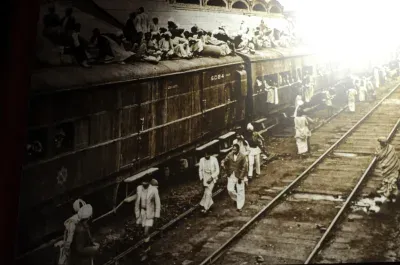
On 14 August, Partition Horror Remembrance Day, India pauses to confront one of the bloodiest chapters of its modern history — the Partition of 1947, which tore apart communities across the subcontinent and left millions killed, displaced, abducted, or forcibly converted. While the aggregate scale of the tragedy is widely acknowledged, the specific atrocities committed in the western regions — particularly in present-day Pakistan — have received comparatively little attention in mainstream historical discourse.
Testimonies preserved by Sikh leader Master Tara Singh and a small number of scholars and eyewitnesses offer harrowing first-hand accounts of the violence. Three episodes, in particular, stand as starkest reminders of what ordinary people endured: the massacres at Sheikhupura, Muzaffarabad, and the village of Thoha Khalsa in Rawalpindi District.
The Sheikhupura Massacre
The following account is drawn from the testimony of Ram Nath, Advocate, High Court, formerly of the Sheikhupura Bar. According to his statement, Sheikhupura — then a district where Muslims comprised roughly 68 percent of the population, Sikhs 20 percent, and Hindus 12 percent — had no prior history of communal riots and was considered a stronghold of non-Muslim communities.
On 15 August 1947, Muslim officials and prominent non-officials reportedly gave assurances of protection to non-Muslim residents. Those assurances, according to the testimony, did not hold. Non-Muslim officials were subsequently removed from service, and the police force remained predominantly Muslim.
On the evening of 24 August, a curfew was imposed by the District Magistrate. According to Ram Nath's statement, military personnel set a house on fire that evening and continued operations the following day. The violence that followed was described as highly systematic: armed groups allegedly moved through the old Sheikhupura settlement, killing residents, while separate groups looted property and torched non-Muslim homes.
At New Ihatas, men and women were reportedly separated. Young women were allegedly singled out while male family members were forced to watch; a young man who protested was reportedly shot along with the other men present. The most devastating episode, according to the testimony, occurred at a Sikh rice factory, where large numbers of men were shot and women subjected to degrading treatment. The statement claimed that by 26 August, approximately 10,000 men had been killed and truckloads of young women removed.
These figures derive from a single eyewitness statement and should be understood in that historical context, warranting careful examination alongside other contemporary records.
The Muzaffarabad Massacre
A separate testimony was given by Khazan Singh, son of Chain Singh of Village Kotli, Tehsil and District Muzaffarabad, Jammu and Kashmir. He described an attack on his village by Pathan raiders in October 1947, in which around 20 people were killed during the initial assault and others fled towards the interior of the state.
According to his account, the fleeing Hindu and Sikh population was subsequently surrounded by armed raiders and taken towards Domel, where families from other villages were also brought. Men were separated from women and children. Khazan Singh testified that a large number of men were then shot and their bodies thrown into a river, with his estimate placing the death toll at more than 1,000 people. He further stated that children were also killed.
Khazan Singh himself was reportedly captured and forcibly converted to Islam. He said he eventually escaped after Pakistani military personnel intervened and took him to Pattan Khurd in the Hazara district. His testimony is particularly significant because he claimed to have personally witnessed the events and later recounted them in a formal statement.
Thoha Khalsa: The Women Who Chose Death Over Dishonour
Among the most haunting episodes of the Rawalpindi violence is that of Thoha Khalsa, a small village in Rawalpindi District. According to contemporary accounts, the village was surrounded by a large armed group during the communal violence. The outnumbered villagers resisted as best they could.
Negotiations followed, and a payment of ₹10,000 was reportedly demanded. After the villagers paid the amount and received assurances of safety, the attackers reportedly returned the following day, demanded further payment, and killed around 40 defenders.
With the defence broken, the women of the village reportedly gathered and faced an impossible choice. Fearing capture and violation, around 90 women chose to end their lives by jumping into a well. Only three were reportedly rescued. Their deaths have since become one of the most enduring and tragic symbols of the suffering borne by women during Partition.
Why These Accounts Must Be Preserved
Partition was not merely a political redrawing of borders. For millions of individuals, it meant the obliteration of homes, families, and communities that had existed across generations. The testimonies from Sheikhupura, Muzaffarabad, and Thoha Khalsa place human faces behind the aggregate statistics — men, women, and children who confronted extraordinary violence with little recourse.
Partition Horror Remembrance Day, observed on 14 August each year, is not a call to hatred or retribution. It is a call to honest memory — to preserve survivor testimonies, examine historical evidence rigorously, and acknowledge the suffering of all communities affected by the division. As author and mass communication student Mohisha Tuli notes, history cannot be changed, but it can be remembered honestly — and those who forget the horrors of the past risk repeating them.
Point of View
Muzaffarabad, Thoha Khalsa — represent a category of Partition violence that has been systematically marginalised in both Indian and Pakistani historiography, partly because the primary sources are survivor testimonies rather than state records. That evidential gap is not a reason to dismiss the accounts; it is a reason to invest in archival research before living witnesses are gone entirely. Partition Horror Remembrance Day risks becoming a ritual of outrage rather than a catalyst for scholarship unless governments and universities treat these testimonies as the foundation for rigorous, cross-border historical inquiry. The harder question is not whether the violence happened — it did — but whether India has built the institutional framework to examine it honestly, including atrocities committed by all sides.
NationPress
28 Sept 2026
Frequently Asked Questions
What is Partition Horror Remembrance Day?
Partition Horror Remembrance Day is observed on 14 August each year in India to commemorate the millions of people killed, displaced, or subjected to violence during the 1947 Partition of the subcontinent. It was formally instituted to ensure the suffering of Partition victims is not forgotten.
What happened at Thoha Khalsa during the 1947 Partition?
Thoha Khalsa was a small village in Rawalpindi District where, according to contemporary accounts, a large armed group surrounded the settlement during communal violence. After paying ₹10,000 as demanded and receiving safety assurances, the villagers were attacked again the following day; around 40 defenders were killed. Facing capture, approximately 90 women reportedly jumped into a well; only three survived.
What is known about the Sheikhupura massacre of 1947?
According to the eyewitness testimony of Ram Nath, Advocate, formerly of the Sheikhupura Bar, systematic violence began on 24 August 1947 after a curfew was imposed. Armed groups allegedly moved through the settlement killing residents, looting property, and setting homes on fire. The testimony claims approximately 10,000 men were killed by 26 August 1947. These figures come from a single eyewitness account and should be examined alongside other contemporary records.
Who was Khazan Singh and what did he witness in Muzaffarabad?
Khazan Singh, son of Chain Singh of Village Kotli in Muzaffarabad, was a survivor who testified to a Pathan raider attack in October 1947 in which he estimated more than 1,000 people were killed. He stated that men were separated from women and children before being shot, that children were also killed, and that he himself was forcibly converted to Islam before eventually escaping.
Why do these Partition testimonies matter today?
These accounts — preserved by Sikh leader Master Tara Singh and a small number of scholars — represent some of the only surviving first-hand records of violence in regions that are now part of Pakistan. They place individual human experiences behind the aggregate statistics of Partition and form a primary, if limited, historical record of events that remain under-researched in mainstream historiography.