Puri Remembers Partition Horrors, Shares Family's Story
Synopsis
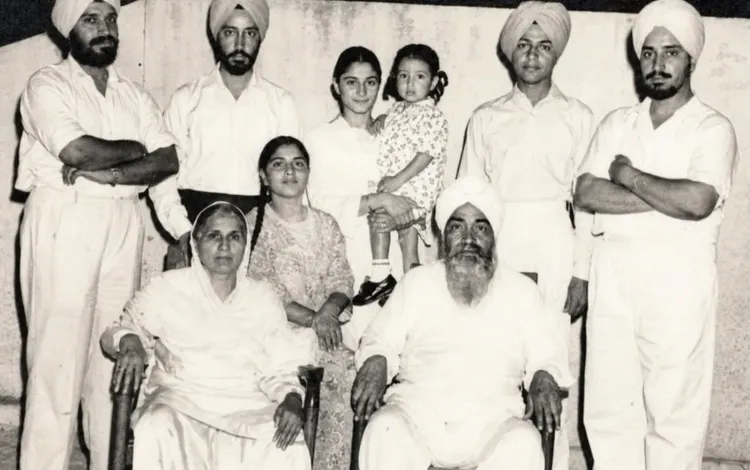
Union Petroleum Minister Hardeep Singh Puri marked Partition Horrors Remembrance Day on 14 August with a personal tribute, recalling how his parents survived the violence and displacement of 1947 and rebuilt their lives from nothing.
Key Takeaways
Hardeep Singh Puri marked Partition Horrors Remembrance Day on 14 August with a personal tribute on social media.
Puri revealed that his parents were direct survivors of the 1947 Partition , and his father fled to India with only the clothes he was wearing.
The minister paid tribute to all those who lost their lives in Partition violence and to survivors who rebuilt their lives from scratch.
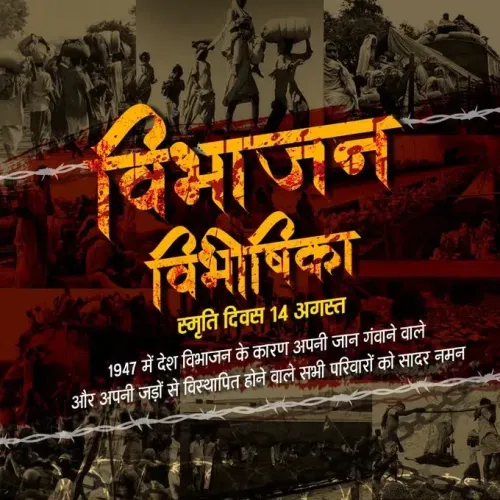
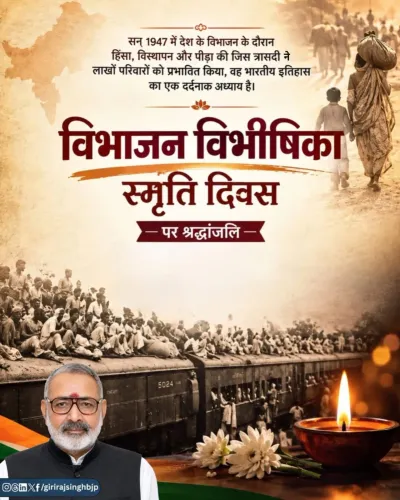
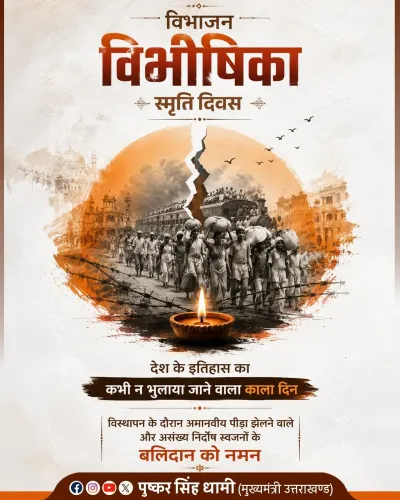
The Government of India instituted Partition Horrors Remembrance Day in 2021 to formally commemorate victims and survivors of the 1947 division.
The 1947 Partition displaced an estimated tens of millions of people and caused widespread communal violence across the subcontinent.
Puri's tribute reflects the central government's annual practice of acknowledging the human cost of Partition through personal and official remembrance.
On a day that cuts close to the bone for millions of Indian families, Union Petroleum Minister Hardeep Singh Puri marked Partition Horrors Remembrance Day on 14 August with a deeply personal tribute — one rooted not in political rhetoric, but in the lived memory of his own parents, who survived the cataclysm of 1947.
A Son's Memory of His Parents' Ordeal
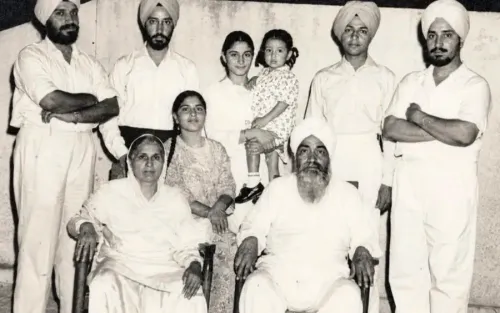
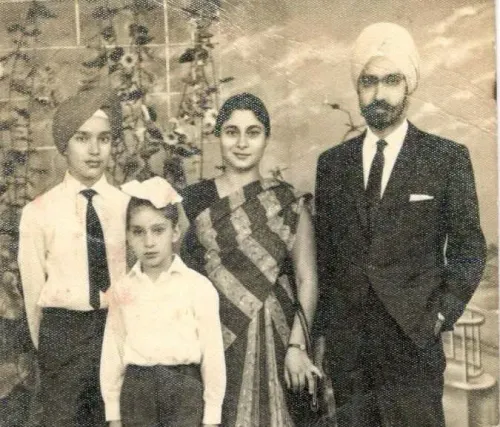
Puri, a senior BJP leader and former career diplomat, did not speak in abstractions. 'Born to parents who bore the brunt and scars of Partition,' he wrote, 'I have grown up with a deeply personal understanding of the anguish of those who were uprooted from their homes.' His father, he recalled, escaped to India with nothing but the clothes on his back — and from that desolation, rebuilt an entire life. That image — a man crossing into an uncertain country with nothing — is the image millions of Partition survivors carried with them to their graves.
What Partition Horrors Remembrance Day Marks
The Government of India declared 14 August as Partition Horrors Remembrance Day in 2021, creating an official annual space to acknowledge the staggering human cost of the 1947 division of British India into India and Pakistan. The Partition triggered one of history's largest forced migrations — displacing an estimated ten to twenty million people — and unleashed communal violence that killed hundreds of thousands. Every 14 August since, senior leaders across the government have used the occasion to surface personal and family accounts, grounding a national tragedy in individual human stories rather than letting it recede into footnote.
Resilience as the Dominant Note
Puri's tribute did not dwell only in grief. He paid homage to 'the extraordinary resilience and strength of ordinary people who endured unimaginable suffering' — the survivors who, stripped of home, land, and community, chose to rebuild. His closing lines carried a quiet moral weight: 'May we remember their pain with empathy, honour their resilience with humility, and ensure that the horrors they witnessed are never forgotten.' No exclamation. No flourish. Just a steady, dignified call to memory.
For a generation that never lived through Partition, the testimonies of those who did — including those passed down through families like Puri's — remain the most irreplaceable archive of that catastrophe. The minister's post is a reminder that for many in public life, history is not a chapter in a textbook. It is a parent's silence at the dinner table.
Point of View
In which the central government uses Partition Horrors Remembrance Day to anchor national identity in the memory of collective suffering rather than purely in celebration. By foregrounding personal family testimony, senior leaders humanise a political commemoration and reinforce the government's broader cultural emphasis on Partition as a foundational national wound. The personal register — a father crossing the border with only his clothes — is more politically durable than any statistic, because it is unanswerable. It also signals that for the BJP's leadership, remembrance of Partition remains a live and emotionally resonant political inheritance, not merely a historical footnote.
NationPress
29 Sept 2026
Frequently Asked Questions
What is Partition Horrors Remembrance Day?
Partition Horrors Remembrance Day is observed every year on 14 August to commemorate the victims and survivors of the violence and displacement caused by the 1947 Partition of British India into India and Pakistan . The Government of India officially declared this observance in 2021 .
Why did Hardeep Singh Puri post about Partition Horrors Remembrance Day?
Hardeep Singh Puri posted a personal tribute because his own parents were survivors of the 1947 Partition . He described growing up with a firsthand understanding of the anguish of displacement and paid tribute to his parents and other family members who lost everything.
What did Hardeep Singh Puri say about his father's experience of Partition?
Puri recalled that his father escaped to India 'with nothing but the clothes they were wearing,' yet showed 'indomitable courage' and rebuilt his life from scratch — a story he described as a testament to the resilience of ordinary Partition survivors.
When was Partition Horrors Remembrance Day instituted in India?
The Government of India declared 14 August as Partition Horrors Remembrance Day in 2021 , creating an annual official occasion to remember the suffering caused by the 1947 Partition .
How many people were displaced by the 1947 Partition of India?
The 1947 Partition of British India triggered one of the largest forced migrations in human history, displacing an estimated tens of millions of people and causing widespread communal violence that killed hundreds of thousands across the subcontinent.