20 projects in protected areas cleared since 2024: MoS Kirti Vardhan Singh
Synopsis
The Centre has cleared 20 infrastructure projects in Protected Areas and Eco-Sensitive Zones over just two financial years — a disclosure that puts the government's multi-tiered scrutiny mechanism under the spotlight. With India's wildlife corridors already under pressure, the scale and pace of these approvals raises questions that parliamentary safeguards alone may not fully answer.
Key Takeaways
20 infrastructure projects in Protected Areas , ESZs , or ESAs received environmental clearance during 2024–25 and 2025–26 .
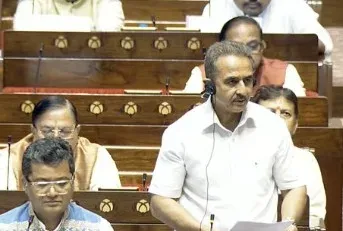
MoS Kirti Vardhan Singh disclosed this in a reply to the Rajya Sabha on Thursday, 31 July .
Each clearance carries project-specific safeguards covering wildlife protection, habitat conservation, pollution control, compensatory plantation, and environmental monitoring.
Proposals undergo a multi-tiered review involving the State Chief Wildlife Warden , State Board for Wildlife , the Ministry , and the SCNBWL .
No construction can begin without Wildlife Clearance under the Wildlife (Protection) Act, 1972 .
The Centre on Thursday informed the Rajya Sabha that 20 infrastructure projects located wholly or partly within Protected Areas, Eco-Sensitive Zones (ESZ), or Eco-Sensitive Areas (ESA) were granted environmental clearance during financial years 2024–25 and 2025–26. The disclosure came in response to a parliamentary query, with Minister of State for Environment, Forest and Climate Change Kirti Vardhan Singh detailing the regulatory framework governing such approvals.
What the Clearances Cover
According to Kirti Vardhan Singh, each environmental clearance is accompanied by project-specific safeguards designed to avoid, minimise, and mitigate adverse ecological impacts. These safeguards span wildlife protection, habitat conservation, pollution control, compensatory plantation, and environmental monitoring.
The minister emphasised that a scientific appraisal process is applied at the approval stage to ensure that ecologically sensitive landscapes receive adequate protection under each clearance condition.
The Multi-Tiered Scrutiny Mechanism
Projects requiring Wildlife Clearance within Protected Areas, ESZs, or forest areas are subject to a layered review process. At the first level, proposals are examined by the State Chief Wildlife Warden and the State Board for Wildlife.
The cases then move to the Ministry of Environment, Forest and Climate Change and the Standing Committee of the National Board for Wildlife (SCNBWL). The SCNBWL evaluates the ecological sensitivity of the area, cumulative and site-specific impacts on wildlife habitats and corridors, and the adequacy of proposed mitigation measures on a case-by-case basis.
'Thereafter, the cases are scrutinised by the Ministry and the Standing Committee of the National Board for Wildlife (SCNBWL), which examines the ecological sensitivity of the area, cumulative and specific impacts on wildlife habitats and corridors, and the proposed mitigation measures on a case-to-case basis,' Singh said.
Legal Safeguards in Place
The minister underscored that no construction or project-related activity can commence unless Wildlife Clearance is obtained under the provisions of the Wildlife (Protection) Act, 1972. Environmental Clearance is granted only after due consideration of environmental impacts and the incorporation of safeguards prescribed in the Environmental Management Plan (EMP).
Wildlife Clearance recommendations by the SCNBWL are issued only after a thorough assessment of impacts, mitigation measures, and appropriate safeguards — a process the minister described as comprehensive and case-specific.
Context and Significance
The disclosure comes amid sustained scrutiny from environmental groups and opposition lawmakers over the pace of infrastructure development in ecologically sensitive regions. India's protected area network covers roughly 5% of the country's geographical area, encompassing national parks, wildlife sanctuaries, and conservation reserves. Critics argue that even with safeguards, cumulative approvals in ESZs can fragment wildlife corridors and accelerate habitat loss.
This is not the first time such clearances have drawn parliamentary attention — similar questions have been raised in previous sessions regarding the balance between development imperatives and ecological preservation. The government's position, as reiterated by Singh, is that the existing multi-tiered mechanism provides sufficient checks before any clearance is granted.
With infrastructure expansion continuing across sectors such as roads, power, and mining, the scrutiny of ESZ approvals is expected to intensify in coming parliamentary sessions.
Point of View
But that committee's meeting frequency and the granularity of its case-by-case assessments are rarely made public, making independent verification difficult. What is missing from this parliamentary reply is any data on post-clearance compliance monitoring — whether the prescribed safeguards are actually implemented on the ground. Without that accountability loop, the multi-tiered approval process risks becoming a legitimising formality rather than a genuine ecological check.
NationPress
31 Jul 2026
Frequently Asked Questions
How many projects in protected areas were given environmental clearance since 2024?
The Centre granted environmental clearance to 20 infrastructure projects located wholly or partly in Protected Areas, Eco-Sensitive Zones, or Eco-Sensitive Areas during financial years 2024–25 and 2025–26, as disclosed in the Rajya Sabha on 31 July.
What safeguards apply to projects cleared in Eco-Sensitive Zones?
Each clearance comes with project-specific conditions covering wildlife protection, habitat conservation, pollution control, compensatory plantation, and environmental monitoring. These are prescribed as part of the Environmental Management Plan accompanying every clearance.
What is the SCNBWL and what role does it play?
The Standing Committee of the National Board for Wildlife (SCNBWL) is the apex body that scrutinises Wildlife Clearance proposals for projects in Protected Areas and ESZs. It evaluates ecological sensitivity, cumulative impacts on wildlife habitats and corridors, and the adequacy of mitigation measures before recommending clearance.
Can construction begin immediately after environmental clearance is granted?
No. Under the Wildlife (Protection) Act, 1972, no construction or project-related activity can commence until Wildlife Clearance is separately obtained. Environmental clearance and Wildlife Clearance are distinct approvals, both of which must be in place before work begins.
Why are clearances in protected areas and ESZs controversial?
India's protected area network covers roughly 5% of the country's geographical area and is critical to wildlife corridor connectivity. Critics argue that even with safeguards, cumulative approvals in ESZs can fragment habitats and accelerate ecological degradation, raising concerns about the adequacy of case-by-case review processes.