Nvidia CEO Jensen Huang Unveils Physical AI Stack
Synopsis
Nvidia CEO Jensen Huang has unveiled the company's full Physical AI stack — spanning Cosmos and Omniverse for simulation and Isaac and Newton for robot skill learning — framing it as the foundation of the next industrial revolution. The announcement extends Nvidia's decade-long push from GPUs into end-to-end AI infrastructure.
Key Takeaways
Nvidia declared 'Physical AI is here' on July 30, 2026 , framing it as the foundation of the next industrial revolution.
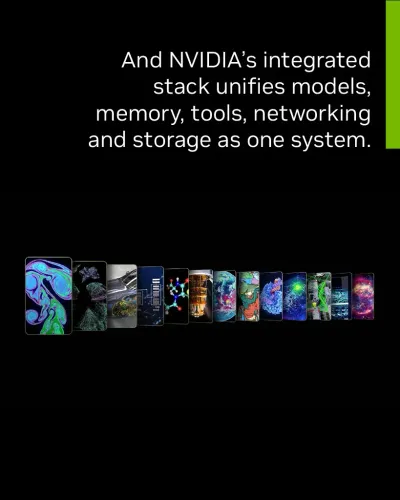
CEO Jensen Huang outlined a four-platform stack: Cosmos and Omniverse for virtual-world development, Isaac and Newton for robot skill learning.
Omniverse was first introduced around 2020 as a physics-based industrial simulation and digital-twin platform.
Isaac has been Nvidia's robotics SDK since 2016-2017 , enabling AI-driven perception and deployment on physical robots.
Global manufacturers and logistics firms have begun pilot programs using simulation-to-robot pipelines similar to what Nvidia describes.
The announcement continues Nvidia's consistent strategy of framing each new AI domain — gaming, data centres, simulation, robotics — as a fresh computing platform it intends to own end-to-end.
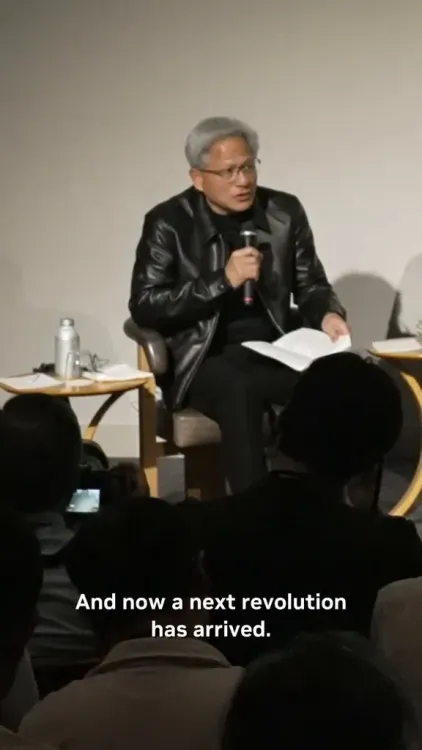
The next industrial revolution has a blueprint — and Nvidia just laid it out in full. On Thursday, July 30, 2026, chip giant Nvidia declared that 'Physical AI is here,' with founder and CEO Jensen Huang outlining the complete software and simulation stack the company believes will power the next wave of AI-driven industry.
From Virtual Worlds to Factory Floors
At the heart of the announcement is a layered platform architecture. Omniverse and Cosmos form the simulation layer — virtual environments where physical AI systems are developed, tested, and refined before they ever touch the real world. Omniverse, which Nvidia introduced publicly around 2020, is the company's physics-based 3D platform for industrial digital twins and collaborative simulation. Cosmos, referenced in the post, is a newer addition to this stack.
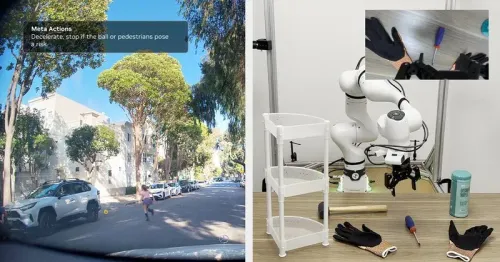
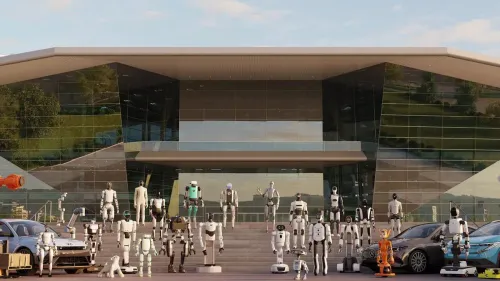
Below that sits the robotics layer: Isaac and Newton, where robots actually learn skills. Isaac has been Nvidia's robotics development platform since its introduction in 2016-2017, enabling AI-driven simulation, perception, and deployment on physical hardware. Newton is a newer framework referenced alongside it.
Huang's 'Full Stack' Framing and What It Signals
The deliberate 'full stack' language is not accidental. Nvidia has spent years building the argument that whoever controls the end-to-end AI infrastructure — from chip to simulator to robot brain — controls the next computing platform. This post is that argument applied to embodied AI: machines that perceive, reason, and act in the physical world.
The pattern is consistent. Nvidia moved from gaming GPUs to data-center training accelerators, then to simulation and now to robotics operating systems. Each transition was framed as a new industrial foundation. Global manufacturers and logistics firms have already begun pilot programs integrating simulation-to-robot pipelines of exactly this kind.
Why the 'Next Industrial Revolution' Framing Matters
Calling something an industrial revolution is a claim that demands scrutiny — but the underlying mechanics are real. When a robot can be trained entirely in a virtual physics simulation and then deployed on a factory floor with minimal real-world retraining, the economics of automation change fundamentally. Development cycles compress. Risk drops. Scale becomes possible for industries that could never afford bespoke robotics programs before.
For India, which is aggressively expanding its manufacturing base under production-linked incentive schemes and positioning itself as a global electronics and auto-component hub, the maturation of physical AI infrastructure is a development worth watching closely. The question is no longer whether robots will enter Indian factories — it is which software stack they will run on.
Nvidia's bet, stated plainly on July 30, is that the answer will be built on Omniverse, Cosmos, Isaac, and Newton. The next GTC event will likely be where the enterprise adoption numbers begin to tell us whether that bet is paying off.
Point of View
Not just a product launch — the company is positioning its simulation-to-robot pipeline as the operating system layer for embodied intelligence, much as it positioned CUDA for parallel computing a decade ago. By naming a four-platform stack in a single post, Nvidia signals to enterprise buyers that fragmented, point-solution robotics stacks carry platform risk. For Indian manufacturers scaling up under production-linked incentive programmes, the choice of simulation infrastructure is becoming a long-term strategic decision, not a procurement line item. If Nvidia's stack achieves the same developer lock-in that CUDA did, the company's influence over the next wave of industrial automation could be as durable as its grip on AI training today.
NationPress
31 Jul 2026
Frequently Asked Questions
What is Physical AI according to Nvidia?
Physical AI refers to artificial intelligence systems that perceive, reason, and act in the real physical world — primarily robots and autonomous machines. Nvidia describes it as the next wave of AI after software-only large language models, enabled by simulation platforms like Omniverse and Cosmos and robotics frameworks like Isaac and Newton.
What is Nvidia Omniverse and how does it relate to robotics?
Nvidia Omniverse is a physics-based 3D simulation and digital-twin platform introduced around 2020. In the Physical AI context, it serves as a virtual environment where robots can be trained and tested before deployment on real factory floors, dramatically reducing development cost and risk.
What is Nvidia Isaac platform?
Isaac is Nvidia's robotics development platform, first introduced in 2016-2017. It provides AI-driven simulation, perception, and deployment tools that allow developers to train robot models in virtual environments and then run them on physical hardware.
What did Jensen Huang say about the next industrial revolution?
Jensen Huang, founder and CEO of Nvidia, stated that Physical AI is 'the foundation of the next industrial revolution,' outlining a full software stack — Cosmos, Omniverse, Isaac, and Newton — that he says makes it possible to develop AI for physical robots and autonomous systems.
How does Nvidia's Physical AI stack affect Indian manufacturing?
India's expanding manufacturing sector, particularly in electronics and auto components, is an early-stage candidate for physical AI adoption. Simulation-to-robot pipelines like Nvidia's can compress automation development cycles and lower costs, making advanced robotics accessible to a broader range of Indian industrial players.